
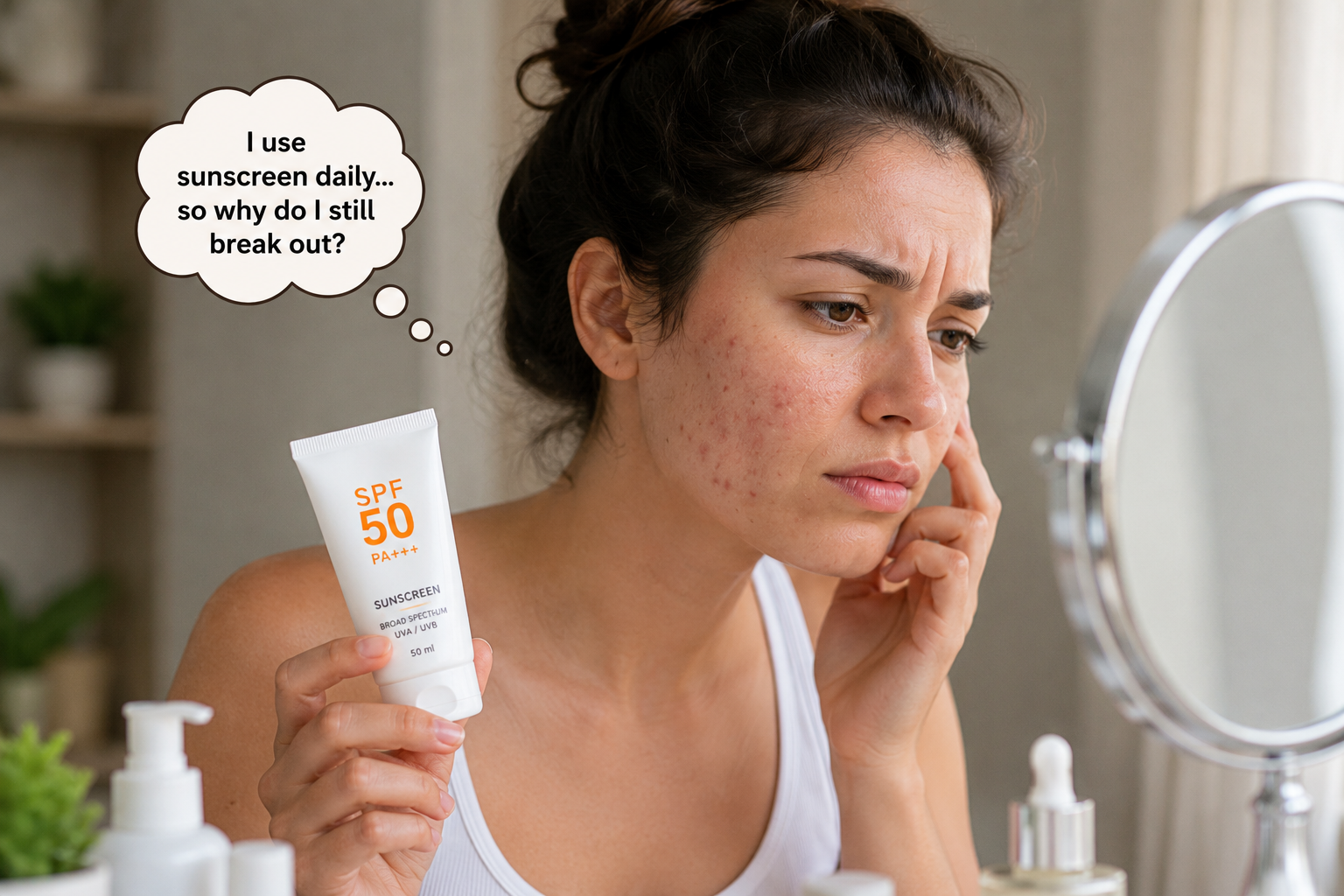
“I stopped wearing sunscreen because it always breaks me out.”
If that sounds familiar, you are not alone — and you are not wrong.
Millions of Americans skip daily sun protection because their skin reacts badly to most formulas. The result? Premature aging, dark spots, and a higher risk of skin cancer — all because the sunscreen market keeps selling products that clog pores.
Here is the good news: the problem is not sunscreen itself. It is the formula. Once you understand which ingredients to avoid — and which ones your skin actually tolerates — you can wear SPF every single day without a single breakout.
This guide breaks everything down clearly so you can make the right choice for your skin type starting today.
- What “Non-Comedogenic” Actually Means
The word non-comedogenic comes from “comedo” — the medical term for a clogged pore. A non-comedogenic product avoids blocking your pores, which lowers the risk of blackheads, whiteheads, and acne flare-ups.
Here is the catch: the FDA does not regulate the term “non-comedogenic.” Any brand can print it on their label without proof. That is why so many people buy a product marked “non-comedogenic” and still break out.
True non-comedogenic sunscreens:
- Avoid pore-blocking ingredients entirely
- Use lightweight or oil-free carrier bases
- Work with acne-prone and sensitive skin without triggering inflammation
- Earn the label through what is actually inside the bottle — not just the marketing on the front
The next time you see “non-comedogenic” on packaging, flip it over and read the ingredient list. That is where the real answer lives.
- The Real Problem With Most Sunscreens
Walk down any drugstore aisle in the US, and you will find dozens of sunscreens. Most of them contain at least one — often several — ingredients that are well-documented pore-cloggers.
Brands add these ingredients because they make sunscreen easier to apply, smoother on skin, and more pleasant to wear. But for oily, acne-prone, or sensitive skin, they trap sebum, dead skin cells, and bacteria inside your pores. That is a recipe for breakouts.
There is also a fundamental divide in sunscreen chemistry that affects acne-prone skin heavily.
Chemical Sunscreen vs. Mineral Sunscreen
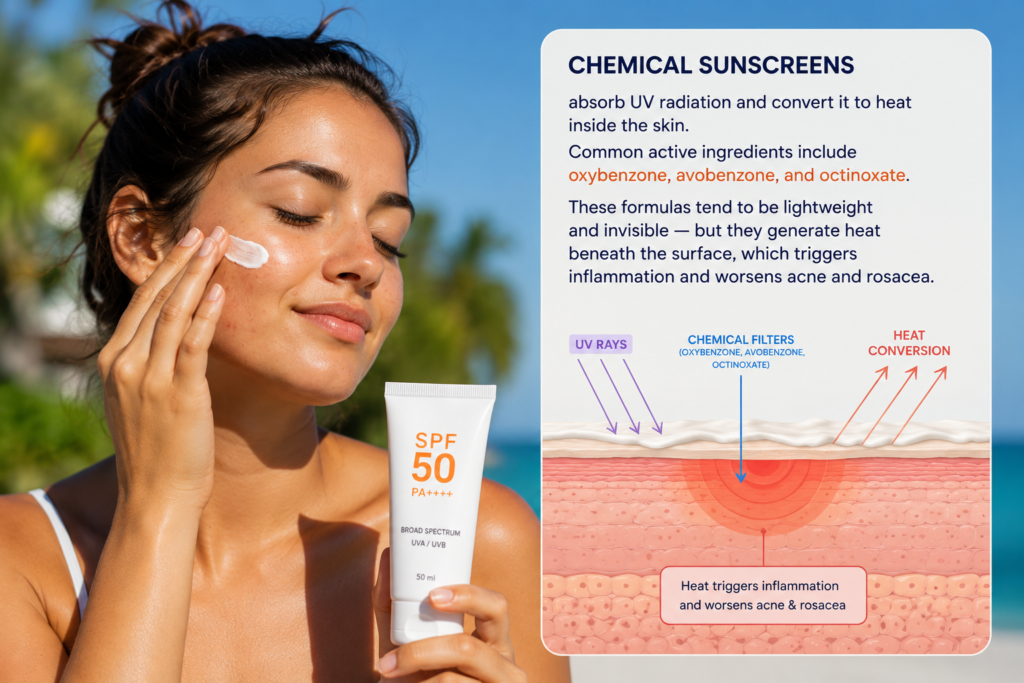
- Chemical sunscreens absorb UV radiation and convert it to heat inside the skin. Common active ingredients include oxybenzone, avobenzone, and octinoxate. These formulas tend to be lightweight and invisible — but they generate heat beneath the surface, which triggers inflammation and worsens acne and rosacea.
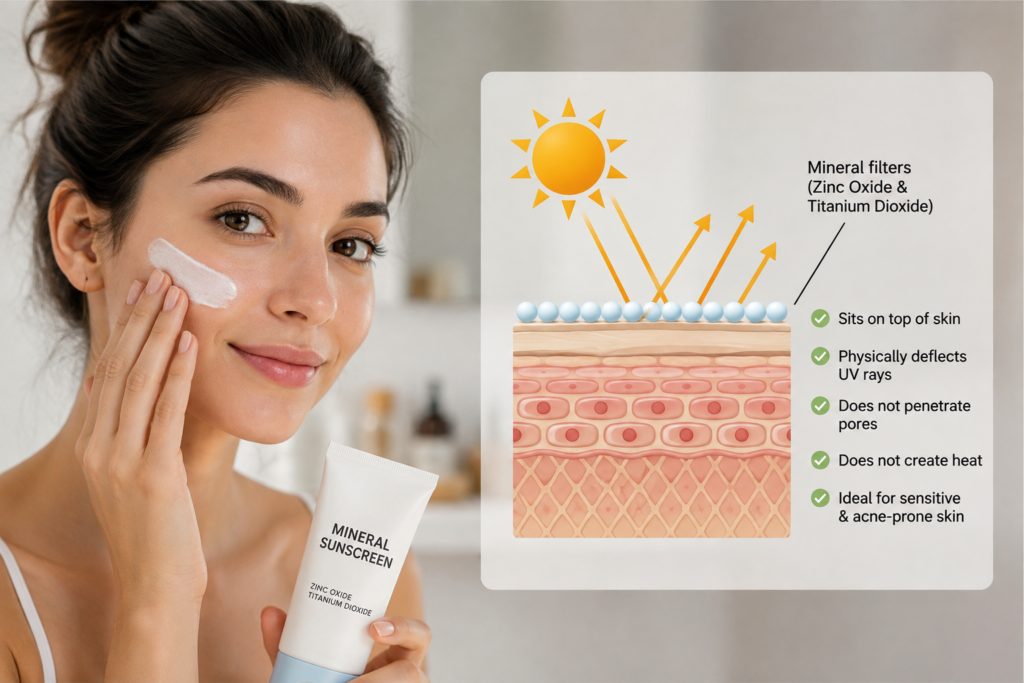
- Mineral sunscreens sit on top of the skin and physically deflect UV rays. The active ingredients are zinc oxide and titanium dioxide. Mineral formulas are far better tolerated by sensitive and acne-prone skin because they do not penetrate pores or create heat.
- Ingredients That Clog Pores — and What Doesn’t
Before you buy any sunscreen, pull up the ingredient list and scan for the following. This single habit will save your skin more than any product ever could.
Pore-Clogging Ingredients to Avoid
- Isopropyl Myristate
- Coconut Oil
- Wheat Germ Oil
- Cocoa Butter
- Isopropyl Palmitate
- Lauric Acid
- Myristyl Myristate
- Sodium Lauryl Sulfate
- Algae or Seaweed Extract
- Heavy concentrations of Dimethicone
Acne-Safe Ingredients to Look For
- Zinc Oxide
- Titanium Dioxide
- Niacinamide
- Hyaluronic Acid
- Squalane (not squalene)
- Glycerin
- Centella Asiatica
- Allantoin
- Cyclopentasiloxane (a lighter silicone)
- Green Tea Extract
A good rule of thumb: the fewer the ingredients, the lower the risk. Minimalist formulas with mineral actives and simple humectants work best for breakout-prone skin.
- Best Non-Comedogenic Sunscreen Formulas by Skin Type
Not everyone needs the same formula. Your skin type determines which texture and active ingredients will work best for daily use.
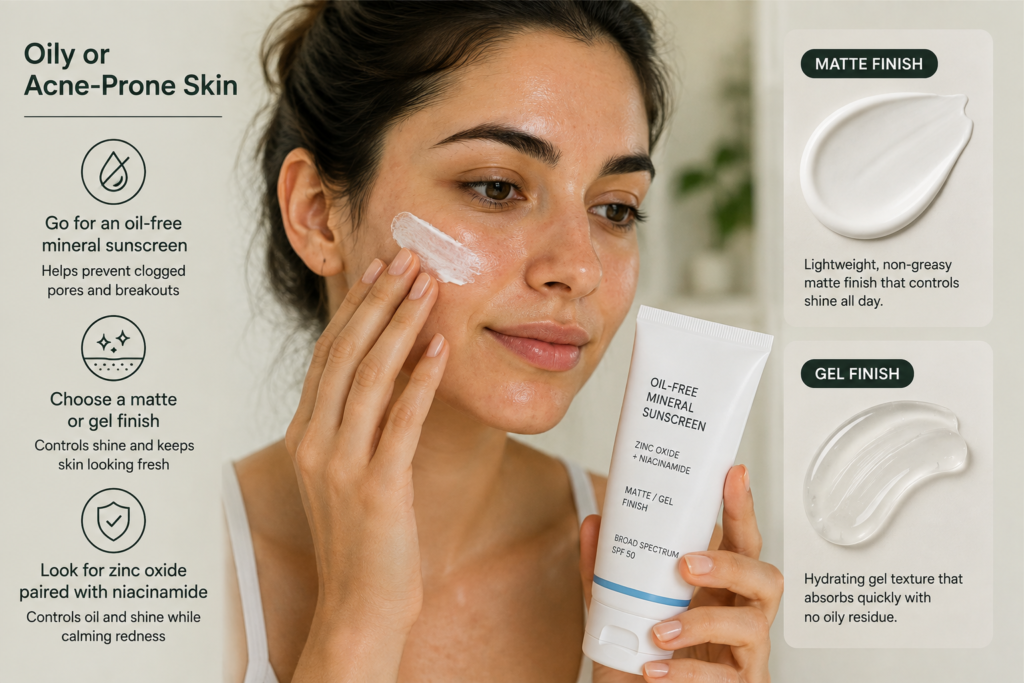
- Oily or Acne-Prone Skin Go for an oil-free mineral sunscreen with a matte or gel finish. Look for zinc oxide paired with niacinamide to control shine and calm redness at the same time.
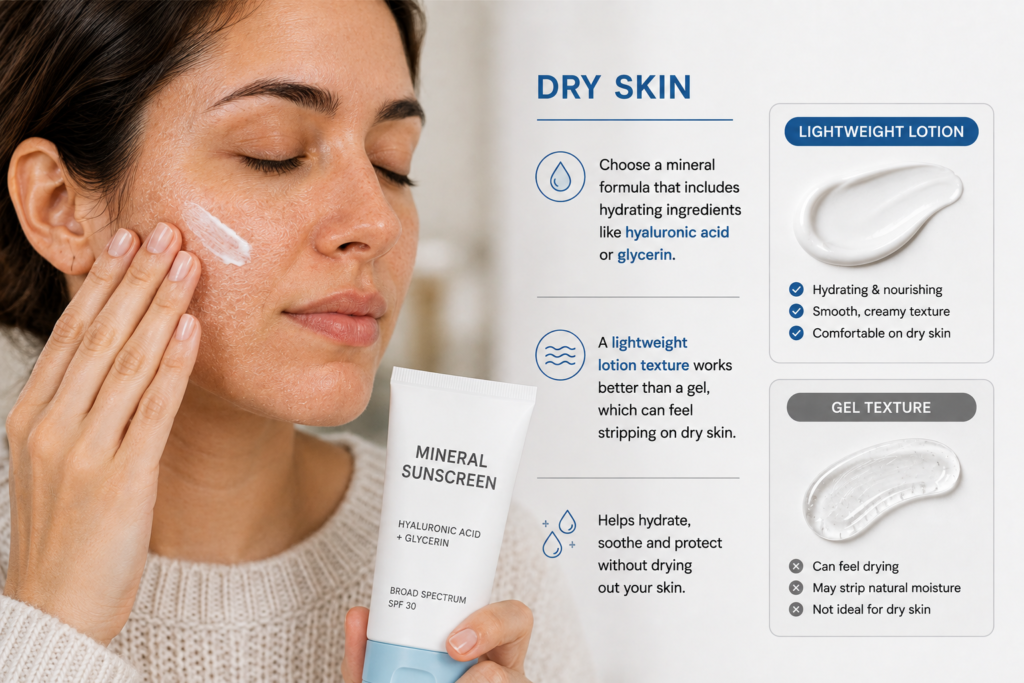
- Dry Skin Choose a mineral formula that includes hydrating ingredients like hyaluronic acid or glycerin. A lightweight lotion texture works better than a gel, which can feel stripping on dry skin.
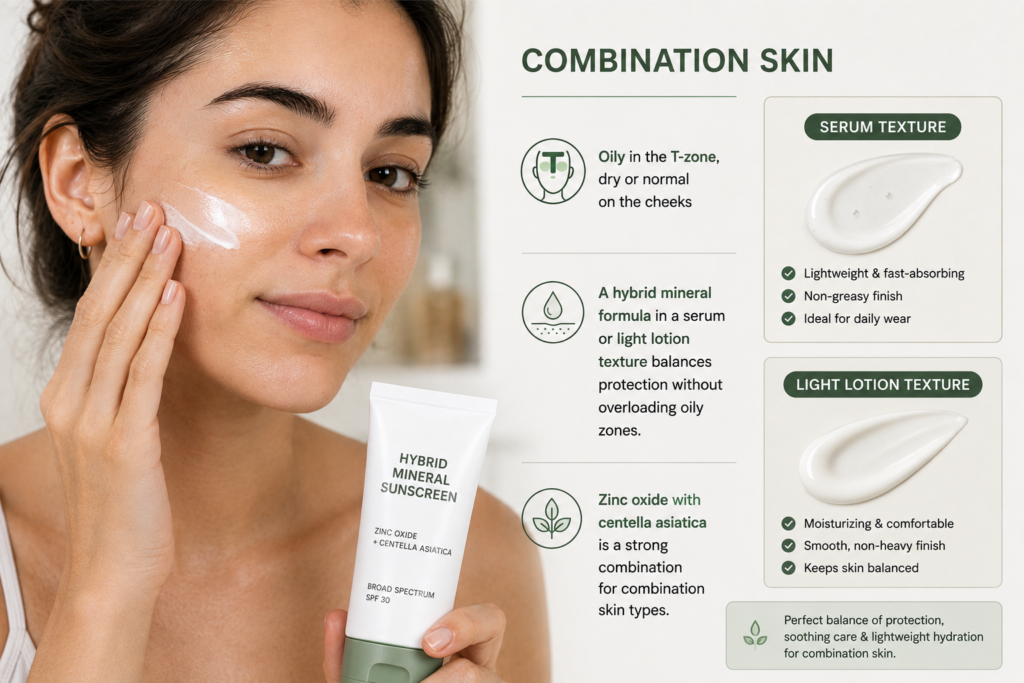
- Combination Skin A hybrid mineral formula in a serum or light lotion texture balances protection without overloading oily zones. Zinc oxide with centella asiatica is a strong combination for combination skin types.
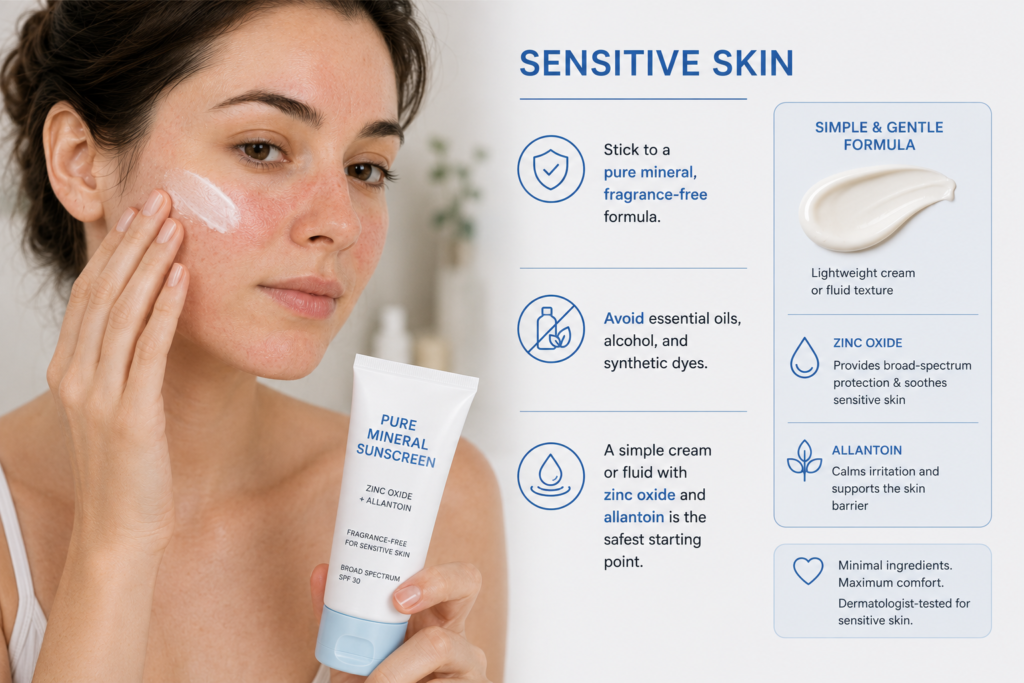
- Sensitive Skin Stick to a pure mineral, fragrance-free formula. Avoid essential oils, alcohol, and synthetic dyes. A simple cream or fluid with zinc oxide and allantoin is the safest starting point.
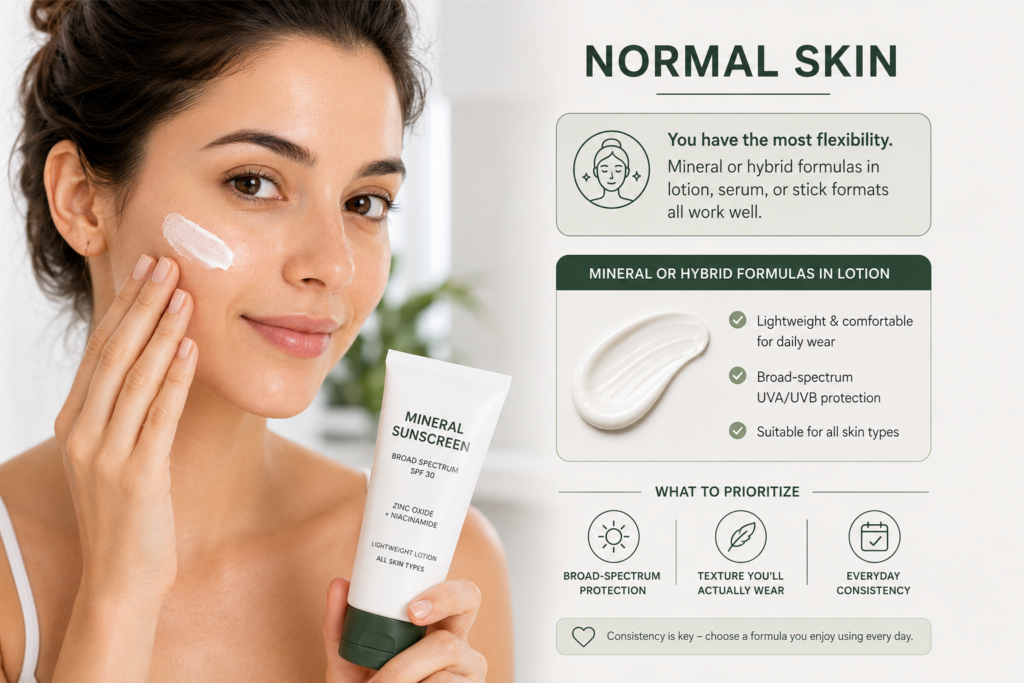
- Normal Skin You have the most flexibility. Mineral or hybrid formulas in lotion, serum, or stick formats all work well. Prioritize broad-spectrum protection and a texture you will actually wear every day.
- How to Choose the Right Non-Comedogenic Sunscreen
Shopping for sunscreen feels overwhelming with hundreds of options competing for your attention. Use this checklist to cut through the noise fast.
What to Look For:
- Active ingredient is zinc oxide, titanium dioxide, or both
- SPF 30 at minimum — SPF 50 for daily outdoor use
- Labeled “broad spectrum” for both UVA and UVB protection
- Oil-free formula for oily or combination skin
- Fragrance-free for sensitive or reactive skin
- Water-resistant (80 minutes) if you sweat or spend time outdoors
What to Avoid Immediately:
- Any sunscreen with coconut oil in the first five ingredients
- Spray sunscreens with high alcohol content — they dry out skin and trigger rebound oil production
- Products that combine sunscreen, moisturizer, and foundation — they dilute SPF effectiveness
- Synthetic fragrance if you have rosacea or easily irritated skin
- Body sunscreens on your face — they contain heavier emollients formulated for thicker skin
- Common Sunscreen Myths You Need to Stop Believing
- Myth #1: “Sunscreen causes acne.”
- The truth: Poorly formulated sunscreen causes acne. The right non-comedogenic mineral formula will not break you out. In fact, daily SPF use prevents UV-triggered hyperpigmentation and inflammation that make acne scars significantly worse over time.
- Myth #2: “I don’t need sunscreen on cloudy days.”
- The truth: Up to 80% of UV radiation passes through clouds. Post-inflammatory hyperpigmentation — those stubborn dark spots acne leaves behind — worsens dramatically without daily SPF, even in winter.
- Myth #3: “Mineral sunscreen leaves a white cast, so it doesn’t work for darker skin tones.”
- The truth: Newer micronized zinc oxide formulas eliminate the white cast almost entirely. Many brands now offer tinted mineral options developed specifically for medium and deeper skin tones. The technology has caught up with the need.
- Myth #4: “The SPF in my foundation is enough.”
- The truth: You would need to apply seven times the normal amount of foundation to reach the SPF level printed on the label. Always wear a dedicated sunscreen underneath your makeup — every single morning.
- Myth #5: “Applying sunscreen once in the morning is enough.”
- The truth: Sunscreen breaks down with UV exposure. Reapply every two hours when outdoors, and immediately after sweating or swimming — regardless of the SPF number on the label.
- How to Add Non-Comedogenic Sunscreen to Your Skincare Routine
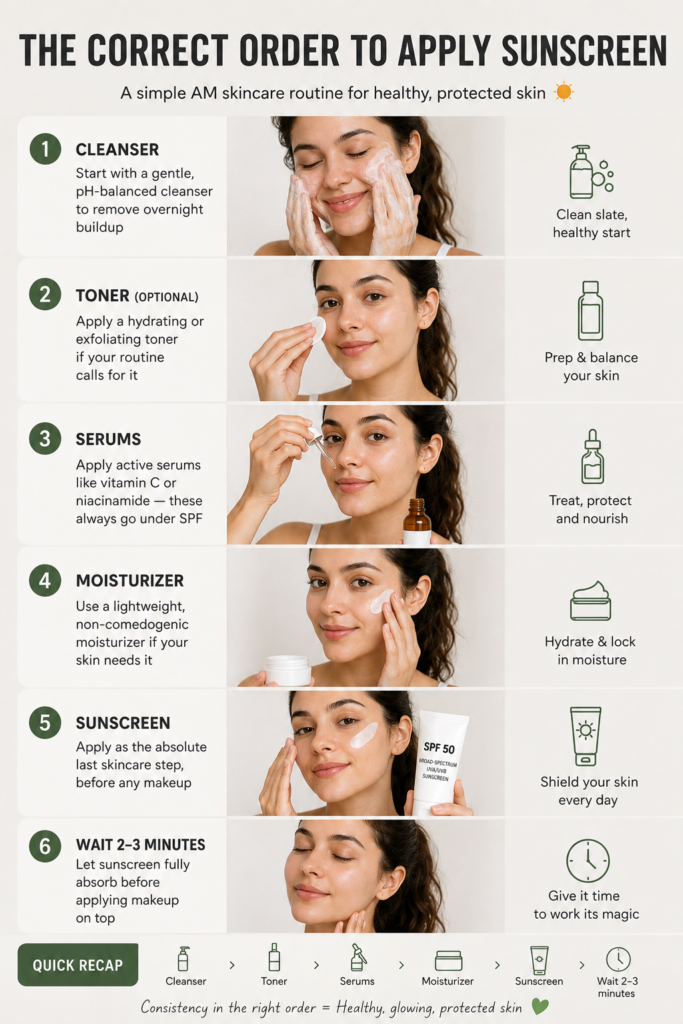
Placement matters. Applying sunscreen at the wrong step reduces its effectiveness and causes pilling or uneven coverage.
Your Morning Routine Order
- Cleanser — Start with a gentle, pH-balanced cleanser to remove overnight buildup
- Toner (optional) — Apply a hydrating or exfoliating toner if your routine calls for it
- Serums — Apply active serums like vitamin C or niacinamide — these always go under SPF
- Moisturizer — Use a lightweight, non-comedogenic moisturizer if your skin needs it
- Sunscreen — Apply as the absolute last skincare step, before any makeup
- Wait 2–3 minutes — Let sunscreen fully absorb before applying makeup on top
How Much Sunscreen to Actually Apply
The standard recommendation is two milligrams per square centimeter of skin. For the face, this equals roughly a nickel-sized amount — about one-quarter teaspoon. Most people apply far less than this, which significantly reduces the real-world protection they receive.
Reapplication Tips for Acne-Prone Skin
Reapplying over makeup without ruining your look is a genuine challenge. These approaches work best:
- Use a powder SPF as a midday top-up over makeup — easy, fast, and non-greasy
- Try a setting spray with SPF to refresh protection without wiping off coverage
- Blot oil first with a clean tissue, then apply a lightweight SPF stick directly over makeup
Frequently Asked Questions
- Is zinc oxide sunscreen safe for acne-prone skin?
Yes — zinc oxide is one of the safest and most effective options available for acne-prone skin. It delivers broad-spectrum UV protection, does not penetrate your pores, and carries natural anti-inflammatory properties that reduce redness and irritation associated with active breakouts.
- Can non-comedogenic sunscreen still cause breakouts?
It depends on your specific skin chemistry. Because “non-comedogenic” is an unregulated label, some products carrying this claim still contain problematic ingredients. Always read the full ingredient list, patch test on your jaw before full-face use, and give any new sunscreen two to three weeks before drawing conclusions.
- What SPF should I use if I have acne?
SPF 30 works for daily indoor use. If you spend time outdoors or live in a high-UV state like Florida, California, or Texas, go with SPF 50 and reapply every two hours. A higher SPF number does not mean you can apply less product — the amount you apply matters just as much as the number.
- Do I need sunscreen if I work indoors all day?
Yes. UVA rays — the ones responsible for skin aging and hyperpigmentation — penetrate glass windows. If you sit near a window at home or at the office, you receive meaningful UV exposure throughout your workday. A lightweight SPF 30 mineral sunscreen every morning protects you regardless of whether you step outside.
- What is the best non-comedogenic sunscreen for deeper skin tones?
Look for micronized zinc oxide formulas with a tinted or transparent finish — they provide full protection without leaving a white or gray cast. Also prioritize formulas that include iron oxide, which blocks visible light and helps prevent the worsening of hyperpigmentation that affects deeper skin tones more significantly.
- Can I use body sunscreen on my face?
No. Body sunscreens are formulated for thicker, less reactive skin and often contain heavy emollients and fragrances that clog facial pores. Always use a dedicated facial sunscreen that has been specifically tested for face use.
The Bottom Line
Skipping sunscreen because it breaks you out is one of the most common — and most damaging — skincare mistakes people make. Every day without SPF worsens acne scars, triggers new inflammation, and accelerates skin aging in ways that take years to reverse.
The solution is not to avoid sunscreen. It is to find the right sunscreen.
Look for a mineral formula with zinc oxide as the active ingredient, scan for pore-clogging ingredients in the inactive list, and choose a texture that matches your skin type. Apply enough of it, reapply during the day, and your skin will thank you in ways that go far beyond just sun protection.
Your skin deserves both protection and clarity. With the right non-comedogenic sunscreen, you do not have to choose between the two.