
If you’ve ever stepped outside on a humid morning with perfectly smooth hair, only to catch your reflection an hour later and wonder what happened, you already know how frustrating frizz can be. It doesn’t matter how much time you spent blow-drying or how expensive your shampoo is — without the right leave-in conditioner, humidity, friction, and dryness will always find a way in.
The good news is that frizz isn’t a personality trait of your hair. It’s usually a sign that your strands are missing moisture, and a good leave-in conditioner is one of the simplest ways to fix that. In this guide, we’re breaking down the best leave-in conditioner for frizzy hair, along with top picks for wavy, curly, and dry hair types, so you can find the formula that actually matches what your hair needs — not just what’s trending.
By the end, you’ll know exactly what to look for on an ingredient label, which products are worth the splurge, and how to apply leave-in conditioner the right way so it works with your hair instead of weighing it down.
Why Frizzy Hair Happens in the First Place
Frizz isn’t random. It happens when the outer layer of your hair, called the cuticle, is raised instead of lying flat. When the cuticle is lifted, moisture from the air sneaks in and causes each strand to swell unevenly, which is what creates that fuzzy, undefined texture.
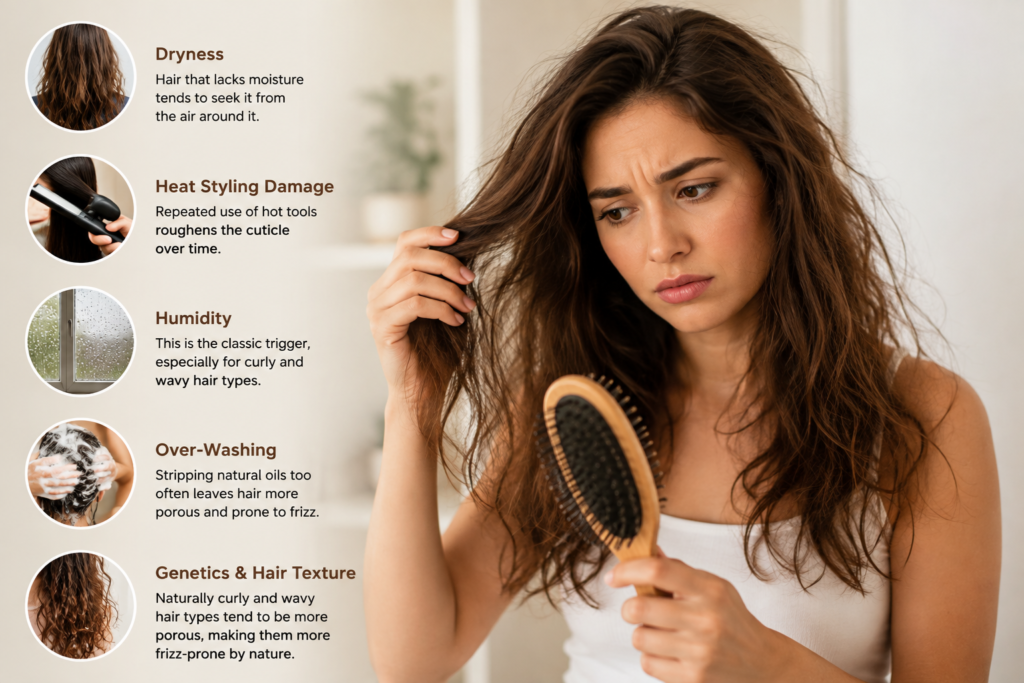
A few common culprits behind frizz include:
- Dryness and dehydration — hair that lacks moisture tends to seek it from the air around it
- Heat styling damage — repeated use of blow dryers, flat irons, or curling wands roughens the cuticle over time
- Humidity — this is the classic trigger, especially for curly and wavy hair types
- Over-washing or harsh shampoos — stripping natural oils too often leaves hair more porous and prone to frizz
- Genetics and hair texture — naturally curly and wavy hair types tend to be more porous, which makes them more frizz-prone by nature
Understanding the root cause matters because it shapes what kind of leave-in conditioner will actually help. Someone with fine, straight hair dealing with occasional flyaways needs something very different from someone with coily or curly hair trying to fight all-day frizz.
What to Look for in a Leave-In Conditioner
Not every leave-in conditioner is built the same way, and reading the label can save you from buying something that looks promising but does very little. Here’s what actually matters.
Moisturizing Ingredients
Look for humectants like glycerin, aloe vera, and hyaluronic acid, which draw moisture into the hair shaft. These are especially helpful for dry, frizz-prone strands that need a hydration boost rather than just a smoothing effect.
Smoothing and Sealing Agents
Lightweight oils such as argan oil, jojoba oil, or squalane help seal the cuticle after moisture is added, which locks in smoothness and blocks excess humidity from getting in. This combination of “hydrate first, seal second” is the foundation of most effective anti-frizz formulas.
Heat Protection
If you regularly use hot tools, a leave-in conditioner with built-in heat protection pulls double duty by softening hair and shielding it from thermal damage in one step.
Weight and Formula Type
Thicker creams tend to work best for coarse, curly, or very dry hair, while lightweight sprays or milks are usually a better match for fine or wavy hair that frizzes easily but doesn’t need heavy moisture. Choosing the wrong weight is one of the most common reasons people feel like their leave-in conditioner isn’t working.
The 10 Best Leave-In Conditioners for Frizzy Hair
Here’s a rundown of standout options, organized by hair type and specific frizz concerns.
1. Best Overall: OUAI Leave-In Conditioner
The OUAI Leave-In Conditioner has built a loyal following for good reason. It’s formulated with keratin, shea butter, and a proprietary blend of oils that smooth the hair shaft without leaving behind a greasy residue. It works well across most hair types, which makes it a solid starting point if you’re not sure what your hair actually needs yet.
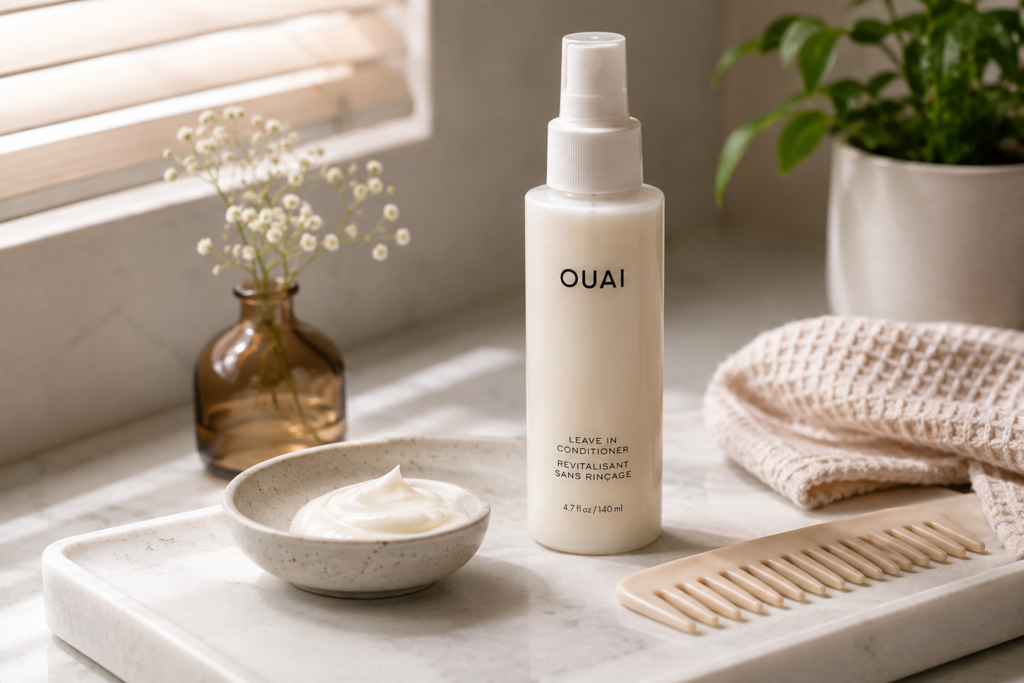
Best for: Straight to wavy hair dealing with everyday frizz and flyaways
2. Best for Curly Hair: A Rich, Curl-Defining Cream
For coily and curly textures, a thicker, cream-based leave-in makes a noticeable difference. Formulas built around shea butter and botanical oils help define curl clumps while controlling frizz, without the crunchy or stiff feeling some gels leave behind.
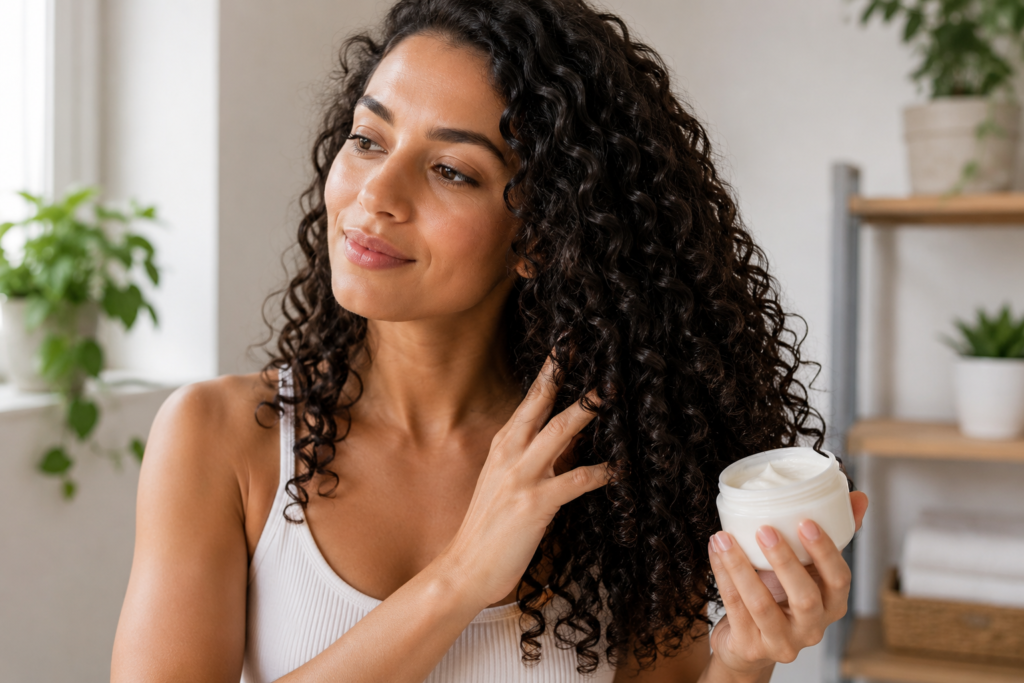
Best for: Type 3 and 4 curls that need both definition and moisture
3. Best Leave-In Conditioner for Wavy Hair
Wavy hair often sits in a tricky middle ground — too much product weighs waves down, but too little leaves them frizzy and shapeless. A lightweight, whipped leave-in conditioner tends to strike the right balance, enhancing natural wave pattern without flattening it.

Best for: Type 2 waves prone to frizz in humidity
4. Best for Dry, Damaged Hair
If your frizz comes paired with breakage, split ends, or a rough texture, a deeply nourishing leave-in built around bond-repairing ingredients and intensive moisturizers can help restore softness while reducing frizz at the same time.
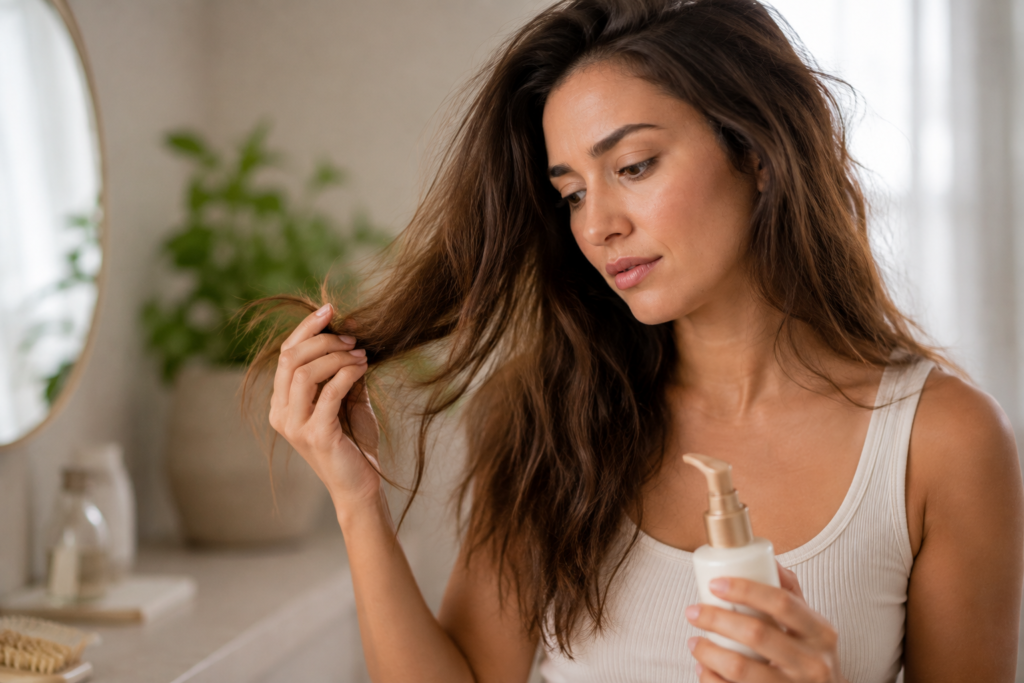
Best for: Chemically treated, color-treated, or heat-damaged hair
5. Best Lightweight Option for Fine Hair
Fine hair frizzes just as easily as thicker hair, but it can’t handle heavy creams without looking limp. A lightweight leave-in mist or milk delivers just enough moisture and smoothing power without sacrificing volume.
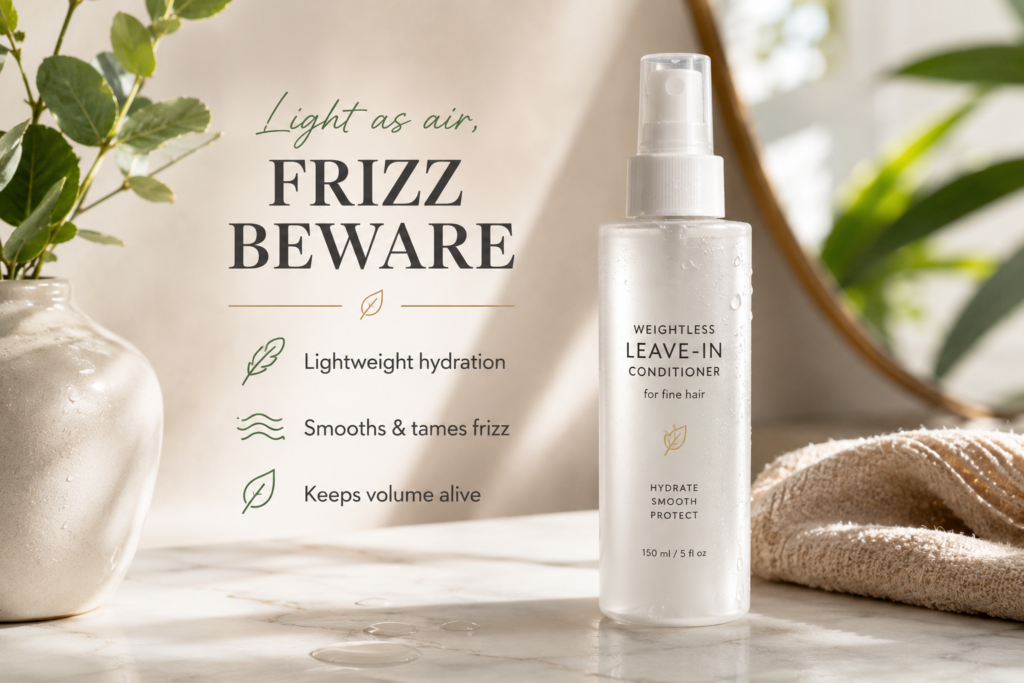
Best for: Fine, straight to wavy hair prone to flyaways
6. Best Drugstore Pick
You don’t need a luxury price tag to get real results. Several drugstore leave-in conditioners use effective, dermatologist-recognized ingredients like glycerin and panthenol at a fraction of the cost of prestige brands, making them a smart everyday option.
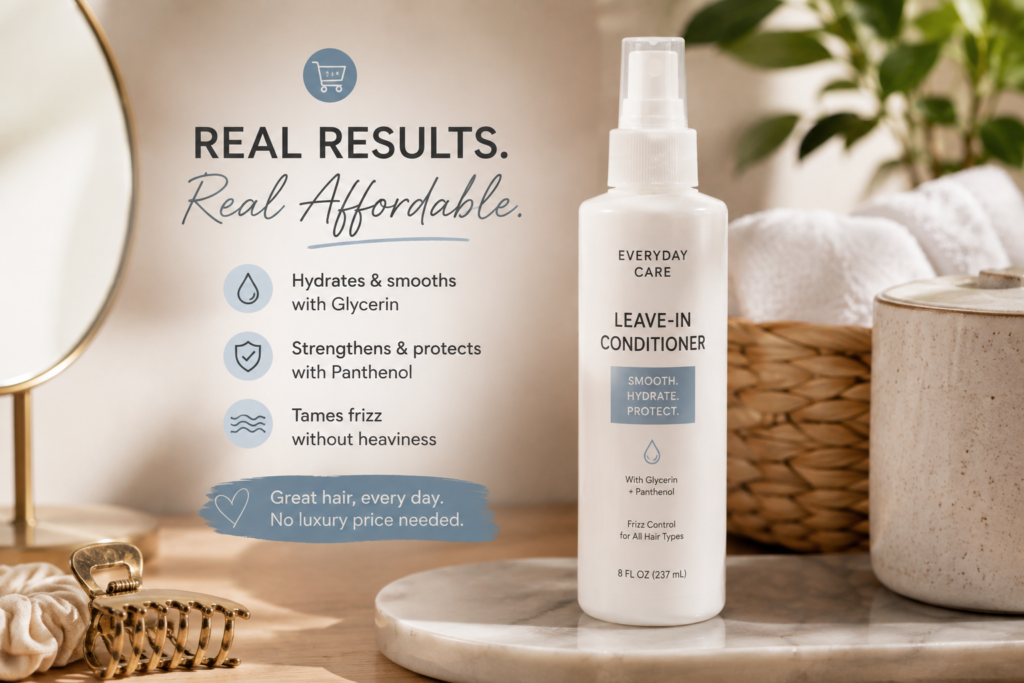
Best for: Anyone testing out a leave-in conditioner for the first time
7. Best for Humidity Control
Formulas with anti-humectant technology are specifically designed to block moisture from the air rather than just adding moisture to your hair. These are worth seeking out if you live somewhere humid or travel frequently to humid climates.
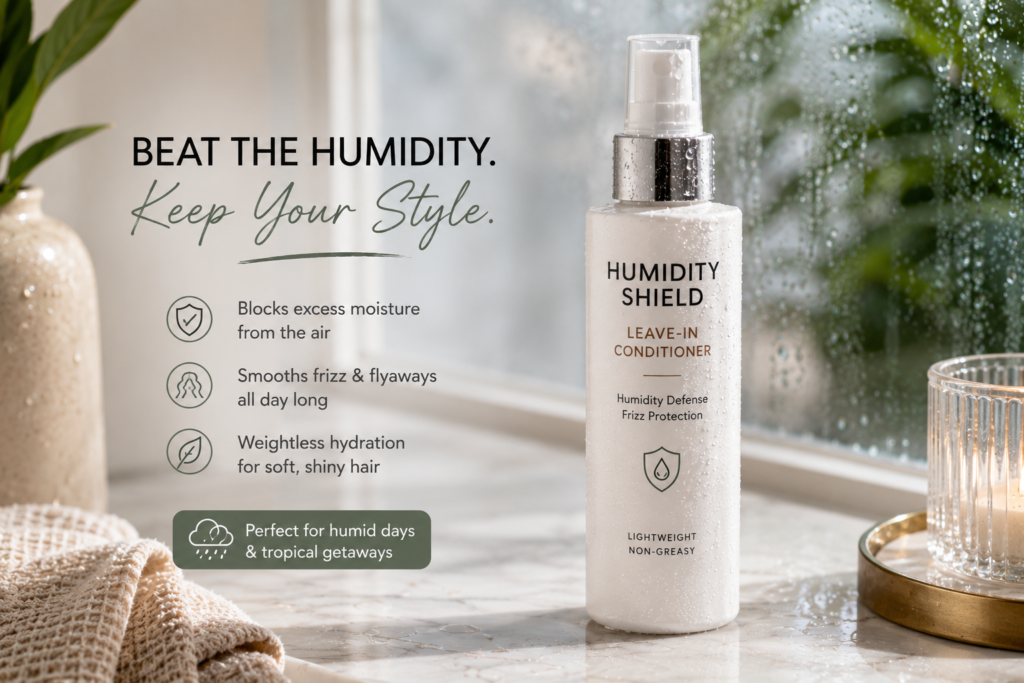
Best for: Frizz that returns within hours of styling
8. Best for Heat Styling
A leave-in conditioner that doubles as heat protectant simplifies your routine and reduces frizz caused by styling damage. Look for formulas that list a specific heat-protection temperature range on the label.
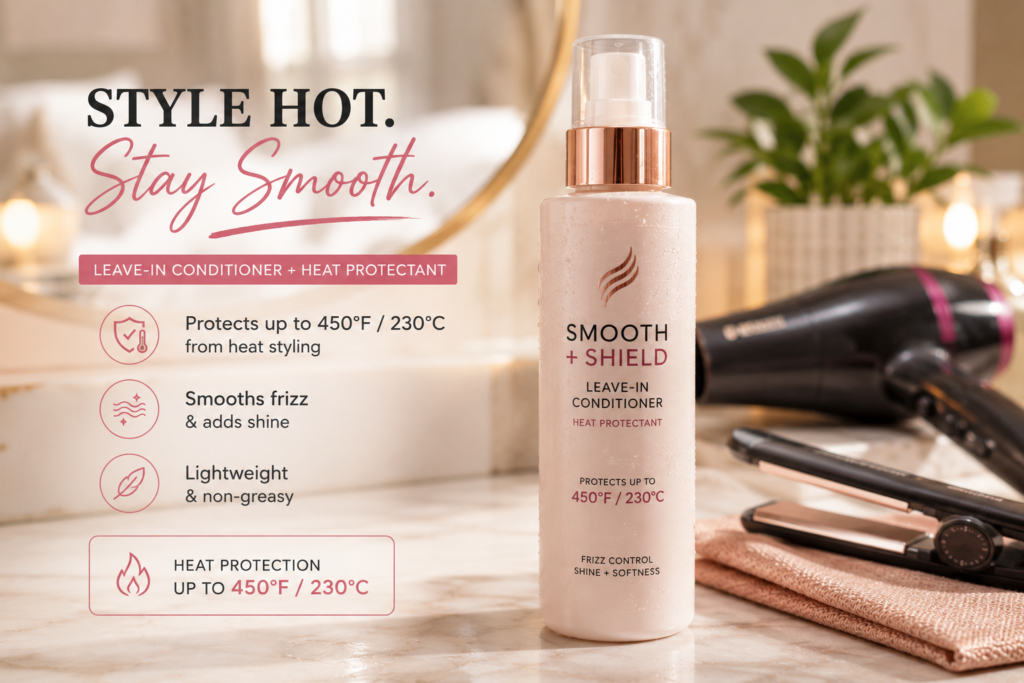
Best for: Anyone who blow-dries or uses hot tools regularly
9. Best Natural or Clean Beauty Option
For those who prefer minimal ingredient lists, clean beauty leave-in conditioners built around aloe vera, botanical oils, and plant-derived proteins can still deliver strong frizz control without synthetic silicones.
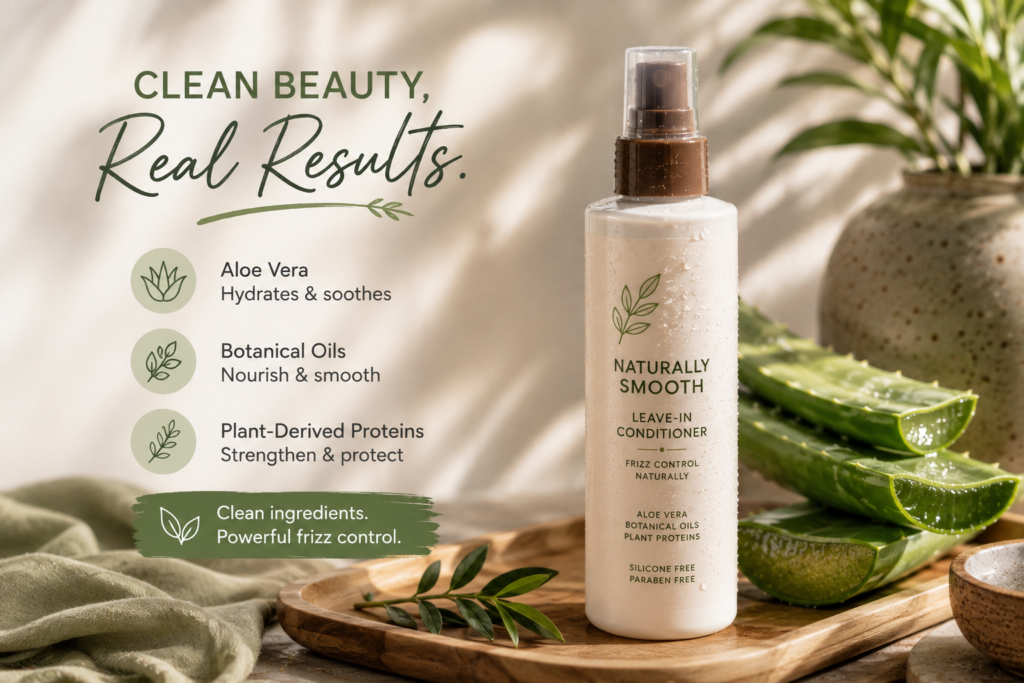
Best for: Sensitive scalps or those avoiding certain synthetic ingredients
10. Best Multi-Tasking Formula
Some leave-in conditioners go beyond frizz control, offering added benefits like UV protection, split-end repair, or scalp care. These are worth considering if you want to simplify your routine into fewer steps.
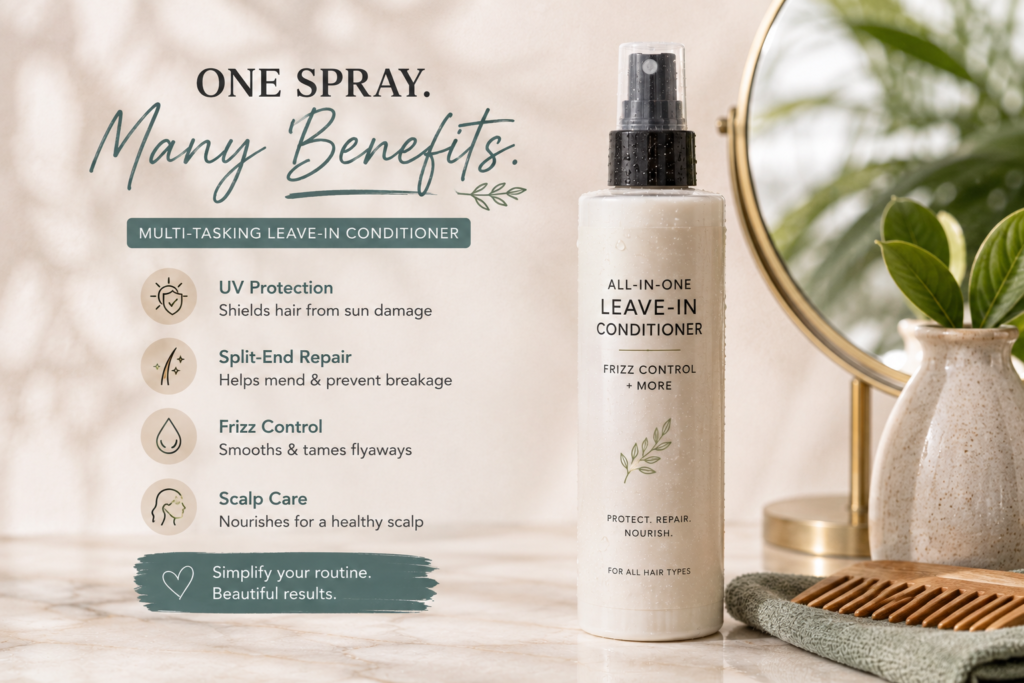
Best for: Anyone looking to streamline their hair care routine
How to Apply Leave-In Conditioner for Maximum Frizz Control
Even the best leave-in conditioner for frizzy hair won’t work well if it’s applied incorrectly. Follow this simple process for the best results:
- Apply to damp, not soaking wet, hair. Excess water dilutes the product and makes it harder for your hair to absorb it properly.
- Focus on mid-lengths and ends. These areas are typically the oldest and driest parts of your hair, and they need the most moisture.
- Use a small amount and build up. It’s easier to add more product than to remove excess from over-application.
- Comb or finger-detangle after applying. This helps distribute the product evenly and reduces breakage.
- Let it work before adding other products. Give the leave-in conditioner a minute to absorb before layering on gel, mousse, or heat protectant.
Frequently Asked Questions
- What is the best leave-in conditioner for frizzy hair?
The best option depends on your specific hair type, but formulas that combine humectants like glycerin with sealing oils tend to work best across most frizz-prone hair types, whether your hair is straight, wavy, or curly.
- Can leave-in conditioner make hair greasy?
Yes, if you use too much or choose a formula that’s too heavy for your hair type. Fine hair generally does better with lightweight sprays or milks, while thicker or curlier hair can typically handle richer creams.
- How often should I use leave-in conditioner?
Most people benefit from using it every time they wash their hair, and some also reapply on second or third-day hair to refresh moisture and control frizz between washes.
- Is leave-in conditioner the same as regular conditioner?
No. Regular conditioner is rinsed out and primarily focuses on detangling, while leave-in conditioner stays in the hair to provide ongoing moisture, frizz control, and protection throughout the day.
- Does leave-in conditioner work for all hair types?
Yes, but the formula matters. Curly and coily hair generally needs richer, cream-based leave-in conditioners, while fine or straight hair usually does better with lightweight sprays or milks.
Final Thoughts
Frizz control isn’t about finding one miracle product — it’s about matching the right formula to your specific hair type and frizz triggers. Whether you’re drawn to a cult-favorite like OUAI leave-in conditioner or a richer cream built for curls, the real key is consistency: apply it correctly, use the right amount, and give your hair time to adjust.
Ready to finally get ahead of frizz instead of chasing it all day? Pick one product from this list that matches your hair type and texture, and give it at least two to three weeks before judging the results — real change in hair health takes a little patience.