
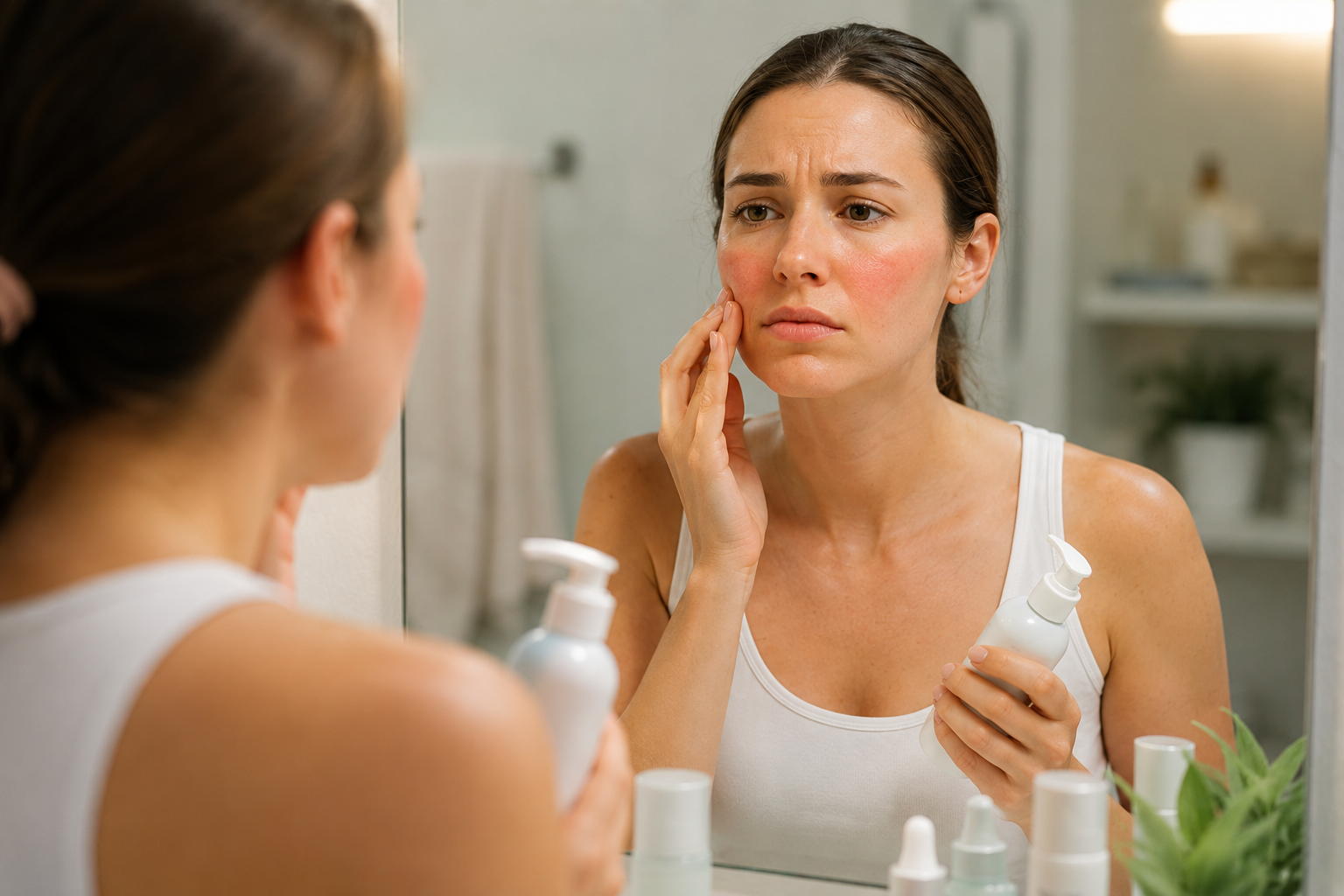
If your face has ever gone red, tight, or itchy after washing it, you already know the frustration. You bought the cleanser that promised to be gentle. The bottle said “for sensitive skin” right on the front. And yet, twenty minutes later, your cheeks are stinging and you’re wondering what you did wrong.
You didn’t do anything wrong. A huge number of cleansers marketed toward sensitive skin still contain ingredients that trigger reactions in people who actually have reactive, easily irritated skin. The label is often more marketing than science.
This guide walks through what actually makes a cleanser safe for sensitive skin, which ingredients to avoid, a handful of specific product picks worth trying, and how to build the rest of your sensitive skin care routine around that first step. By the end, you’ll know exactly what to look for the next time you’re standing in the skincare aisle (or scrolling through ingredient lists online).
What Makes a Cleanser Actually Good for Sensitive Skin
Sensitive skin isn’t one single condition. It can show up as redness, dryness, a burning sensation, small bumps, or just a general feeling that your skin is “reactive” to almost everything you put on it. Sometimes it’s linked to an underlying condition like rosacea or eczema. Sometimes it’s just how your skin has always been.
Regardless of the cause, a good cleanser for sensitive skin needs to do three things well:
It should clean without stripping. Your skin has a natural barrier made of lipids and oils that keep moisture in and irritants out. A cleanser that leaves your face feeling squeaky clean is usually stripping that barrier along with the dirt.
It should have a low or neutral pH. Healthy skin sits around 4.5 to 5.5 on the pH scale. Traditional bar soap is way more alkaline than that, often above 9, which disrupts the skin barrier over time.
It should skip common irritants. That means no sulfates like sodium lauryl sulfate, minimal fragrance, and no harsh exfoliating acids in a daily cleanser.
If a cleanser checks those three boxes, you’re already ahead of most of what’s on store shelves.
Ingredients to Avoid in a Sensitive Skin Cleanser
Reading an ingredient label can feel like decoding a foreign language, so here’s a shortlist of what tends to cause trouble.
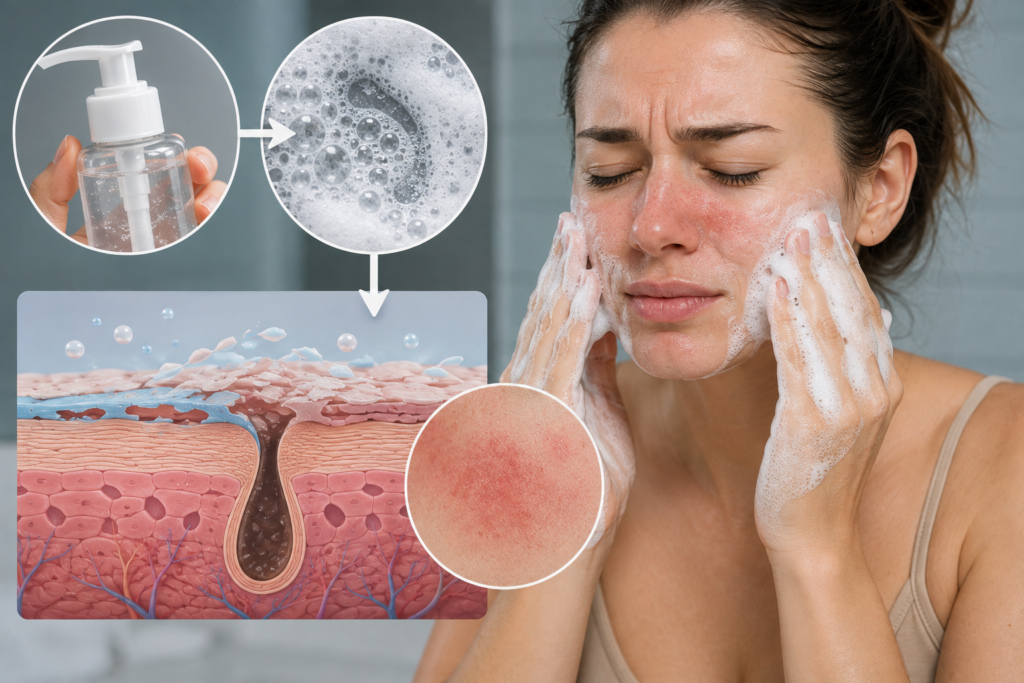
Sulfates (SLS and SLES)
Sodium lauryl sulfate and sodium laureth sulfate are the ingredients responsible for that foamy lather you might associate with a “deep clean.” They’re effective at cutting through oil, but they’re also known to strip the skin barrier and cause dryness and irritation, especially with daily use.
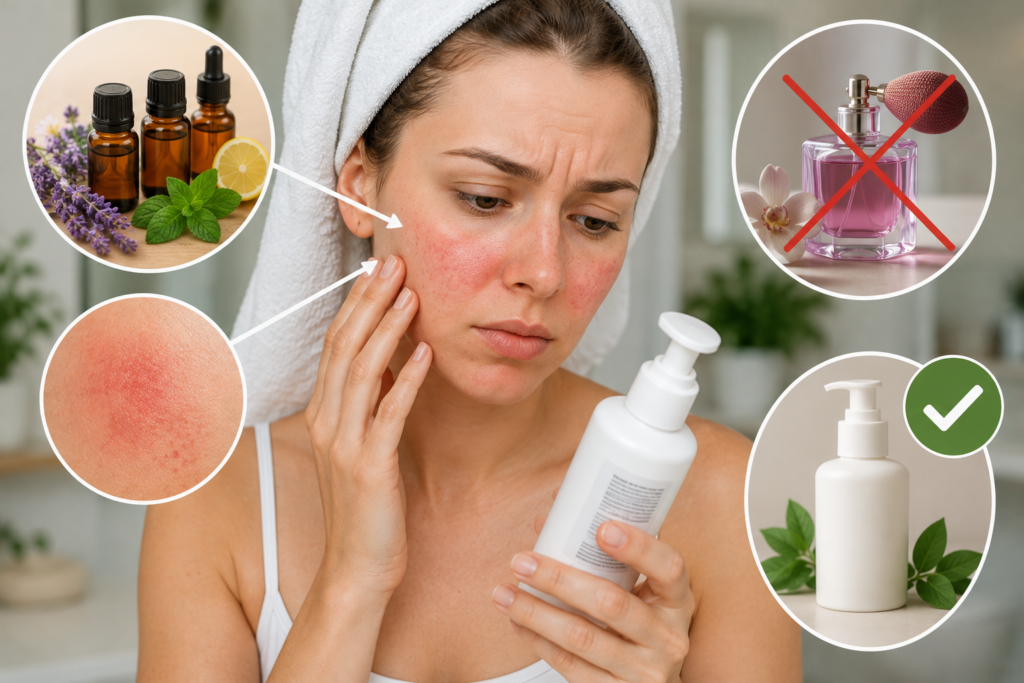
Fragrance and Essential Oils
Fragrance is one of the most common causes of contact dermatitis. Even “natural” fragrance from essential oils like citrus, lavender, or peppermint can trigger a reaction if your skin is already compromised. Look for “fragrance-free” rather than “unscented,” since unscented products sometimes use masking fragrances to cover other smells.
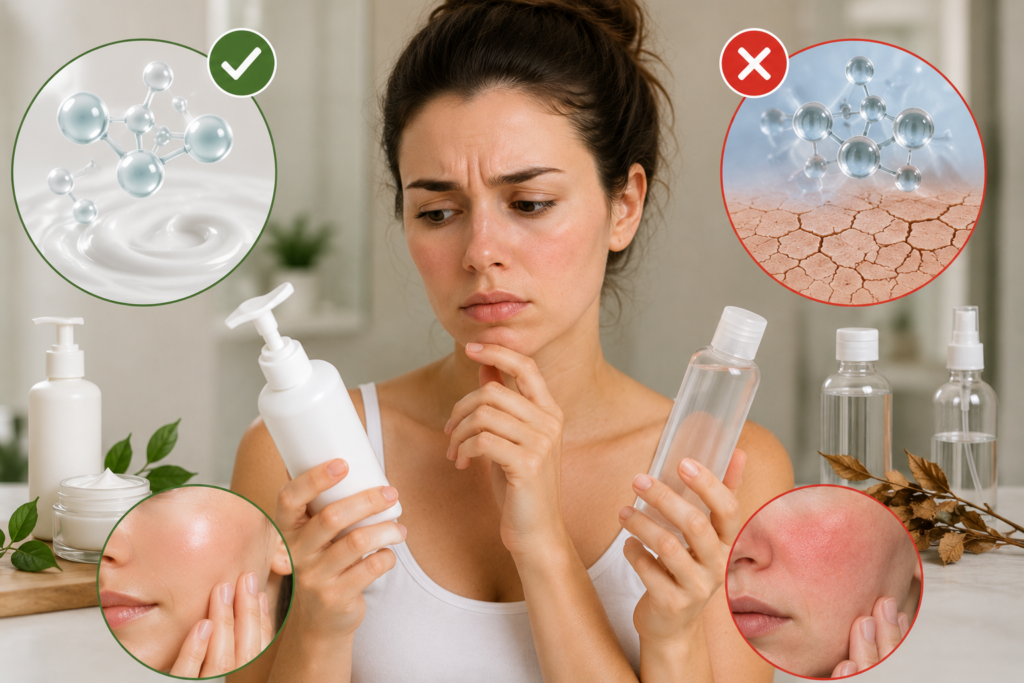
Alcohol (the drying kind)
Not all alcohols are bad. Fatty alcohols like cetyl alcohol or stearyl alcohol are actually moisturizing. But denatured alcohol or SD alcohol, often added to give a product a lightweight, quick-drying feel, can be dehydrating and irritating for reactive skin.
Physical Exfoliants and Harsh Acids
A cleanser with built-in scrub beads or a high concentration of glycolic or salicylic acid isn’t the place to exfoliate if your skin is sensitive. Save exfoliation for a separate, carefully dosed step later in your sensitive skin care routine, not your everyday wash.
Ingredients That Actually Help
Once you know what to avoid, it’s easier to spot what’s worth reaching for.
Ceramides help rebuild and reinforce the skin barrier, which is often compromised in sensitive skin types. Glycerin and hyaluronic acid pull moisture into the skin rather than pulling it out. Niacinamide can calm redness and support the barrier at the same time. Colloidal oatmeal is a classic for a reason. It’s been used for decades to soothe itching and irritation, and it’s gentle enough for daily use.
If you see these on an ingredient list, especially near the top, that’s a good sign the formula was built with sensitive skin in mind rather than just labeled for it.
Best Types of Cleansers for Sensitive Skin
Not every cleanser format works the same way on reactive skin. Here’s how the main categories stack up.
Cream and Lotion Cleansers
These are usually the safest starting point. They clean without foaming much, which means they’re less likely to strip natural oils. They tend to leave a slightly hydrating film behind, which is exactly what compromised skin needs.
Micellar Water
Micellar water uses tiny oil molecules suspended in soft water to lift away makeup and dirt without rubbing or rinsing. It’s a solid option for sensitive skin on busy days or as a first cleanse before a proper wash, though it shouldn’t always replace rinsing with water afterward, since some formulas can leave a residue if not removed.
Oil Cleansers
Oil cleansers dissolve makeup, sunscreen, and sebum using oils that mimic what your skin already produces. They can be surprisingly gentle for sensitive skin, though the texture takes some getting used to if you’ve never tried one before.
Gel Cleansers (Use With Caution)
Gel formulas can be great for oily, sensitive skin, but check the ingredient list closely. Some gel cleansers rely on sulfates for their clear, gel-like texture, so this category has more range in quality than the others.
How to Build a Sensitive Skin Care Routine Around Your Cleanser
A cleanser is only one piece of the puzzle. Here’s a simple skincare routine for sensitive skin that won’t overwhelm your barrier.
Morning: Rinse with lukewarm water or use a gentle cream cleanser, follow with a fragrance-free moisturizer, then apply a mineral sunscreen with zinc oxide or titanium dioxide.
Evening: Cleanse with your chosen gentle cleanser, apply a barrier-repair moisturizer or one with ceramides, and skip active ingredients like retinol or acids unless your skin has calmed down and can tolerate them a few times a week.
The golden rule for sensitive skin is fewer products, applied consistently, rather than a long routine with something new every week. Every time you introduce a new product, you’re introducing a new variable your skin has to adjust to.
How to Patch Test a New Cleanser
Before you commit to a full-face wash with a new product, patch test it. Apply a small amount to your inner forearm or behind your ear once a day for three to five days. If you don’t see redness, itching, or bumps, it’s likely safe to try on your face. This step feels tedious, but it saves you from a week of recovering from a reaction you could have caught early.
Common Mistakes That Make Sensitive Skin Worse
A few habits quietly undo the benefits of a gentle cleanser. Washing with hot water is one of the biggest culprits, since heat strips oils just as effectively as harsh surfactants do. Over-washing, meaning more than twice a day, is another. Using a washcloth or cleansing brush on sensitive skin adds friction your skin doesn’t need. And layering too many active ingredients at once, like vitamin C, retinol, and exfoliating acids all in the same routine, can overwhelm a barrier that’s already struggling.
Frequently Asked Questions
- What is the best cleanser for sensitive skin?
The best cleanser for sensitive skin is a fragrance-free, low-pH cream or lotion cleanser that contains barrier-supporting ingredients like ceramides or glycerin, without sulfates or drying alcohols.
- Should I use warm or cold water to wash sensitive skin?
Lukewarm water is best. Hot water strips natural oils and can worsen redness, while very cold water offers no real benefit and can also cause reactive skin to feel tight.
- How often should I wash sensitive skin?
Twice a day, once in the morning and once at night, is generally enough. Washing more often than that can strip your skin’s barrier and make sensitivity worse.
- Can sensitive skin use foaming cleansers?
Some foaming cleansers are fine as long as they’re sulfate-free. The issue isn’t foam itself, but the harsh surfactants that are often used to create it.
- Is micellar water enough to clean sensitive skin?
Micellar water works well for light cleansing or removing makeup, but on days with heavier sunscreen or makeup, it’s worth following up with a gentle cleanser and water to make sure everything is fully removed.
Final Thoughts
Finding the right cleanser for sensitive skin usually comes down to reading labels rather than trusting marketing claims. Look for a low-foaming, fragrance-free formula with barrier-supporting ingredients, patch test before committing, and keep the rest of your sensitive skin care routine simple. Your skin doesn’t need ten steps. It needs consistency and a handful of products that actually work with it instead of against it.
If you’ve been struggling with reactive, irritated skin, start with your cleanser first. It’s the product that touches your face most often, and getting it right makes every other step in your routine more effective.