
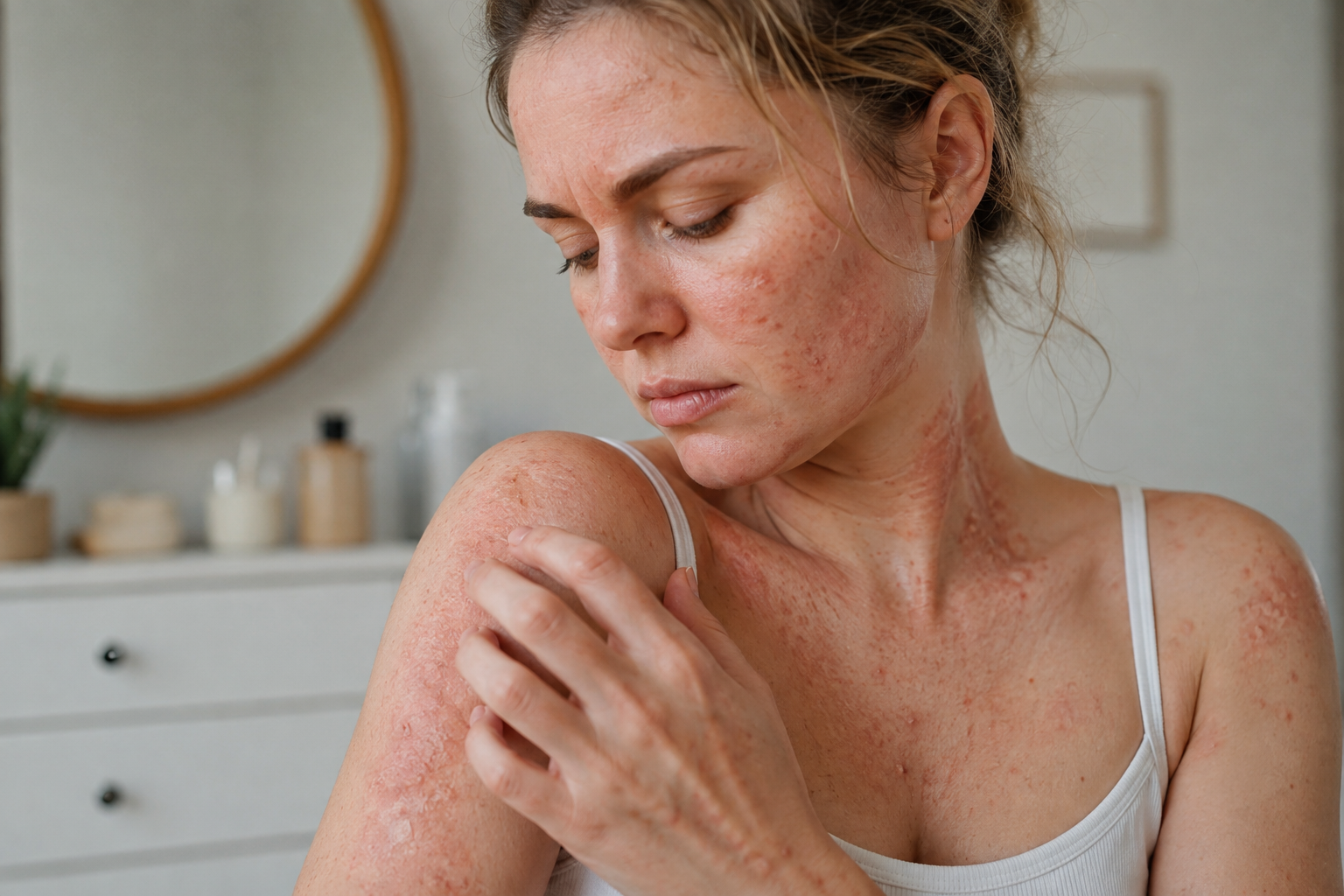
If you’ve ever woken up at 2 a.m. scratching your arms raw, you already know eczema isn’t just “dry skin.” It’s an itch that flares at the worst possible times — before a big meeting, during a heat wave, or right when you finally settle in for sleep.
Eczema affects more than 31 million people in the U.S., yet most people searching for eczema treatment still aren’t sure what’s actually causing their skin to act this way. Food? Laundry detergent? Stress? Genetics? Usually, it’s a combination.
This guide covers what eczema is, why it happens, the symptoms to watch for (including in babies), the everyday triggers behind flare-ups, and the treatments — from prescription creams to natural remedies — that actually calm irritated skin.
What Is Eczema, Exactly?
Eczema is an umbrella term for conditions that cause the skin to become inflamed, itchy, and irritated. The most common form is atopic dermatitis, a chronic condition tied to the immune system and a weakened skin barrier.
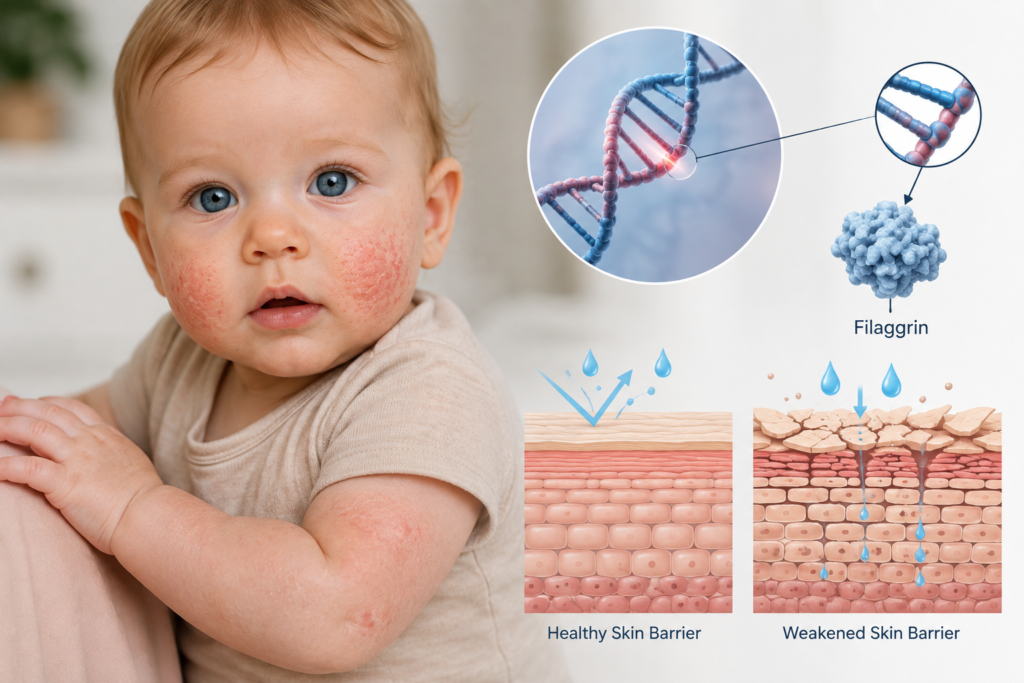
Think of healthy skin as a brick wall: skin cells are the bricks, and natural oils are the mortar holding everything together and keeping moisture in. In eczema-prone skin, that mortar is weaker, so moisture escapes easily and irritants, allergens, and bacteria get in more easily too. The result is dry, inflamed, itchy patches that can crack, weep, or thicken over time.
Eczema isn’t contagious and isn’t caused by poor hygiene. It tends to run in families and often shows up alongside asthma and seasonal allergies — a trio sometimes called the “atopic march.”
What Causes Eczema?
There’s no single answer to what causes eczema, which is part of why it’s so frustrating to manage. Most dermatologists point to a mix of the following:
Genetics and Skin Barrier Function
A major contributor is a mutation in the gene responsible for producing filaggrin, a protein that helps build and maintain the skin’s protective barrier. People with this mutation often have drier, more sensitive skin from birth, making them more prone to flare-ups.
Immune System Response
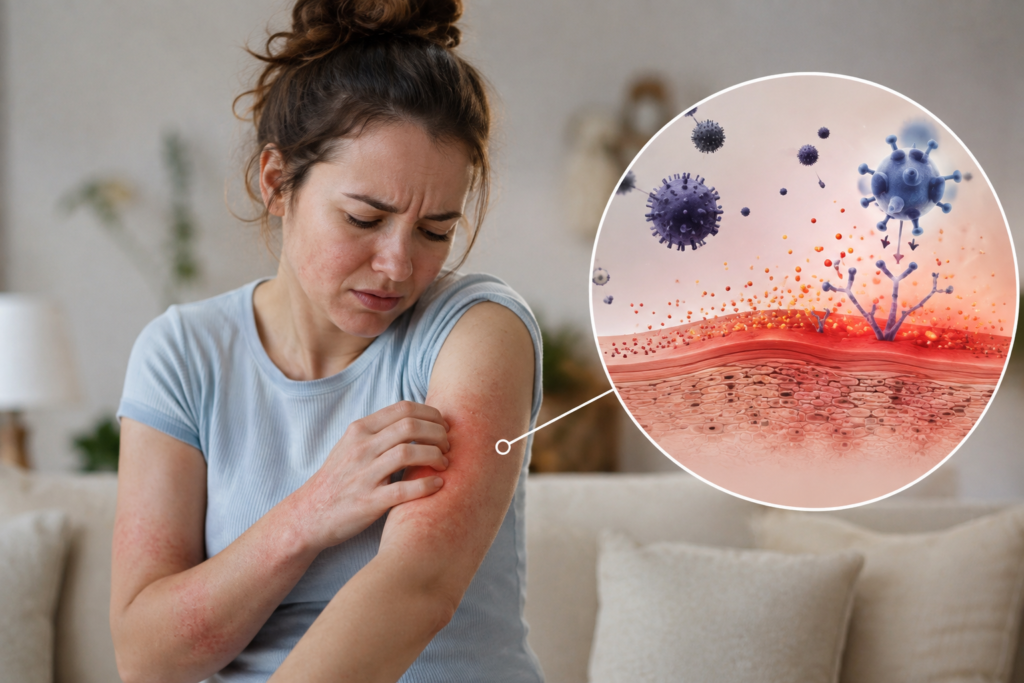
In eczema, the immune system tends to overreact to things that wouldn’t normally bother the skin, releasing inflammatory signals that cause redness, swelling, and that unmistakable itch.
Environmental Factors and Family History
Climate, pollution, hard water, and seasonal changes can all influence how often flare-ups happen — many people notice their skin worsens in dry winters or humid summers. Genetics plays a role too: if one or both parents have eczema, asthma, or hay fever, their children are statistically more likely to develop it as well.
Common Eczema Symptoms to Watch For
Eczema symptoms can look different depending on skin tone, age, and severity, but the most common signs include:
- Dry, scaly, or rough patches of skin
- Intense itching, often worse at night
- Red or brownish-gray patches (redness may be harder to see on darker skin tones, where patches often appear darker, purplish, or ashen-gray)
- Small, raised bumps that may leak fluid when scratched
- Thickened, cracked, or leathery skin from chronic scratching
- Sensitive, swollen skin that feels raw to the touch
Flare-ups commonly appear on the hands, wrists, inside the elbows, behind the knees, and on the face and neck, though they can show up anywhere.
Eczema in Babies
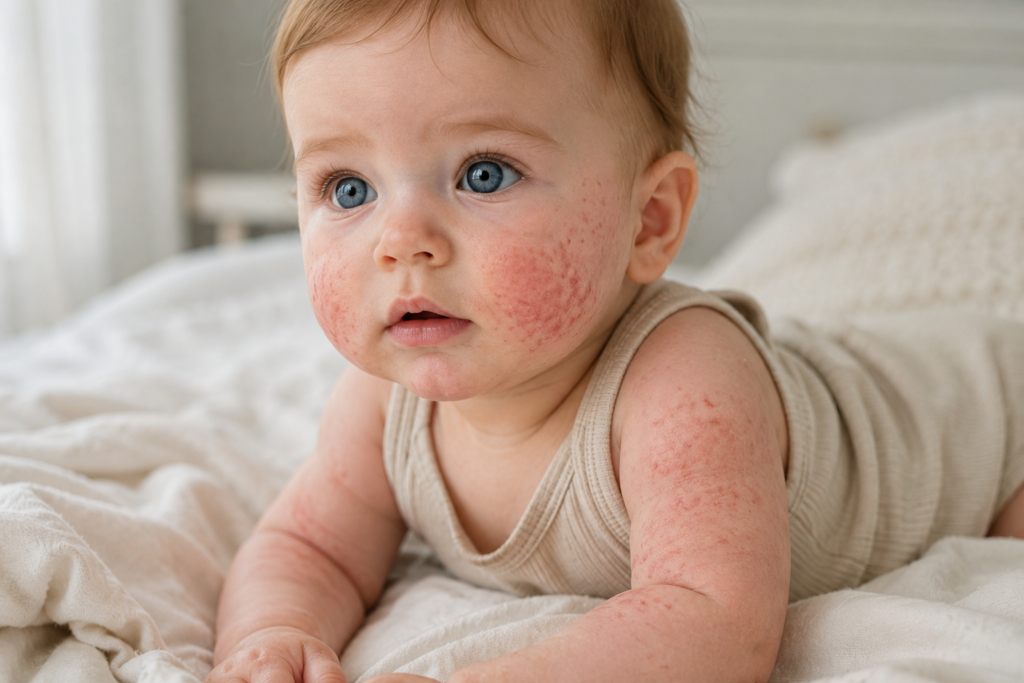
Eczema in babies often appears earlier and looks slightly different than in adults — typically on the cheeks, scalp, and outer arms and legs as red, weepy, or crusty patches. Since babies can’t describe an itch, watch for restlessness, fussiness, or poor sleep alongside the rash. Many infants outgrow eczema by age 4, though for some it persists or shifts into the elbow and knee creases later on. A pediatrician can confirm the diagnosis and recommend gentle, baby-safe treatment.
What Triggers an Eczema Flare-Up?
Understanding your personal eczema flare-up causes is one of the most powerful tools for long-term management. Common triggers include:
Foods That Trigger Eczema
For some people — especially children — certain foods can worsen symptoms. The most commonly reported culprits are dairy, eggs, nuts, soy, wheat, and acidic foods like citrus and tomatoes. Not everyone with eczema has food triggers, and cutting out entire food groups without guidance can cause nutritional gaps, especially in kids. If you suspect a food connection, work with a doctor or allergist before making major dietary changes.
Environmental and Lifestyle Triggers
- Harsh soaps and fragranced products — strip natural oils and disrupt the skin barrier
- Sweat and heat — one of the most common nighttime flare-up triggers
- Dry indoor air — especially during winter heating season
- Stress — cortisol spikes can directly worsen inflammation
- Rough fabrics — wool and synthetic fibers irritate sensitive skin
- Allergens — dust mites, pet dander, and pollen
- Hormonal shifts — some notice flare-ups tied to their menstrual cycle
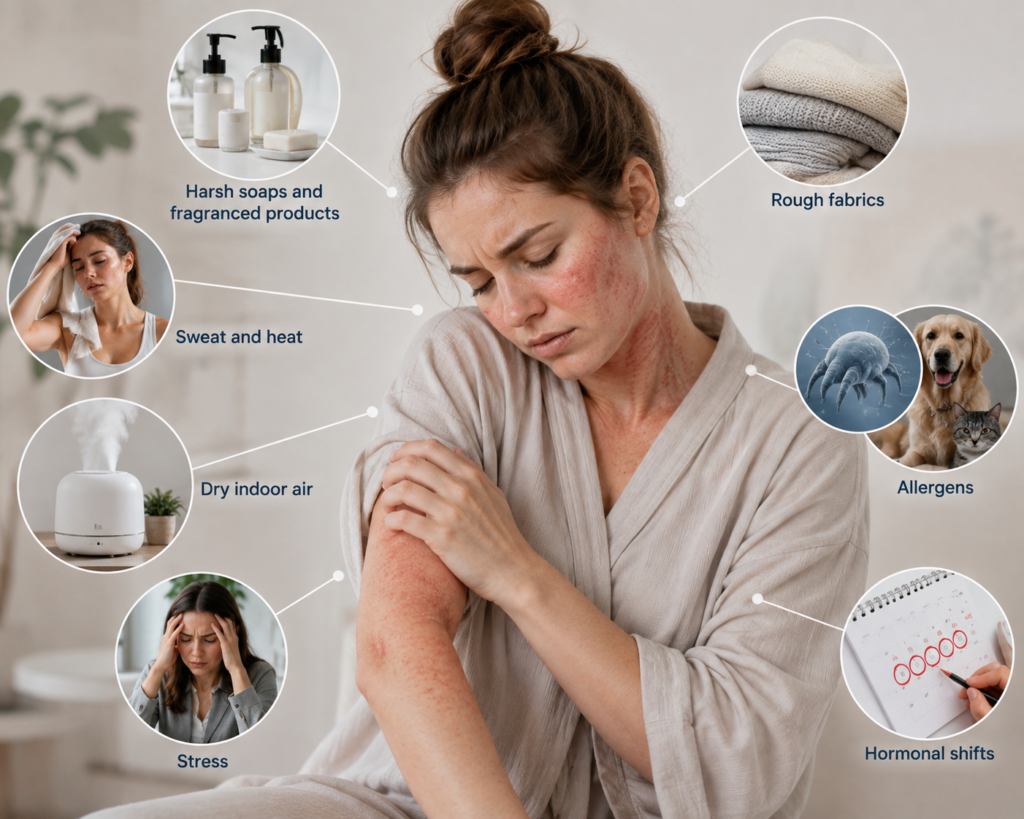
Keeping a simple flare-up journal — noting what you ate, wore, and did on bad-skin days — helps you and your doctor spot patterns and fine-tune your treatment plan.
Best Eczema Treatment Options
There’s no universal cure for eczema, but there are effective ways to manage it. The right eczema treatment usually combines daily skin care with targeted treatment during flare-ups.
Moisturizing: Your First Line of Defense
A good eczema moisturizer isn’t optional — it’s foundational. Look for thick, fragrance-free creams or ointments containing ceramides, colloidal oatmeal, or shea butter. Apply within three minutes of bathing, while skin is still damp, to lock in moisture (dermatologists call this “soak and seal”). Ointments tend to seal in moisture better than lotions, which contain more water and evaporate faster.
Best Eczema Cream Options by Severity
- Mild flare-ups: Fragrance-free moisturizers with ceramides, used consistently, can prevent escalation.
- Moderate flare-ups: Over-the-counter hydrocortisone cream (1%) can reduce inflammation for short periods.
- Persistent or severe cases: Prescription topical steroids, calcineurin inhibitors (like tacrolimus), or non-steroid options such as crisaborole may be recommended by a dermatologist.
Always follow your provider’s guidance on how long to use steroid creams, since overuse can thin the skin over time.
What Soap Is Good for Eczema?
The best soap for eczema cleans without stripping. Look for fragrance-free, dye-free, “soap-free” cleansers labeled for sensitive skin with a mild, low pH. Avoid antibacterial soaps and anything labeled “deep cleansing” — these tend to be too harsh for eczema-prone skin.
How to Stop Eczema Itching
The itch-scratch cycle is one of the toughest parts of living with eczema — scratching feels good for a second but damages skin further, triggering more itching. Breaking that cycle is key.
How to Stop Eczema Itching at Night
Nighttime itching is especially common because body temperature rises slightly during sleep, and there are fewer distractions to keep your mind off it. To stop itching eczema at night:
- Keep your bedroom cool and use breathable, cotton bedding
- Apply a thick moisturizer right before bed
- Try soft cotton gloves to reduce unconscious scratching
- Take a lukewarm (not hot) bath with colloidal oatmeal before sleep
- Use an antihistamine if recommended by your doctor — some have a mild sedative effect that also eases itch
Quick Daytime Relief Techniques
- Apply a cold compress directly to itchy areas for a few minutes
- Pat — don’t rub — skin dry after washing
- Keep nails trimmed short to limit damage from scratching
- Distract your hands with a stress ball or fidget tool during intense urges
Natural Remedies for Eczema
Many people look for natural eczema remedies to use alongside (not instead of) medical treatment. While these aren’t a substitute for professional care in moderate-to-severe cases, several have decent evidence behind them for mild symptoms:
- Colloidal oatmeal baths — soothes itching and reduces inflammation
- Coconut oil — natural antimicrobial properties, moisturizes effectively
- Sunflower seed oil — supports the skin barrier without clogging pores
- Aloe vera gel — cooling and anti-inflammatory for mild flare-ups
- Probiotics — emerging research suggests gut health may influence skin inflammation
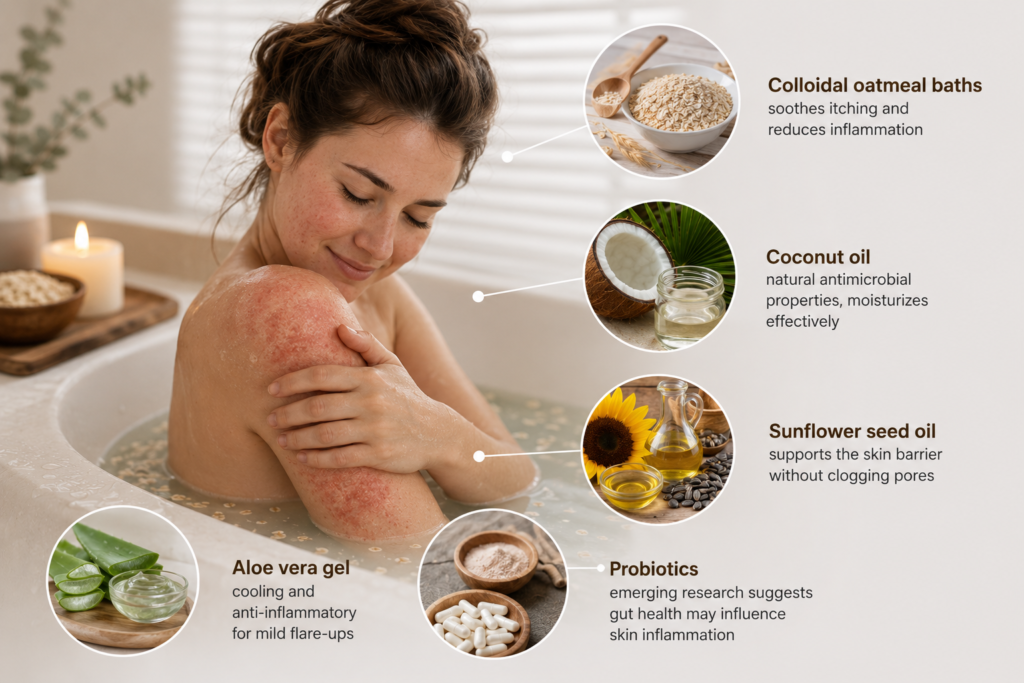
Always patch-test any new remedy on a small area first, since “natural” doesn’t always mean safe for sensitive, broken skin.
Frequently Asked Questions
- What is eczema in simple terms?
Eczema is a chronic skin condition that causes dry, itchy, and inflamed patches due to a weakened skin barrier and an overactive immune response.
- What causes eczema flare-ups most often?
The most common flare-up causes are dry air, sweat, harsh soaps, stress, and contact with allergens like dust or pet dander.
- Can eczema be cured permanently?
There’s currently no permanent cure for eczema, but it can be effectively managed with consistent moisturizing, trigger avoidance, and appropriate treatment, and many children outgrow it.
- Is eczema the same as psoriasis?
No. While both cause red, scaly patches, eczema is primarily driven by a barrier defect and allergic-type inflammation, while psoriasis is an autoimmune condition that speeds up skin cell turnover.
- When should I see a doctor about eczema?
See a doctor if flare-ups are widespread, signs of infection appear (oozing, fever, increasing pain), or over-the-counter treatments aren’t providing relief after a few weeks.
Final Thoughts: Take Control of Your Eczema
Eczema can feel unpredictable, but it doesn’t have to control your life. Once you understand your personal triggers, build a consistent moisturizing routine, and know which treatments work for your skin, flare-ups become far more manageable.
If your symptoms are persistent, worsening, or affecting your sleep and daily life, don’t tough it out alone. A dermatologist can help you build a personalized eczema treatment plan, including prescription options not available over the counter. Relief is possible — sometimes it just takes the right combination of care.