

You notice them first in a photo you didn’t expect to see — a fine line at the corner of your eye, a crease between your brows that stays even after you stop frowning. Wrinkles have a way of sneaking up on us, and once you spot one, it’s hard to unsee it.
Here’s the good news: you don’t have to just live with them. While no product or procedure can turn back the clock entirely, there’s a lot of solid, science-backed ground between “doing nothing” and “getting a facelift.” This guide walks through what actually causes wrinkles, which skincare ingredients have real evidence behind them, how to build a routine that works, and when it might be worth talking to a dermatologist about professional treatments.
Whether you’re just starting to notice the first fine lines or you’re looking to tackle deeper wrinkles that have been around for years, you’ll find practical, realistic steps here — not miracle promises.
What Causes Wrinkles? Understanding the Root of the Problem
Before you can figure out how to reduce wrinkles, it helps to understand what causes wrinkles in the first place. Skin aging comes from two overlapping processes: intrinsic aging (things you can’t control) and extrinsic aging (things you largely can).
Intrinsic Causes of Wrinkles
This is the aging that happens no matter what you do, driven by your genes and the natural passage of time. As you get older, your skin produces less collagen and elastin — the proteins that keep skin firm and bouncy. Oil glands also become less active, so skin holds onto less moisture, making it more prone to visible lines. Repeated facial expressions, like smiling or squinting, gradually etch themselves into the skin as dynamic wrinkles, which eventually become visible even at rest.
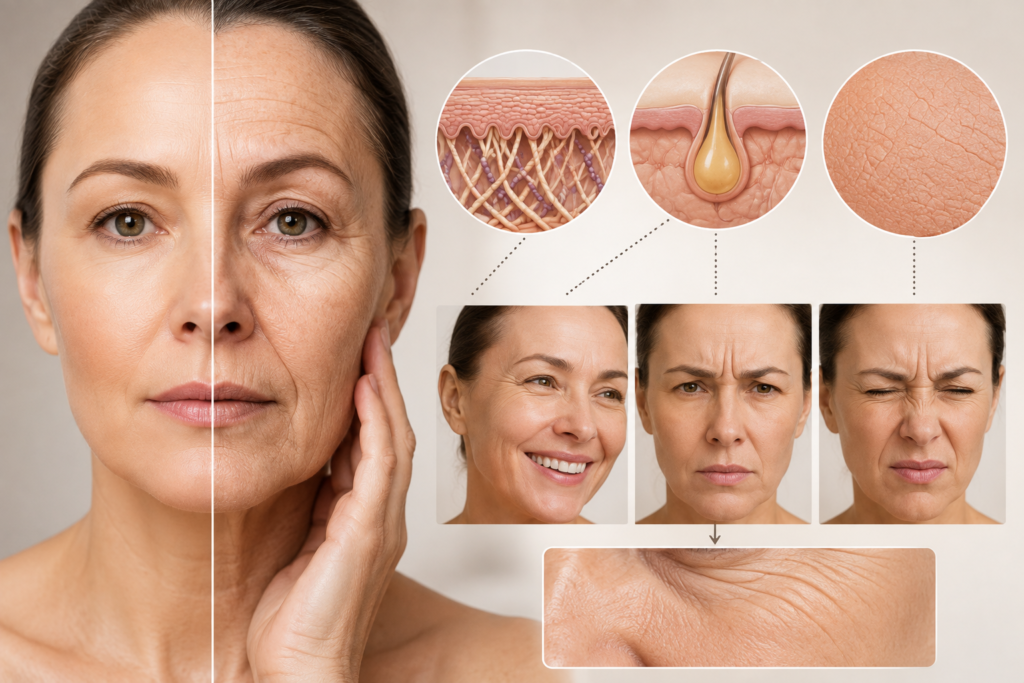
Extrinsic Causes of Wrinkles
These are the environmental and lifestyle factors that speed up skin aging, and they’re where you have the most control:
- Sun exposure (photoaging): UV rays break down collagen and elastin fibers, making this the single biggest external cause of premature wrinkles.
- Smoking: Tobacco smoke restricts blood flow to the skin and breaks down collagen, leading to that classic “smoker’s lines” look around the mouth.
- Pollution: Airborne particles trigger oxidative stress, which damages skin cells over time.
- Poor sleep and chronic stress: Both raise cortisol levels, which can break down collagen and slow skin repair.
- Diet: Diets high in sugar and processed foods have been linked to a process called glycation, which stiffens collagen fibers.
- Repetitive facial movements: Squinting without sunglasses or sleeping on your side can deepen certain lines over time.

Understanding which of these apply to you is the first step in building a routine that targets the actual problem instead of just throwing products at it.
How to Get Rid of Wrinkles: Building an Effective Anti-Wrinkle Skincare Routine
There’s no single product that erases wrinkles overnight, but a consistent anti-wrinkle skincare routine, used correctly over weeks and months, can make a real visible difference. Here’s what a solid routine looks like, step by step.
Step 1: Cleanse Gently
Start with a gentle, non-stripping cleanser. Harsh cleansers disrupt your skin barrier, and a damaged barrier makes fine lines and dryness more noticeable. Look for sulfate-free formulas that clean without leaving skin feeling tight.
Step 2: Apply a Vitamin C Serum in the Morning
A vitamin C serum for wrinkles is one of the most well-supported morning steps you can add. Vitamin C is a potent antioxidant that helps neutralize free radicals from UV exposure and pollution, and it also plays a role in collagen synthesis. Over time, consistent use can improve skin texture, brighten dullness, and soften the look of fine lines. Apply it after cleansing and before moisturizer, and store it in a cool, dark place since vitamin C degrades quickly when exposed to light and air.
Step 3: Use Retinol at Night
If you’re wondering how to reduce wrinkles with a single ingredient that has the most research behind it, retinol is usually the answer. More on this below.
Step 4: Moisturize, Morning and Night
Hydrated skin simply looks smoother. A good moisturizer with ingredients like hyaluronic acid, ceramides, or peptides plumps the skin surface and reinforces the barrier, which makes existing lines less visible while supporting the barrier repair that ingredients like retinol can temporarily disrupt.
Step 5: Sunscreen, Every Single Day
This is the step people skip most often — and the one that matters most. We’ll cover this in detail in its own section, because sun protection is arguably the single most important part of any anti-wrinkle routine.
Can Retinol Get Rid of Wrinkles? What the Research Says
Retinol for wrinkles has become something of a gold standard in dermatology, and for good reason. Retinol is a derivative of vitamin A that works by speeding up cell turnover and stimulating collagen production in the deeper layers of skin. Over consistent use, this can lead to smoother texture, reduced fine lines, and a more even tone.
So, can retinol get rid of wrinkles completely? Not entirely — it won’t erase deep, established wrinkles on its own, but it can meaningfully soften their appearance and help prevent new ones from forming as quickly.
Tips for using retinol effectively:
- Start slow. Begin with a lower concentration two to three nights a week, gradually building up to nightly use as your skin adjusts.
- Apply at night. Retinol breaks down in sunlight and can increase sun sensitivity, so nighttime application is standard practice.
- Follow with moisturizer. This helps buffer potential irritation, especially when you’re just starting out.
- Always pair with sunscreen the next morning. Skipping this step undoes much of the benefit and can leave skin vulnerable to further UV damage.
- Be patient. Visible improvement typically takes 12 weeks or longer of consistent use.
If you have sensitive skin or are pregnant or breastfeeding, talk to a dermatologist before starting retinol, since it isn’t suitable for everyone.
Does Sunscreen Prevent Wrinkles? Why SPF Is Non-Negotiable
Yes — and this might be the most important section in this entire guide. Does sunscreen prevent wrinkles? Research consistently shows that daily sunscreen use significantly slows visible skin aging, including wrinkle formation, compared to inconsistent or no use. UV exposure is responsible for the majority of visible skin aging, a phenomenon dermatologists call photoaging, so protecting your skin from it is arguably more impactful than any serum on the market.
What to Look for in the Best Sunscreen for Wrinkles
- Broad-spectrum protection: This means it protects against both UVA rays (which cause aging) and UVB rays (which cause burning).
- SPF 30 or higher: SPF 30 blocks about 97% of UVB rays; higher SPF offers marginally more protection, but consistent application matters more than chasing SPF 100.
- A texture you’ll actually wear daily: Mineral (zinc oxide, titanium dioxide) formulas tend to suit sensitive skin, while chemical sunscreens often feel lighter under makeup. The best sunscreen for aging skin is the one you’ll reapply without thinking twice about it.
- Antioxidant-enhanced formulas: Some sunscreens now include vitamin C or E for added free-radical protection.
Apply sunscreen every morning, rain or shine, indoors near windows included, since UVA rays penetrate glass. Reapply every two hours if you’re outdoors for extended periods.
Natural Ways to Get Rid of Wrinkles
Not everyone wants to start with retinol or a dermatologist visit, and there are natural ways to get rid of wrinkles that can support your skin alongside — not instead of — the basics above.
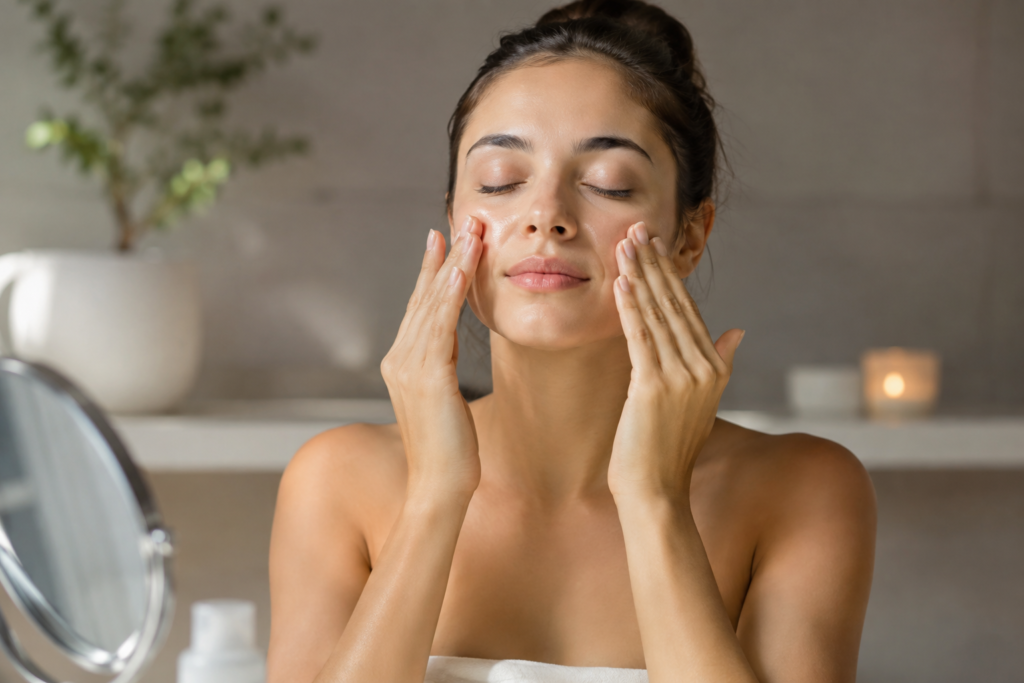
- Facial massage: Gently massaging the face can temporarily boost circulation and reduce puffiness, giving skin a more refreshed look.
- Antioxidant-rich diet: Foods high in vitamins C and E, like berries, leafy greens, and nuts, support the skin’s natural defense against oxidative stress.

- Staying hydrated: Adequate water intake supports overall skin plumpness, though it works best alongside a proper moisturizer.

- Quality sleep: Skin repairs itself overnight, so consistent, sufficient sleep supports collagen production.

- Facial oils like rosehip or argan oil: These contain fatty acids and antioxidants that can support skin barrier health, though they work more as a complement to active ingredients than a replacement for them.

Natural approaches can meaningfully support skin health, but it’s worth setting realistic expectations: they tend to work more gradually and subtly than ingredients with strong clinical backing, like retinol and sunscreen.
Professional Treatments for Wrinkles
For deeper, more established wrinkles, at-home skincare has its limits, and this is where professional treatments for wrinkles come in.
- Botox (botulinum toxin): Temporarily relaxes the muscles that cause dynamic wrinkles, like crow’s feet and forehead lines. How much does Botox cost? In the U.S., it’s typically priced per unit, generally ranging from around $10 to $25 per unit, with a full treatment area often requiring 20 to 40 units — so total cost commonly falls somewhere between $300 and $800 per session, though this varies widely by provider, location, and the area treated. Results usually last three to four months.
- Dermal fillers: Add volume to areas that have hollowed with age, like the cheeks or nasolabial folds, softening the appearance of static wrinkles.
- Chemical peels: Use acids to exfoliate the top layers of skin, encouraging renewal and improving texture over a series of sessions.
- Microneedling: Creates controlled micro-injuries that stimulate the skin’s natural collagen production.
- Laser resurfacing: Targets deeper layers of skin to significantly improve texture and reduce more stubborn wrinkles, typically with more downtime than other options.
A board-certified dermatologist or licensed provider can help determine which treatment, if any, fits your skin type, budget, and goals.
How Long Does It Take to Get Rid of Wrinkles? Setting Realistic Expectations
This is one of the most common questions people ask, and the honest answer depends on the method:
- Topical ingredients like retinol and vitamin C: Most people see initial improvement in 8 to 12 weeks, with more noticeable results after 3 to 6 months of consistent use.
- Sunscreen: This is preventive rather than corrective — its main benefit is slowing further wrinkle formation, which you won’t necessarily “see” but will appreciate over years.
- Professional treatments: Botox typically shows results within 3 to 7 days; fillers are often visible immediately; peels and microneedling usually need a series of sessions spaced weeks apart for full results.
Consistency matters more than intensity. A simple routine followed daily for months will outperform an elaborate routine used sporadically.
The Bottom Line
Getting rid of wrinkles isn’t about finding one miracle product — it’s about consistently protecting your skin from further damage while giving it the ingredients it needs to repair and renew itself. Daily sunscreen, a retinol-based nighttime routine, and antioxidant support from vitamin C form a foundation that’s backed by real research, not just marketing claims. For wrinkles that skincare alone can’t fully address, professional treatments offer another effective layer of options.
Start with the basics, be patient with the timeline, and consider a dermatologist consultation if you want a routine tailored specifically to your skin. Your future self, looking back at today’s photos, will thank you for starting now.
Frequently Asked Questions
What causes wrinkles to form so early for some people?
Genetics play a large role, but early wrinkles are often accelerated by sun exposure without protection, smoking, and repetitive facial expressions. Starting sunscreen and a basic anti-aging routine in your 20s can meaningfully delay their appearance.
Can retinol get rid of wrinkles that are already deep?
Retinol can soften the appearance of established wrinkles and prevent new ones, but very deep, static wrinkles usually respond better to a combination of retinol plus a professional treatment like filler or laser resurfacing.
Does sunscreen prevent wrinkles if I already have some?
Yes. While it won’t erase existing wrinkles, sunscreen prevents further UV-related collagen breakdown, which slows the formation of new lines and keeps existing ones from deepening.
How much does Botox cost for a typical treatment?
Costs vary by provider and geographic location, but most people in the U.S. pay somewhere between $300 and $800 per session, depending on the treatment area and number of units used.
Are natural ways to get rid of wrinkles as effective as skincare products?
Natural approaches like a healthy diet, hydration, and good sleep support overall skin health, but they generally work more gradually than clinically studied ingredients like retinol and vitamin C. The two work best together rather than as substitutes for one another.