
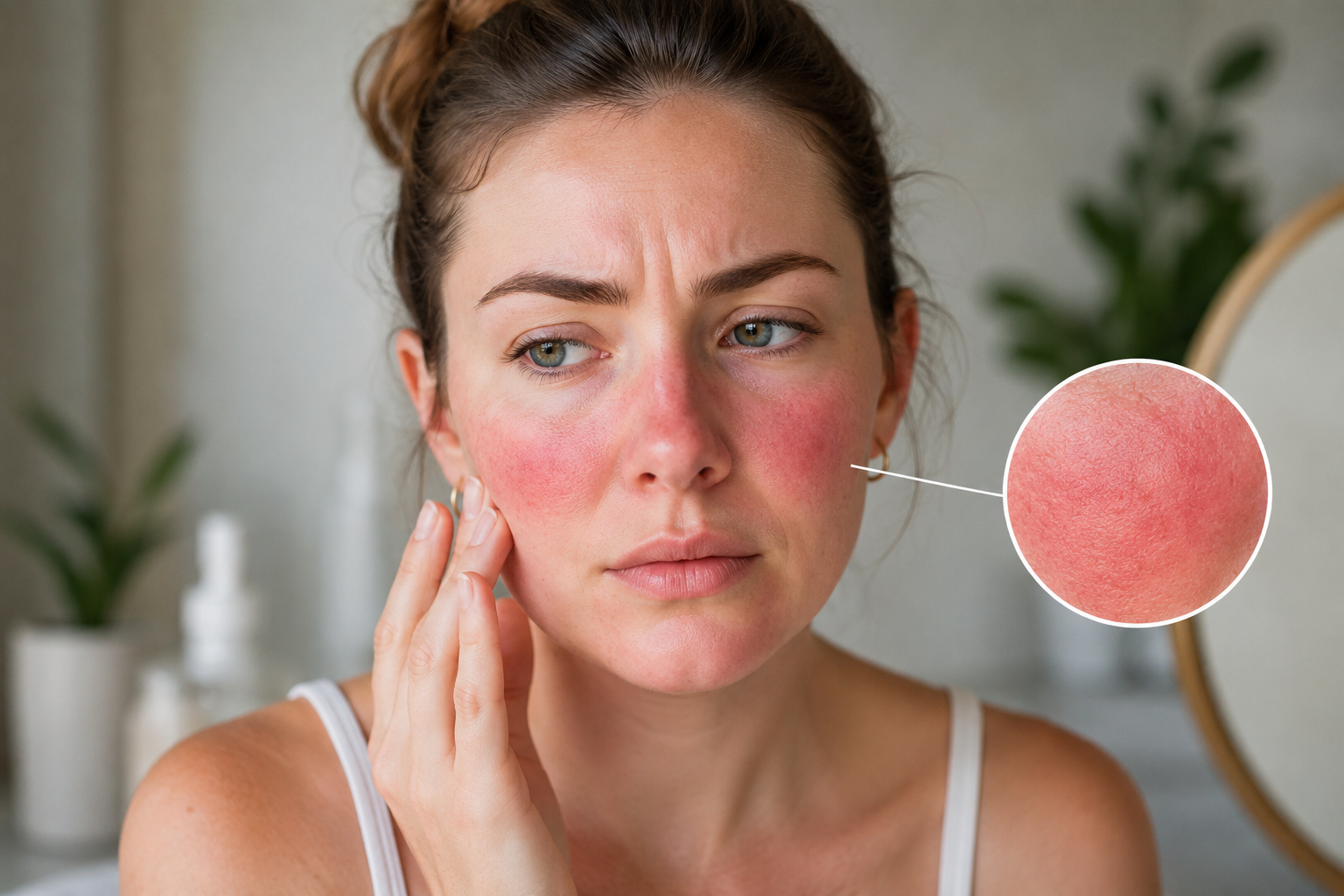
If you’ve ever caught your reflection after a hot shower, a glass of wine, or a stressful meeting and thought “why is my face on fire right now” — you’re not imagining things. That persistent flush, the little bumps that show up out of nowhere, the skin that stings when you put on sunscreen… this is rosacea territory, and you’re far from alone in dealing with it.
Rosacea affects an estimated 16 million Americans, and a huge chunk of them don’t even realize that’s what they’re dealing with. Many people spend years blaming their skin on acne, allergies, or “just being sensitive” before they get an actual diagnosis. So if you’re here trying to figure out what’s going on with your face, this guide is going to walk you through what rosacea actually is, why it shows up, and what genuinely helps calm it down — including the treatments dermatologists reach for first.
What Is Rosacea, Exactly?
Rosacea is a chronic inflammatory skin condition that mainly affects the face — cheeks, nose, chin, and forehead. It shows up as persistent redness, visible blood vessels, and sometimes small, acne-like bumps. Unlike a sunburn or a one-off breakout, rosacea tends to come and go in cycles: you’ll have flare-ups, then calmer stretches, then it flares again, often triggered by something specific.
It typically starts showing up between ages 30 and 50, and it’s more commonly diagnosed in people with fair skin, though it absolutely affects people of all skin tones — it just can be harder to spot on deeper skin, where it might look more like a dusky or brownish discoloration rather than bright pink or red.
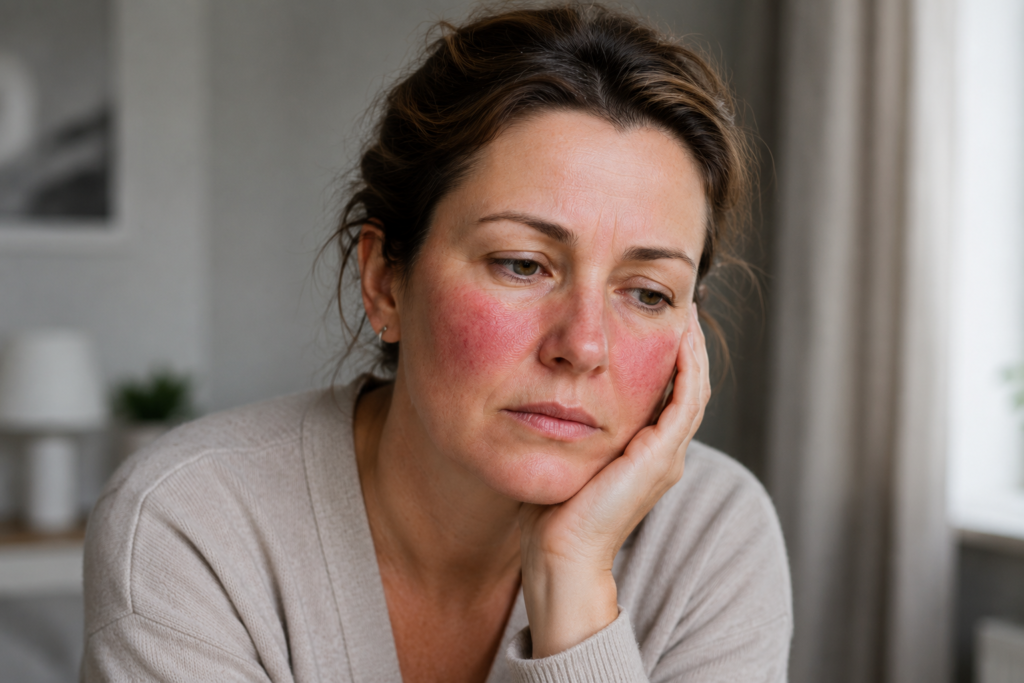
Here’s the important part: rosacea isn’t caused by poor hygiene, and it’s not something you did wrong. It’s a combination of genetics, immune system response, and blood vessel behavior that makes your skin react more intensely to things that wouldn’t bother someone else’s skin at all.
The Main Types of Rosacea
Dermatologists generally break rosacea into a few subtypes, and you can absolutely have more than one at the same time:
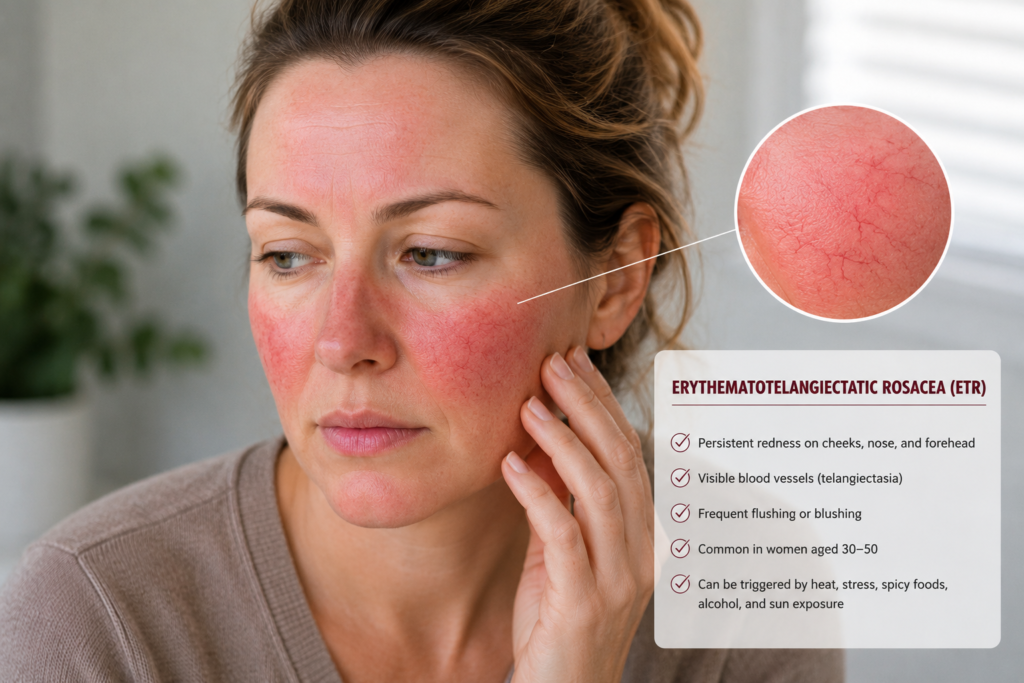
- Erythematotelangiectatic rosacea (ETR): persistent redness and visible blood vessels, often with flushing
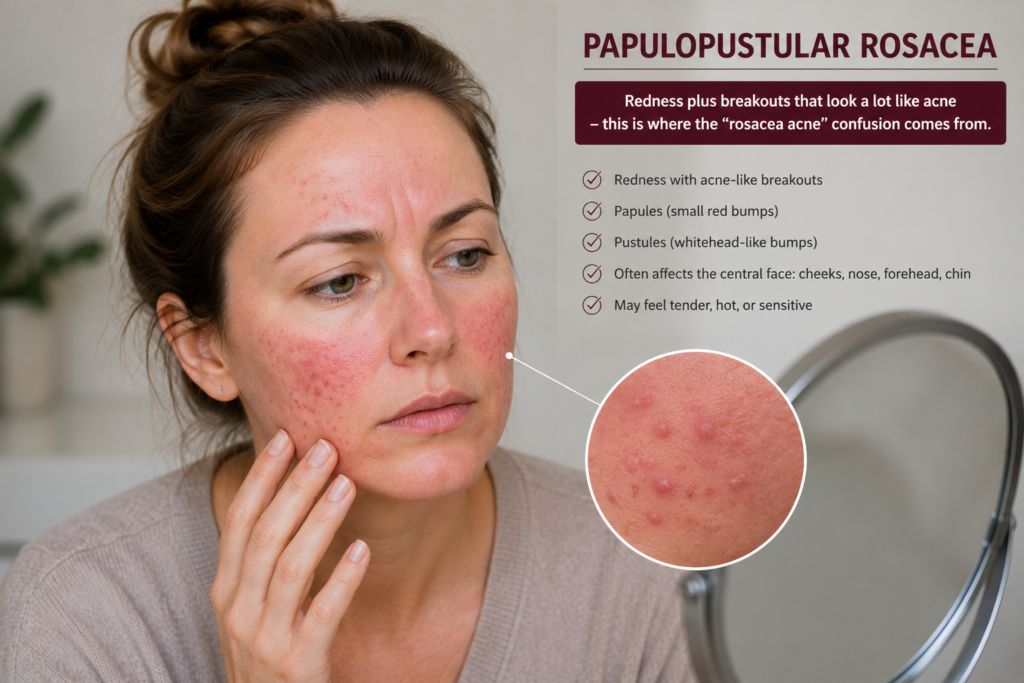
- Papulopustular rosacea: redness plus breakouts that look a lot like acne — this is where the “rosacea acne” confusion comes from
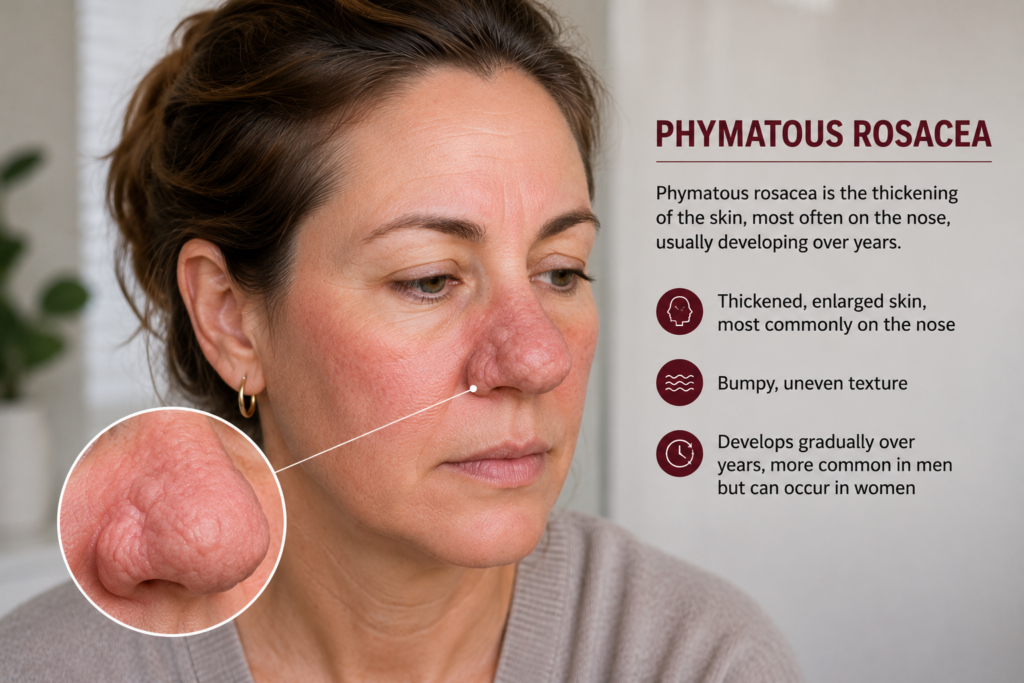
- Phymatous rosacea: thickening skin, most often on the nose, usually developing over years
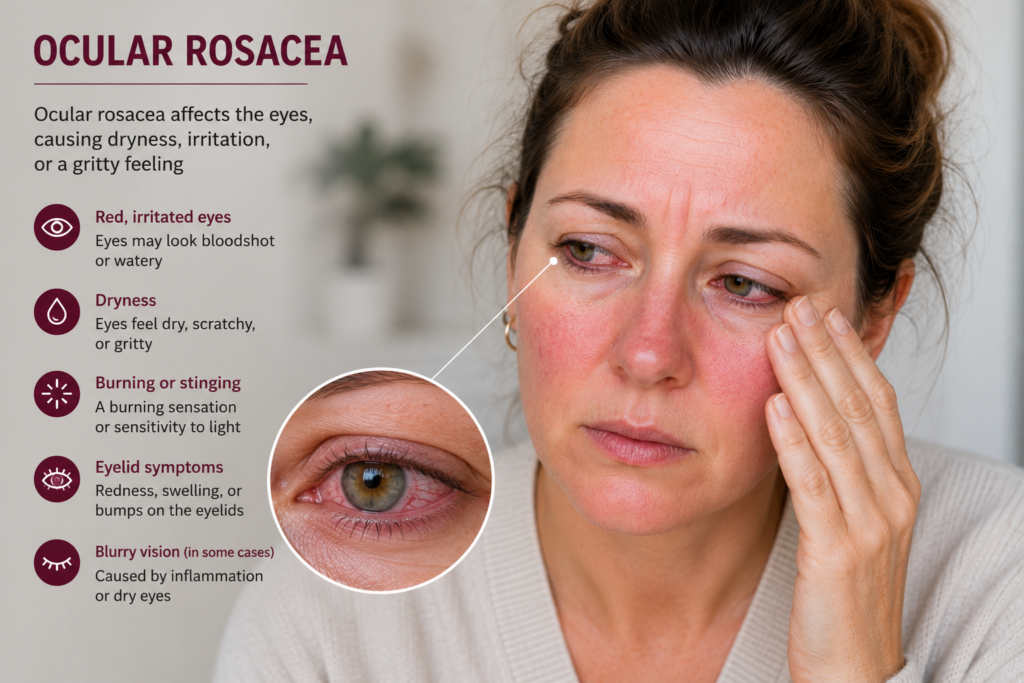
- Ocular rosacea: affects the eyes, causing dryness, irritation, or a gritty feeling
What Causes Rosacea and Facial Redness?
Nobody has pinned down one single cause of rosacea, and that’s honestly one of the more frustrating things about it. What researchers do agree on is that it involves a mix of factors working together:
- Blood vessel dysfunction: the vessels in your face dilate more easily and stay dilated longer than they should
- Immune system overactivity: your skin’s immune response overreacts to normal triggers, causing inflammation
- Demodex mites: these microscopic mites live on everyone’s skin, but people with rosacea often have higher numbers of them, which may contribute to inflammation
- Genetics: if a parent or sibling has rosacea, your odds go up
- Gut and skin barrier connection: some research links rosacea to an impaired skin barrier and even to conditions like small intestinal bacterial overgrowth (SIBO)
Common Rosacea Triggers
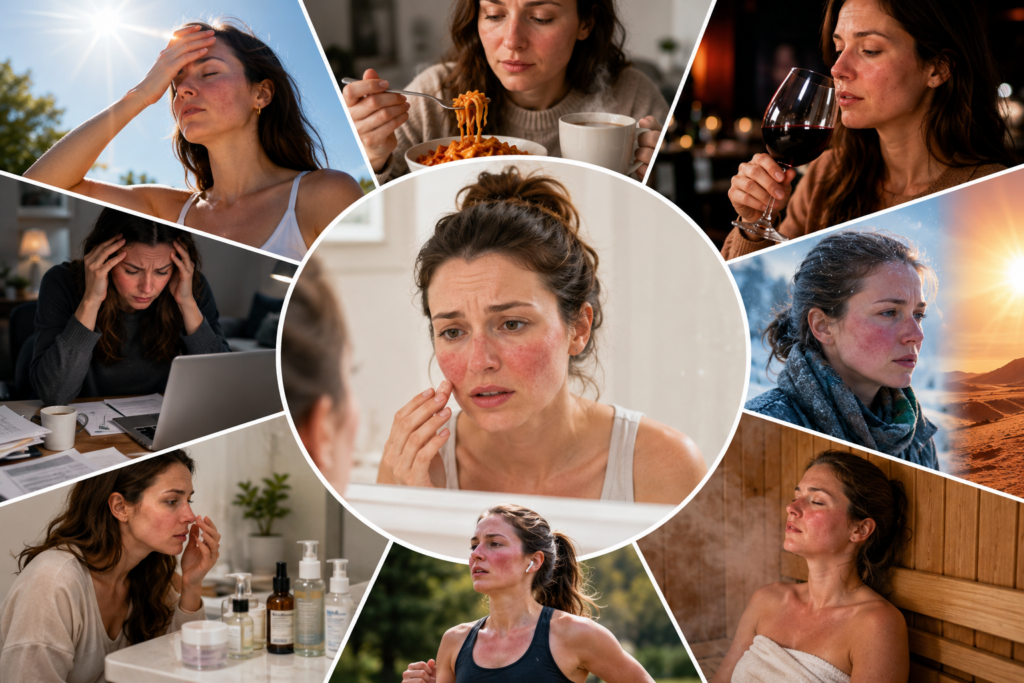
This is the part most people actually care about, because triggers are what turn “mild redness” into “why does my face look like this right now.” Common ones include:
- Sun exposure (the number one trigger for most people)
- Spicy food and hot drinks
- Alcohol, especially red wine
- Extreme temperatures, hot or cold
- Stress and anxiety
- Intense exercise
- Certain skincare ingredients like alcohol, witch hazel, and fragrance
- Hot showers or saunas
Keeping a simple trigger log for a few weeks — just jotting down what you ate, did, or used before a flare-up — is one of the most useful things you can do. It sounds tedious, but patterns show up faster than you’d expect.
Rosacea Symptoms: What to Actually Look For
Rosacea symptoms vary quite a bit from person to person, but the most commonly reported ones are:
- Persistent facial redness that doesn’t fully go away
- Flushing that comes on quickly and lasts longer than a normal blush
- Small, visible blood vessels (telangiectasia)
- Bumps or pimples, sometimes with pus
- Skin that feels swollen, sensitive, or tight
- Burning or stinging, especially with certain products
- Dry, rough patches
- Eye irritation, redness, or a gritty sensation
Does Rosacea Itch? Is Rosacea Itchy?
This comes up constantly, and the honest answer is: yes, for some people, though it’s not the most classic symptom. Rosacea is more commonly associated with burning and stinging than itching, but a subset of people do experience genuine itchiness, especially during active flares or when the skin barrier is compromised. If your rosacea is itchy, it’s often a sign that the skin barrier needs some extra support — think gentle, fragrance-free moisturizers rather than active ingredients that might make the itch worse.
How to Get Rid of Rosacea Permanently: What’s Actually Realistic
Let’s be straight about this one, because it’s the question everyone wants answered. There’s currently no permanent cure for rosacea — it’s considered a chronic condition, similar to eczema or psoriasis, meaning the goal is management rather than a one-time fix.
That said, “chronic” doesn’t mean “hopeless.” Plenty of people get their rosacea to a place where it’s barely noticeable most of the time, with occasional manageable flares instead of constant redness. The combination that tends to work best is:
- Identifying and avoiding personal triggers
- Using a consistent, gentle skincare routine
- Prescription treatment from a dermatologist
- Daily sun protection, no exceptions
- In some cases, laser or light therapy for visible blood vessels
Laser treatments, particularly pulsed dye laser (PDL) or IPL, can significantly reduce visible blood vessels and background redness, sometimes for years at a time. It’s not a permanent cure either, but for a lot of people it’s the closest thing to it.
Metronidazole for Rosacea: How It Works
Metronidazole is one of the most commonly prescribed treatments for rosacea, and it’s usually the first thing dermatologists reach for. It comes in gel, cream, or lotion form and works by reducing the inflammation and bacteria-related activity that contribute to those rosacea bumps and redness.
Most people apply it once or twice daily, and it can take four to eight weeks before you notice real improvement, so patience matters here. It’s generally well tolerated, though some people experience mild dryness or irritation when they first start.
Other prescription options your dermatologist might suggest include azelaic acid, ivermectin cream, and oral antibiotics like doxycycline for more moderate to severe cases.
Does Retinol Help With Rosacea?
This is one of the trickier questions in skincare, because the answer is genuinely “it depends.” Retinol can help with rosacea by improving skin texture, supporting collagen production, and reducing the thickened skin sometimes seen in phymatous rosacea. Some dermatologists do prescribe low-strength retinoids for rosacea patients.
But — and this is a big but — retinol can also irritate already-sensitive, reactive skin, especially if your barrier is compromised. If you want to try it, the general advice is:
- Start with the lowest strength available, used just once or twice a week
- Always pair it with a solid moisturizer to buffer irritation
- Never combine it with other actives like exfoliating acids in the same routine
- Stop immediately if you notice increased burning, stinging, or redness
If in doubt, run it by your dermatologist first. What works beautifully for one rosacea-prone face can backfire on another.
Does Vitamin C Help Rosacea?
Vitamin C is well known as an antioxidant that brightens skin and supports collagen, but for rosacea-prone skin, it’s a mixed bag. Some formulations, particularly those with L-ascorbic acid at high concentrations, can sting and trigger flare-ups. Others, like more stable derivatives such as sodium ascorbyl phosphate or magnesium ascorbyl phosphate, tend to be much gentler.
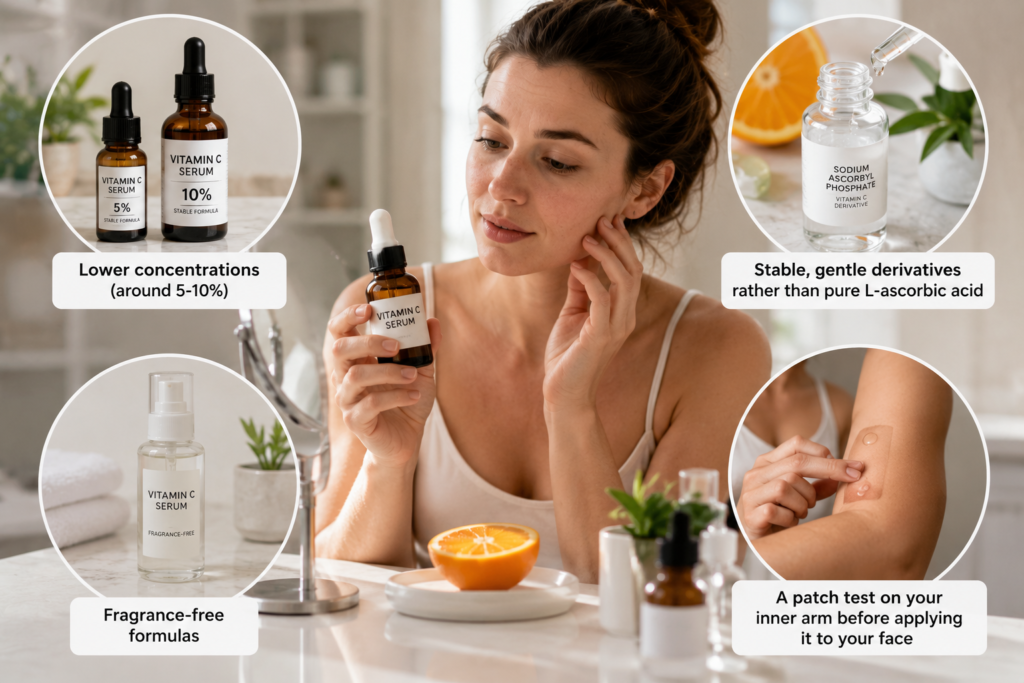
If you want to try vitamin C, look for:
- Lower concentrations (around 5-10%)
- Stable, gentle derivatives rather than pure L-ascorbic acid
- Fragrance-free formulas
- A patch test on your inner arm before applying it to your face
Building a Rosacea-Friendly Skincare Routine
A simple, consistent routine does more for rosacea than any single “miracle” product. Here’s a solid daily framework:
Morning:
- Gentle, fragrance-free cleanser (or just water, if your skin is very reactive)
- Lightweight, soothing moisturizer with ingredients like niacinamide or ceramides
- Mineral sunscreen with zinc oxide or titanium dioxide, SPF 30 or higher
Evening:
- Gentle cleanser
- Any prescribed treatment (like metronidazole)
- Barrier-repairing moisturizer
Skip anything with alcohol, fragrance, menthol, or witch hazel. And when trying new products, introduce them one at a time so you can actually tell what’s helping and what’s making things worse.
Frequently Asked Questions
- Is rosacea the same as acne?
No, though they can look similar and even occur together. Rosacea bumps come from inflammation and blood vessel issues, not clogged pores, which is why standard acne treatments like benzoyl peroxide often make rosacea worse instead of better.
- Can diet affect rosacea?
Yes, for many people. Spicy foods, alcohol, and hot beverages are commonly reported triggers. There’s no universal “rosacea diet,” but tracking your own reactions to specific foods is genuinely useful.
- Will rosacea go away on its own?
It’s unlikely to fully disappear without management, since it’s a chronic condition. However, symptoms can be significantly reduced and controlled with the right routine and treatment plan.
- Does makeup make rosacea worse?
Not necessarily. Mineral-based, fragrance-free makeup can actually help by providing light coverage and sun protection without irritating the skin. The issue is usually with heavy, fragranced, or alcohol-based products.
- Should I see a dermatologist for facial redness?
If redness is persistent, worsening, or affecting your confidence, yes. A dermatologist can confirm whether it’s rosacea versus something else (like eczema or an allergic reaction) and get you started on treatment that actually targets the cause.
The Bottom Line
Rosacea can feel frustrating precisely because it’s unpredictable, but understanding your triggers and building a gentle, consistent routine puts you back in control. Between trigger management, the right skincare, and proven treatments like metronidazole, most people see real, lasting improvement.
If your facial redness has been sticking around and you haven’t talked to a dermatologist yet, that’s the single best next step. They can confirm what you’re dealing with and get you on a treatment plan built for your skin specifically, instead of guessing your way through it alone.