
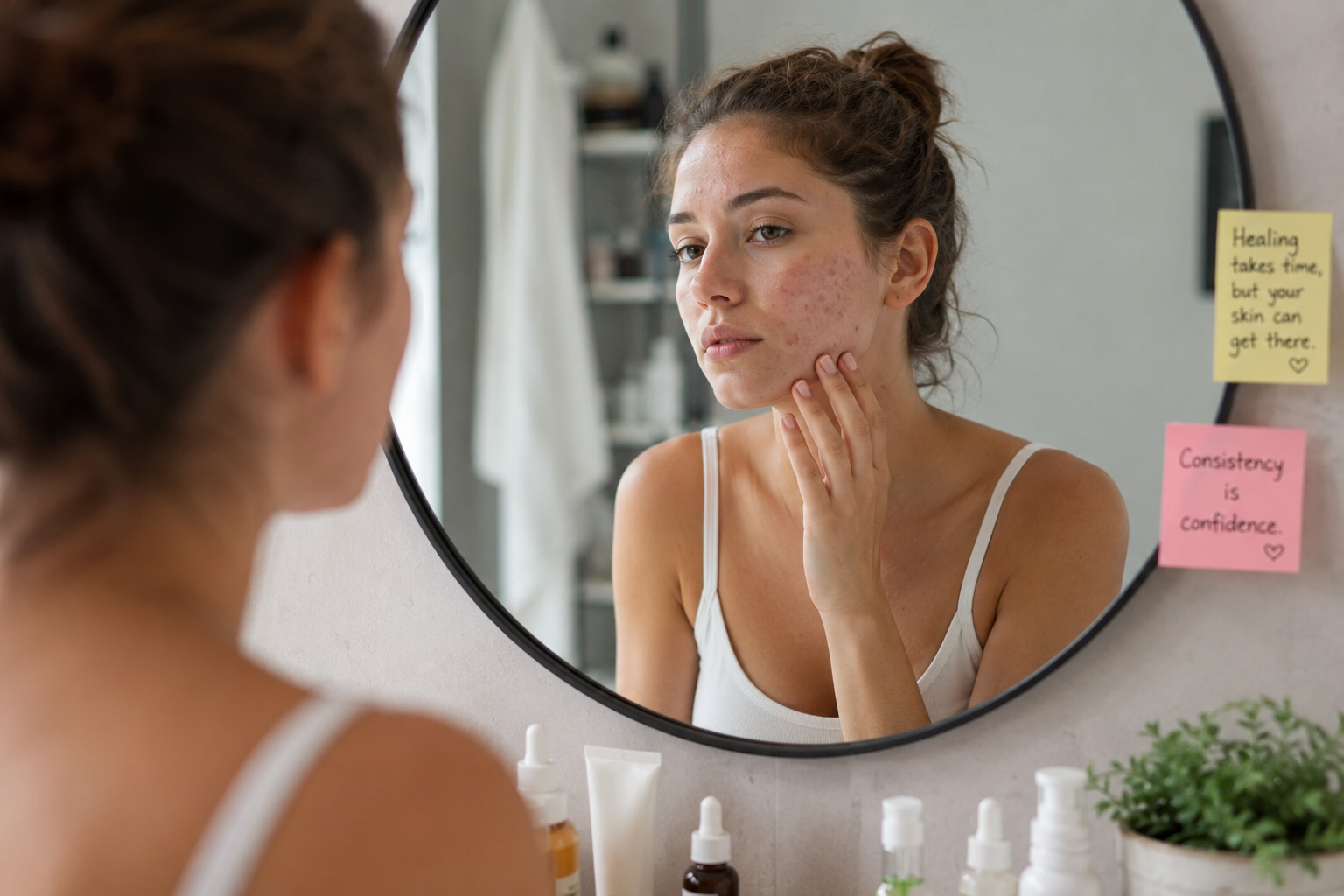
If you’ve ever stood in front of the mirror picking apart every mark left behind by a breakout, you already know acne scars can feel more stubborn than the acne itself. The pimple fades in a week. The scar? That can stick around for months, sometimes years, quietly affecting your confidence every time you skip makeup or step into good lighting.
The good news is that you have more options today than ever before. Some work gradually from your bathroom shelf. Others deliver faster, more dramatic results from a dermatologist’s chair. This guide breaks down exactly how to get rid of acne scars fast, covering what genuinely works, what’s mostly hype, and how to decide which route fits your skin, budget, and timeline.
By the end, you’ll understand the different types of acne scars, which treatments target each one, realistic timelines for seeing results, and how to build a routine that actually moves the needle.
Understanding Acne Scars Before You Treat Them
Not all acne scars are the same, and that’s exactly why so many people try a treatment and feel disappointed. Before spending money or time on any remedy, it helps to know what you’re actually dealing with.
Types of Acne Scars
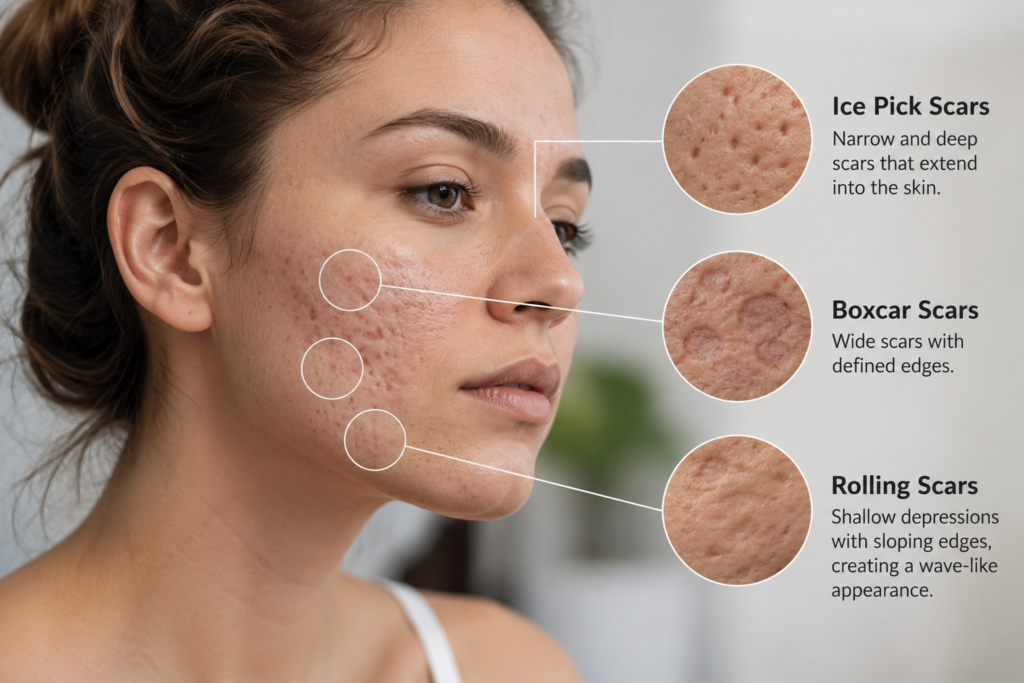
- Atrophic (indented) scars — These form when the skin doesn’t produce enough collagen during healing, leaving behind a depression. This category includes ice pick scars (narrow and deep), boxcar scars (wide with defined edges), and rolling scars (shallow with sloping edges).
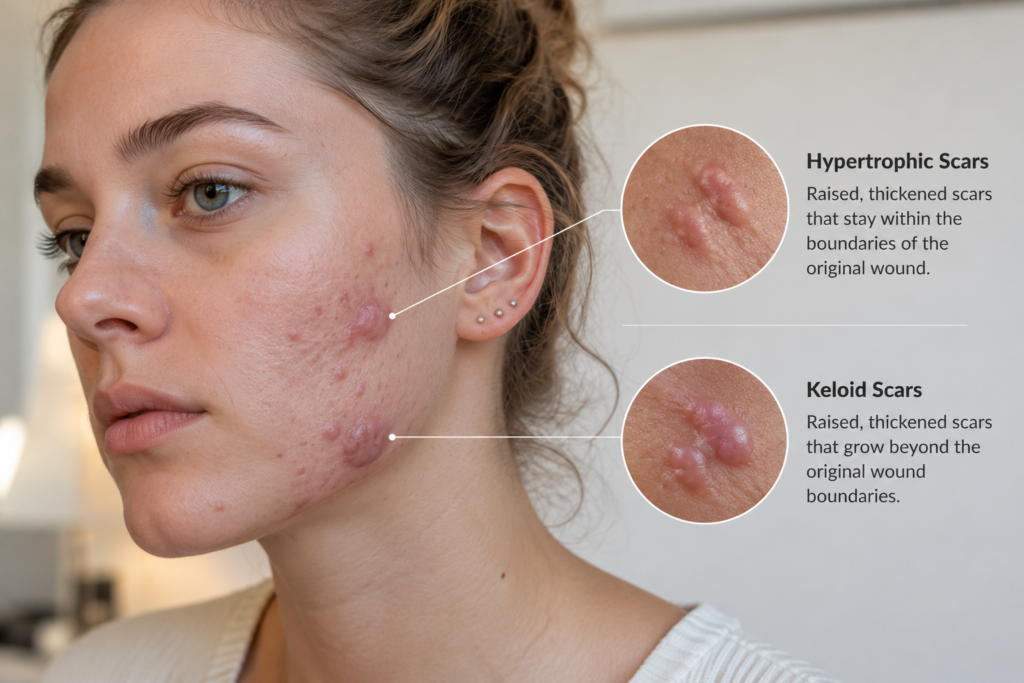
- Hypertrophic and keloid scars — The opposite problem: too much collagen, resulting in raised, thickened tissue.
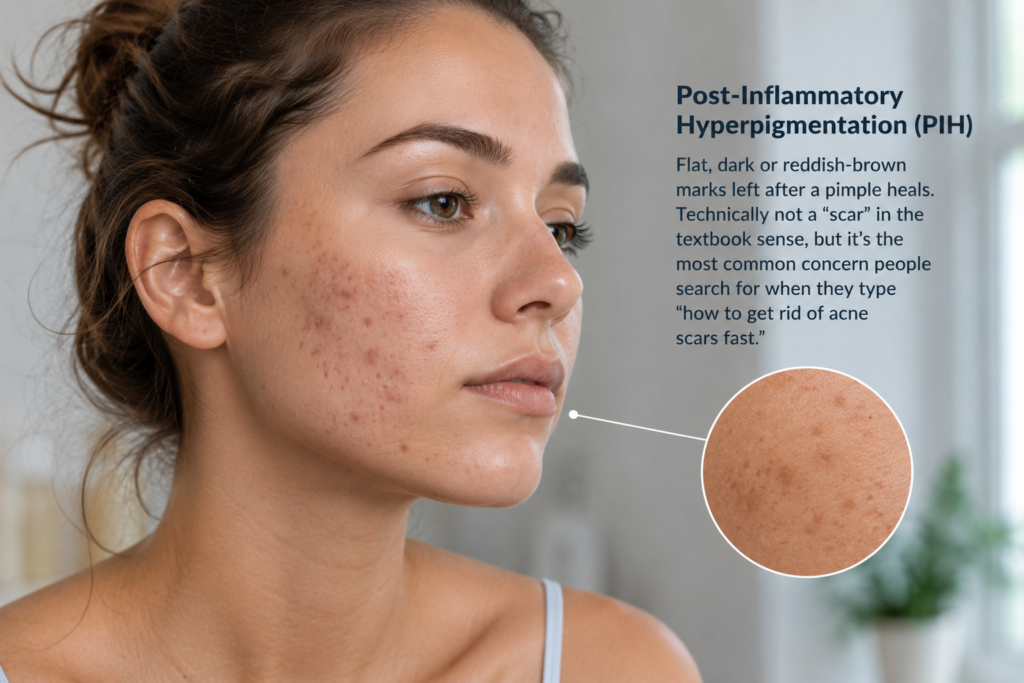
- Post-inflammatory hyperpigmentation (PIH) — Flat, dark or reddish-brown marks left after a pimple heals. Technically not a “scar” in the textbook sense, but it’s the most common concern people search for when they type “how to get rid of acne scars fast.”
Knowing which category you’re dealing with matters because a product built to fade pigmentation won’t do much for a deep boxcar scar, and a treatment designed to rebuild collagen won’t fix discoloration. Matching the treatment to the scar type is the single biggest factor in getting real results.
Home Remedies for Acne Scars: What Actually Helps
Home remedies won’t erase deep scarring overnight, but consistent use of the right ingredients can noticeably fade discoloration and improve texture over several weeks to months.
Over-the-Counter Ingredients That Work
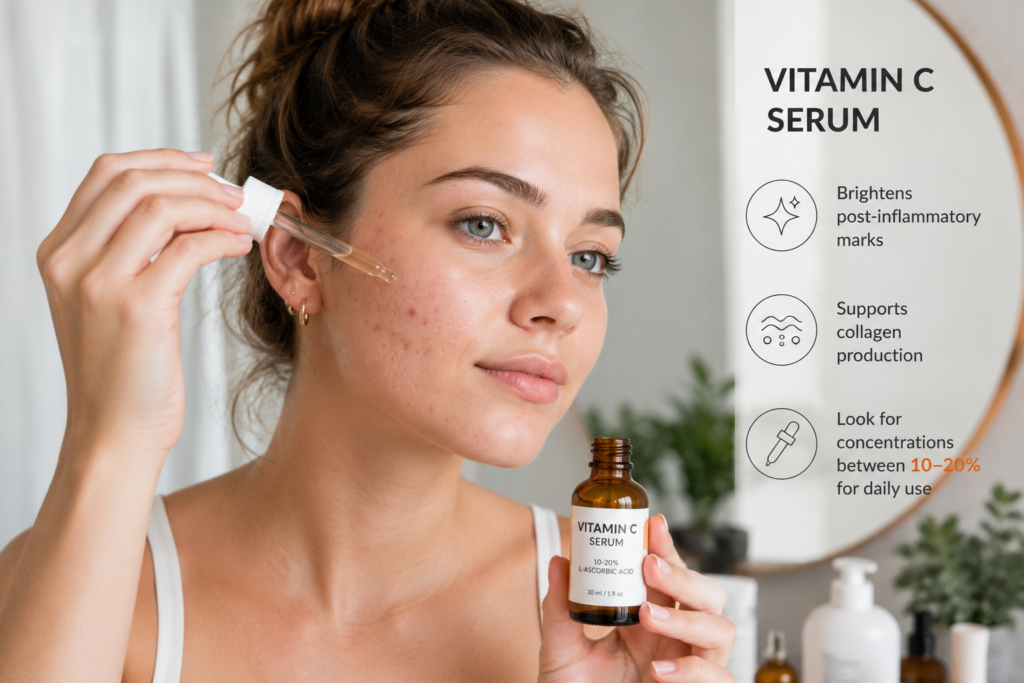
- Vitamin C serum — A well-formulated vitamin C serum helps brighten post-inflammatory marks and supports collagen production. Look for concentrations between 10–20% for daily use.
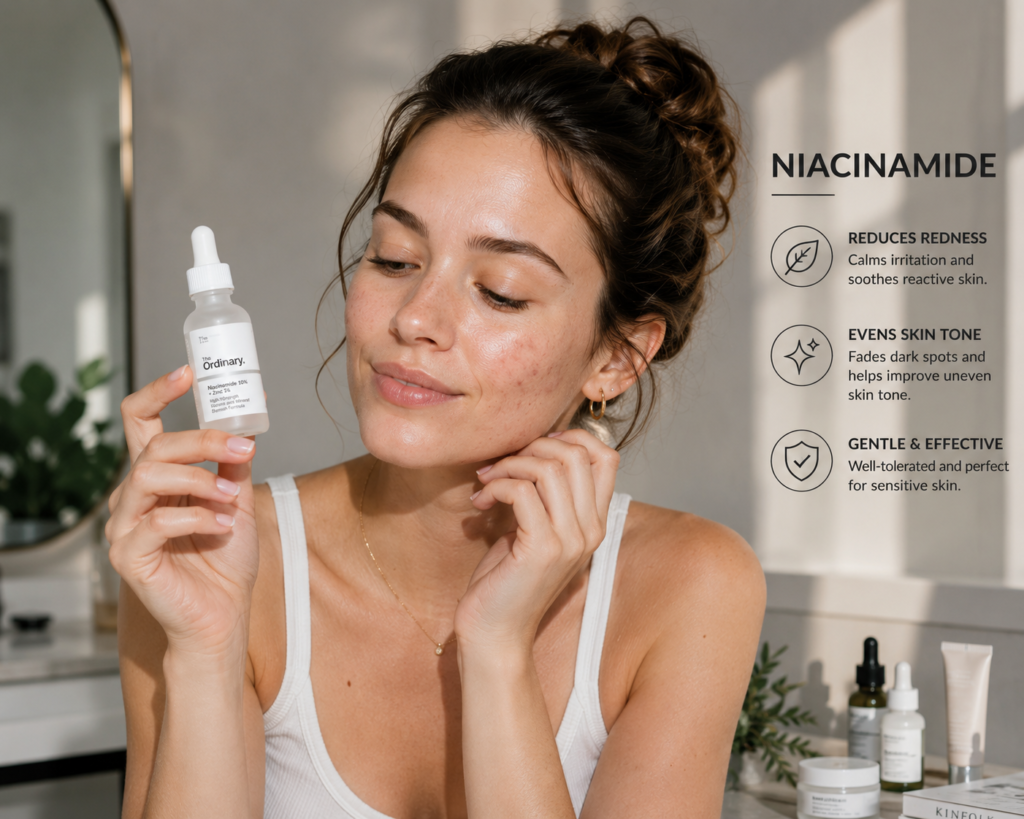
- Niacinamide — This gentle, well-tolerated ingredient reduces redness and helps even out skin tone, making it a solid option even for sensitive or reactive skin.
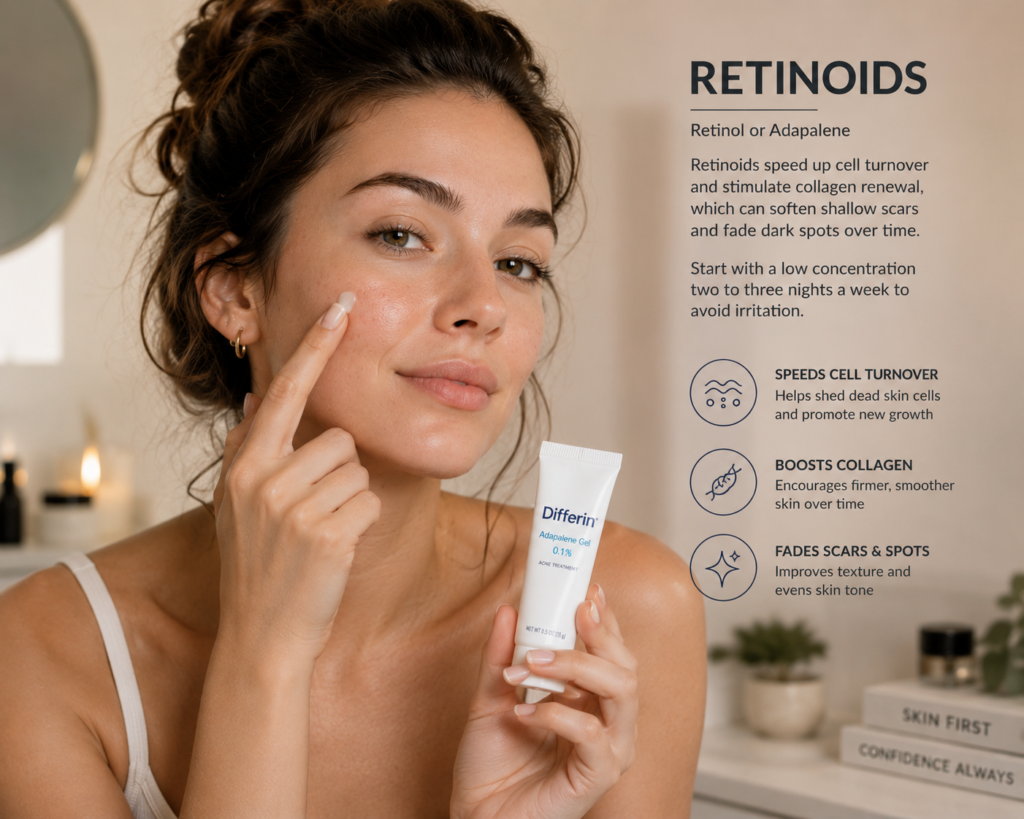
- Retinoids (retinol or adapalene) — Retinoids speed up cell turnover and stimulate collagen renewal, which can soften shallow scars and fade dark spots over time. Start with a low concentration two to three nights a week to avoid irritation.
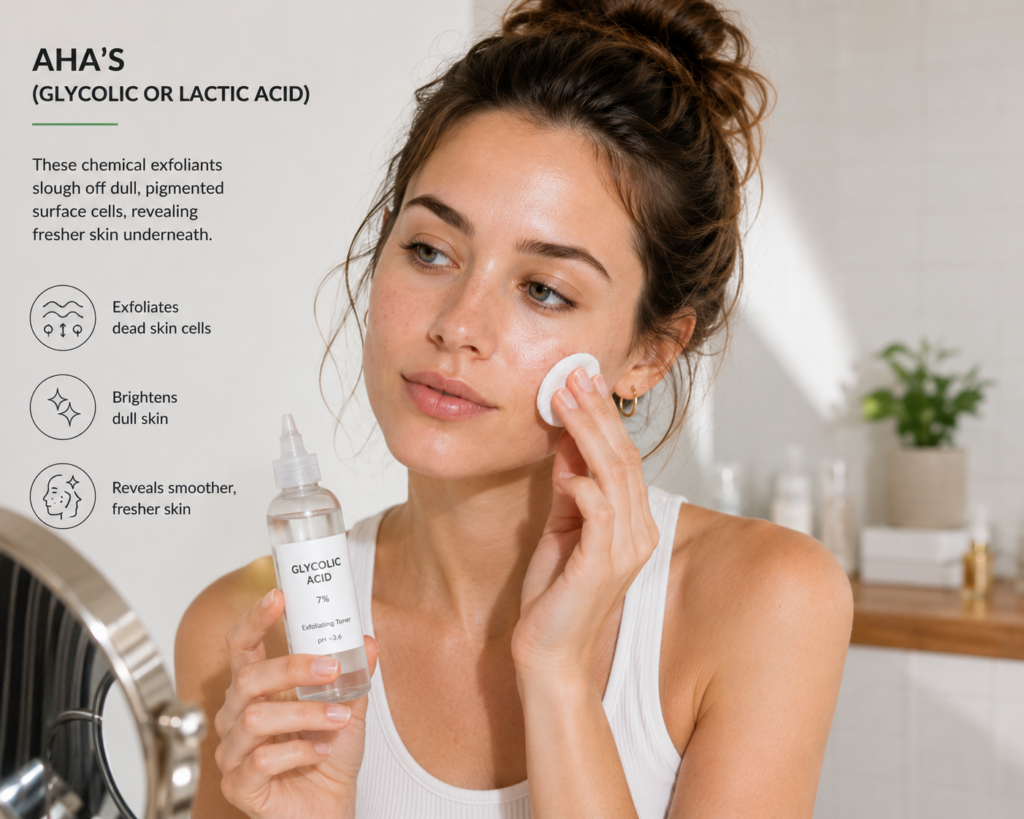
- Alpha hydroxy acids (AHAs) like glycolic or lactic acid — These chemical exfoliants slough off dull, pigmented surface cells, revealing fresher skin underneath.
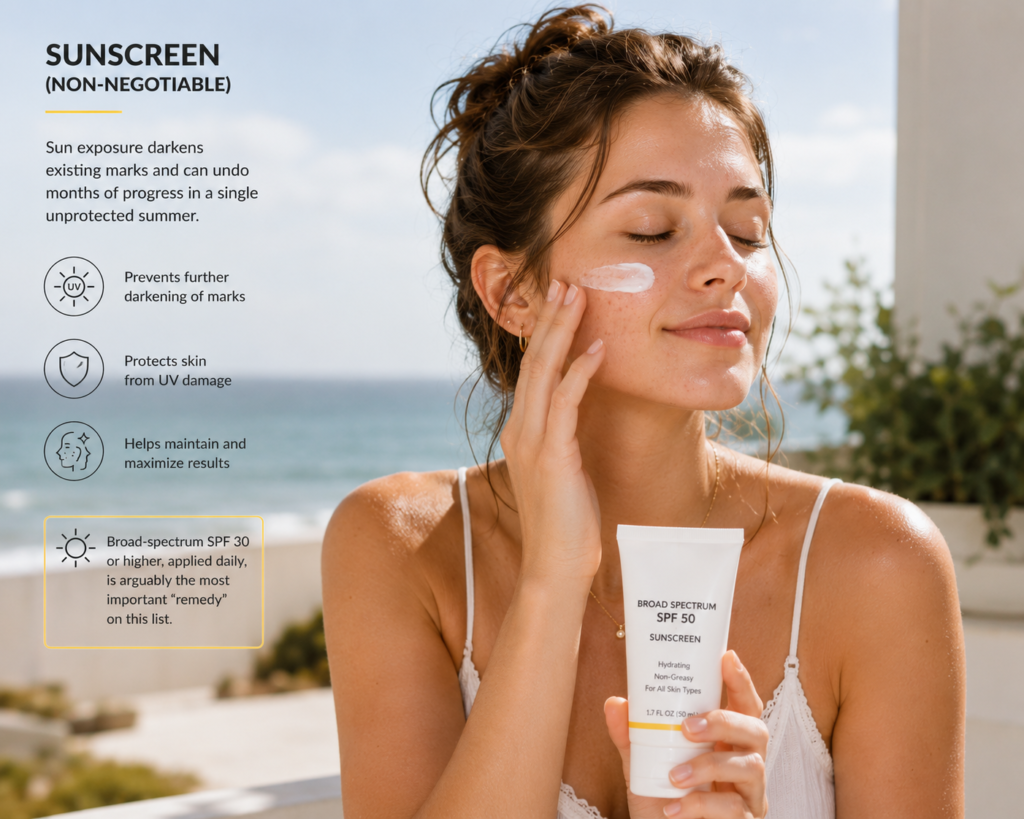
- Sunscreen (non-negotiable) — Sun exposure darkens existing marks and can undo months of progress in a single unprotected summer. Broad-spectrum SPF 30 or higher, applied daily, is arguably the most important “remedy” on this list.
Natural Remedies: Separating Fact from Folklore
Ingredients like aloe vera, honey, and green tea extract have mild anti-inflammatory and soothing properties, which can support overall skin healing. However, claims that lemon juice, baking soda, or toothpaste can “erase” scars are largely unsupported and can actually damage your skin barrier or cause chemical burns. If a remedy sounds too good to be true, it’s worth doing more research (or asking a dermatologist) before applying it to your face.
Realistic Timelines for Home Treatments
Most people see gradual fading of pigmentation within 6–12 weeks of consistent use. Textural improvements from retinoids typically take three months or longer, since they depend on your skin’s natural collagen cycle. Patience and consistency matter more than any single “miracle” product.
Professional Treatments: The Faster, More Targeted Route
When scars are deeper, more widespread, or resistant to home care, professional treatments offer faster and more dramatic improvement — though usually at a higher cost and with some downtime.
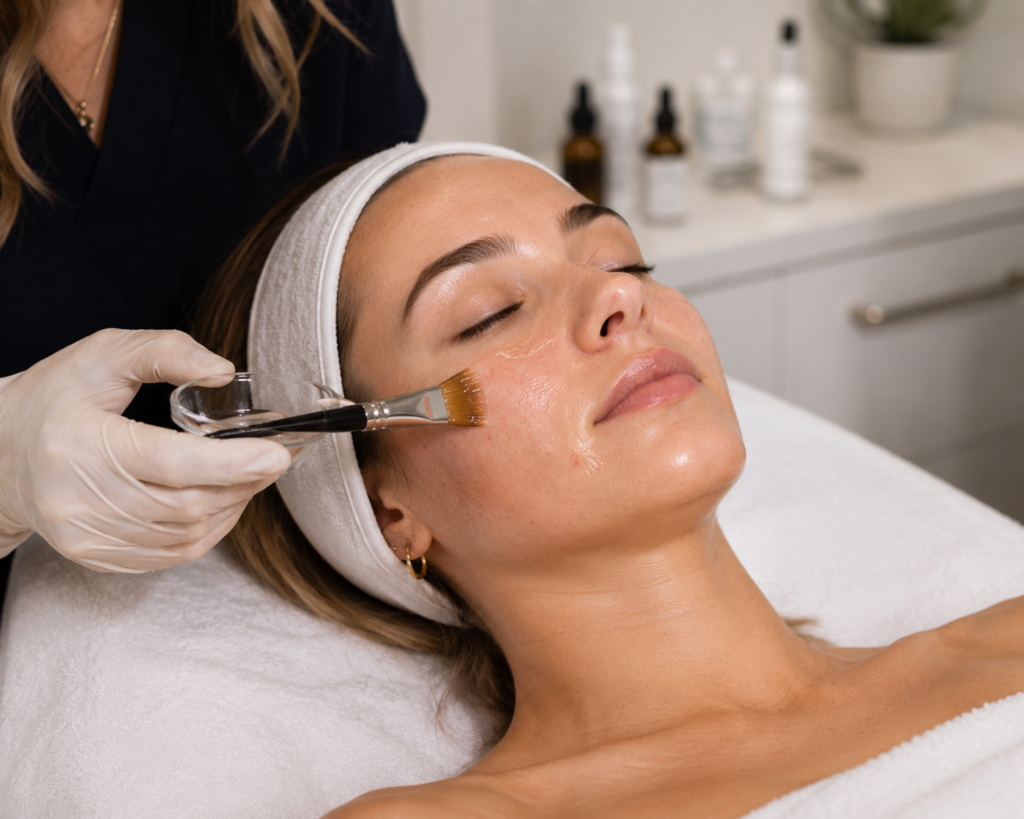
Chemical Peels
Medium-depth peels using stronger concentrations of glycolic, salicylic, or trichloroacetic acid (TCA) remove damaged surface layers and encourage smoother, more even-toned skin. They’re especially effective for hyperpigmentation and mild textural scarring, often requiring a series of sessions spaced several weeks apart.
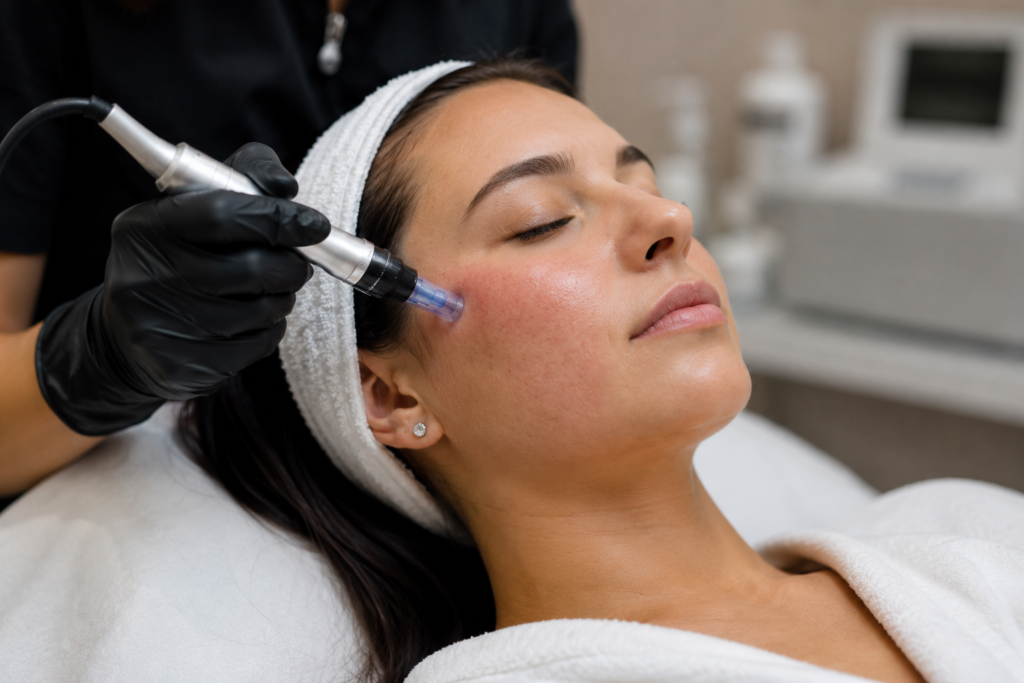
Microneedling
This treatment uses fine needles to create controlled micro-injuries in the skin, triggering a collagen-rebuilding response. It’s particularly effective for rolling and boxcar scars. Many providers now combine microneedling with platelet-rich plasma (PRP) or radiofrequency for enhanced results.
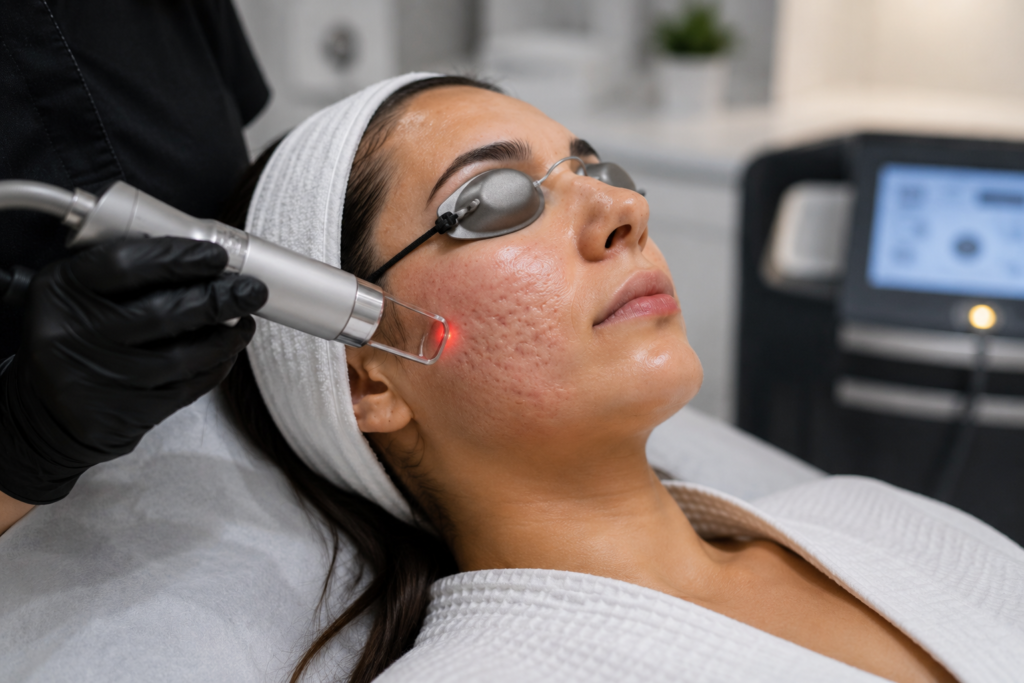
Laser Resurfacing
Fractional lasers (like fractional CO2 or erbium lasers) target deeper scar tissue and stimulate significant collagen remodeling. Results tend to be more dramatic than peels or microneedling, but recovery time is longer, ranging from a few days to two weeks depending on the laser’s intensity.
Dermal Fillers
For atrophic scars, injectable fillers can temporarily plump depressed areas, creating a smoother appearance. This isn’t a permanent fix, but it’s a fast option for people who want visible improvement before a specific event.
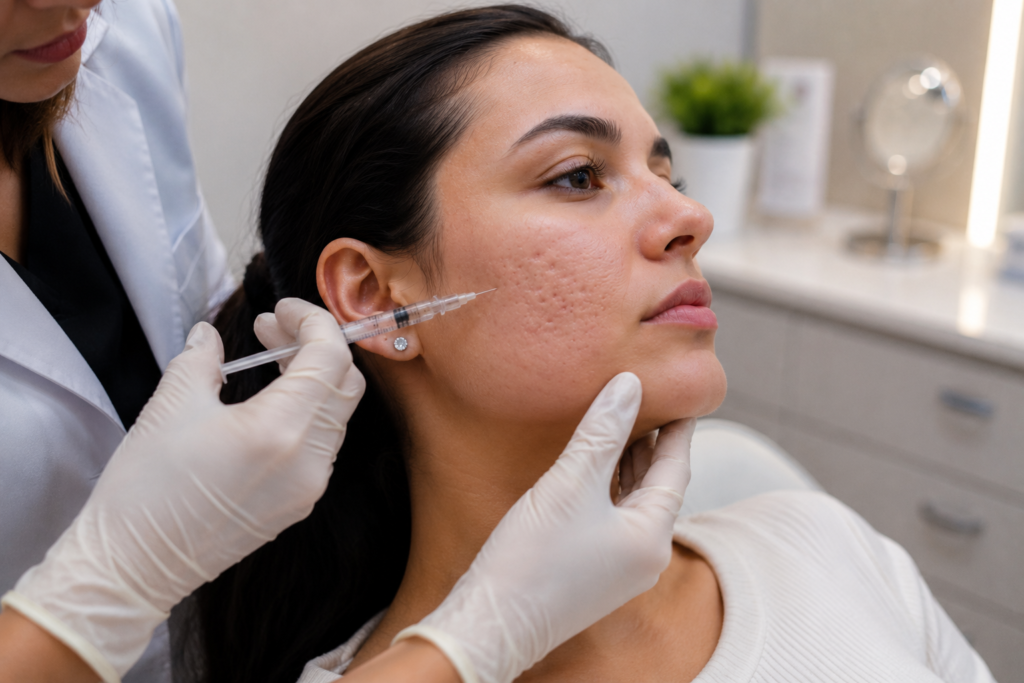
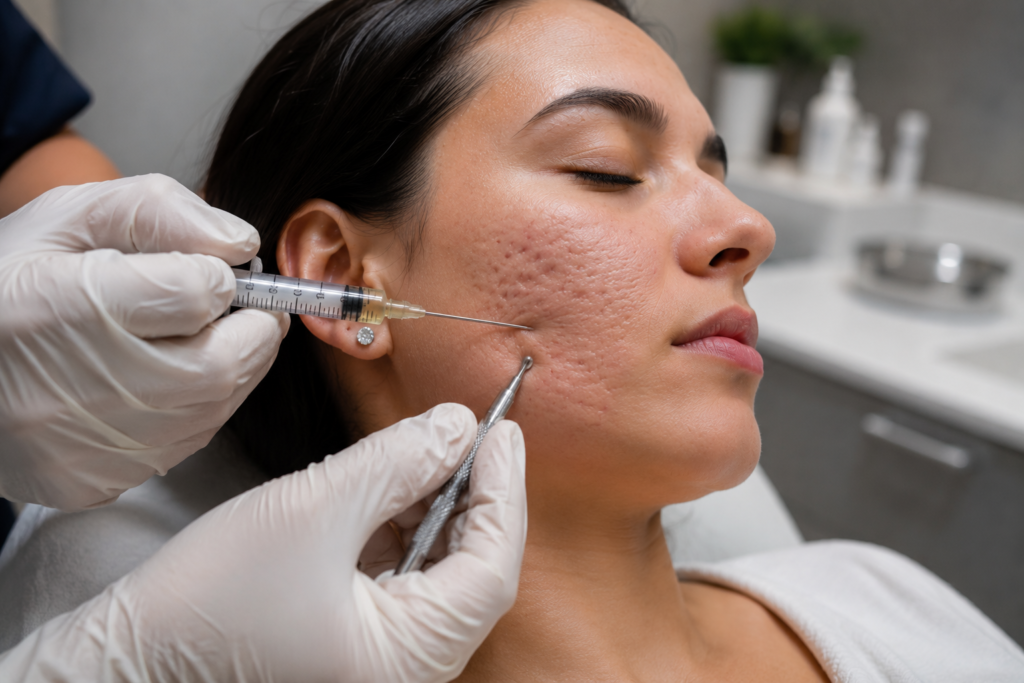
Subcision and Punch Excision
For deep, tethered scars like ice picks or boxcars, a dermatologist may recommend subcision (releasing the fibrous bands under the scar) or punch excision (surgically removing the scar and closing the area). These are more invasive but can produce the most significant improvement for stubborn, deep scarring.
What to Expect: Cost, Downtime, and Sessions
Professional treatments generally range from a few hundred to over a thousand dollars per session, and most require multiple sessions for optimal results. A board-certified dermatologist can assess your scar type and recommend a realistic treatment plan, which is always worth the upfront investment compared to trial-and-error.

Home Remedies vs. Professional Treatments: Which Should You Choose?
| Factor | Home Remedies | Professional Treatments |
| Best for | Mild discoloration, early-stage marks | Deep, textured, or long-standing scars |
| Speed of results | Weeks to months | Days to weeks per session |
| Cost | Lower, ongoing | Higher, often per-session |
| Downtime | None to minimal | Varies (none to two weeks) |
| Who should try it | Anyone starting out | Those with moderate-severe scarring or no improvement from home care |
A practical approach many dermatologists recommend: start with a consistent home routine for 8–12 weeks. If you’re not seeing meaningful improvement, or your scarring is moderate to severe, that’s your signal to book a consultation for in-office treatment.
Building a Daily Routine to Prevent New Scars
Treating existing scars is only half the equation — preventing new ones is just as important.
Don’t Pick or Pop
This is the single most preventable cause of new scarring. Picking disrupts the healing process and dramatically increases the risk of permanent marks.
Treat Active Acne Early
The longer inflammation lingers, the higher the chance of scarring. Addressing breakouts promptly with appropriate acne treatment (benzoyl peroxide, salicylic acid, or prescription options) reduces long-term damage.
Stick to a Gentle, Consistent Skincare Routine
Over-exfoliating or using harsh products can worsen inflammation and slow healing. A simple routine — gentle cleanser, targeted treatment, moisturizer, and daily SPF — supports your skin’s natural repair process.
Frequently Asked Questions
- Can acne scars really be removed completely?
Deep scars are rarely removed 100%, but significant improvement is achievable through a combination of consistent skincare and professional treatments. Post-inflammatory hyperpigmentation, on the other hand, typically fades completely over time.
- What is the fastest way to get rid of acne scars?
Professional treatments like laser resurfacing or chemical peels tend to produce the fastest visible results, often within one to a few sessions, compared to the weeks-to-months timeline of home remedies.
- Do dark spots from acne go away on their own?
Yes, mild post-inflammatory hyperpigmentation often fades on its own within several months, especially with diligent sun protection. Active ingredients like vitamin C or niacinamide can speed this process along.
- Is it safe to combine home remedies with professional treatments?
In most cases, yes. Many dermatologists recommend pairing a gentle at-home routine with periodic professional treatments for the best long-term results. Always check with your provider before combining active ingredients with in-office procedures.
- How long does it take to see results from acne scar treatments?
Home remedies generally show visible improvement within 6–12 weeks. Professional treatments can show results within days to a few weeks per session, though full results often require multiple sessions over several months.
Final Thoughts: Start Where You Are
- Acne scars can feel permanent, but for most people, meaningful improvement is well within reach. The key is matching the treatment to your specific scar type, staying consistent, and being realistic about timelines. Start with a solid at-home routine featuring proven ingredients like retinoids, vitamin C, and daily sunscreen. If progress stalls or your scarring is more severe, a dermatologist can offer targeted, faster-acting treatments tailored to your skin.
- Ready to build your personalized scar-fading routine? Consult a board-certified dermatologist to get a professional assessment of your scar type and a treatment plan designed specifically for your skin.