

If your skin constantly feels tight, red, itchy, or just plain angry — you’re not alone. Sensitive skin is one of the most common skin concerns in the United States, and in many cases, the real culprit isn’t your skin type. It’s a damaged skin barrier.
The good news? A damaged skin barrier is fixable. With the right sensitive skin care routine, the right ingredients, and a little patience, most people see a dramatic improvement within weeks.
This guide covers everything — from how to fix your skin barrier to the best cleanser for sensitive skin, the role of niacinamide for sensitive skin, and exactly how long it takes to repair a skin barrier.
Quick Takeaways
- A damaged skin barrier is the root cause of most sensitive skin flare-ups.
- The right barrier repair routine uses gentle cleansers, ceramide-rich moisturizers, and zero harsh actives.
- Niacinamide is one of the best ingredients for sensitive and reactive skin.
- Most people repair a mildly damaged barrier in 2–4 weeks with the right products.
- Daily SPF is non-negotiable — UV rays weaken the skin barrier every single day.
What is the skin barrier — and why does it matter so much?
Your skin barrier (scientifically called the stratum corneum) is the outermost layer of your skin. Think of it like a brick wall: skin cells are the bricks, and a mixture of lipids — ceramides, fatty acids, and cholesterol — act as the mortar holding everything together.
When this barrier is healthy, it does two critical jobs:
- It keeps moisture locked inside your skin.
- It keeps irritants, bacteria, allergens, and pollution out.
When the barrier breaks down, both systems fail. Moisture escapes. Irritants get in. The result? Skin that feels perpetually dry, tight, sensitive, flushed, or reactive to products it used to handle just fine.
Signs you have a damaged skin barrier
Many Americans chalk these symptoms up to “just having sensitive skin” — but they’re often signs of a damaged skin barrier that needs targeted repair:
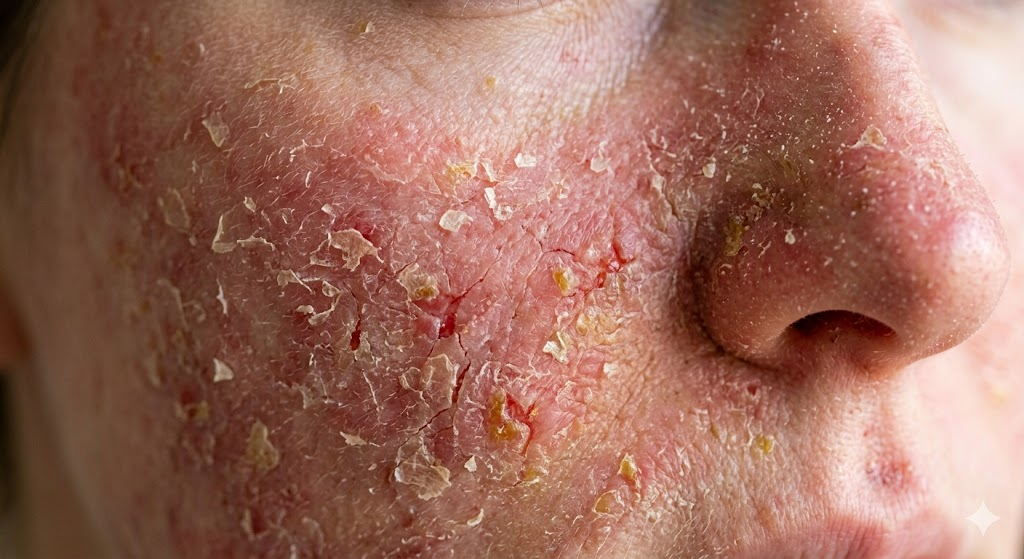
- Skin feels dry, tight, or uncomfortable after cleansing
- Stinging or burning when you apply products (even water-based ones)
- Persistent redness, dullness, or uneven texture
- Breakouts that seem to happen out of nowhere
- Skin that looks rough or feels flaky despite moisturizing
- Products that used to work fine now irritate your skin
Sound familiar? Then the first step isn’t finding a stronger product. It’s repairing what’s broken.
What causes a damaged skin barrier?
In the U.S., a few lifestyle and product habits are the most common culprits:
- Over-exfoliating: Using AHAs, BHAs, or physical scrubs too often strips the lipid layer that holds your barrier together.
- Harsh cleansers: Foaming cleansers with sulfates remove too much of your skin’s natural oils — especially damaging for sensitive skin.
- Skipping moisturizer: Without daily hydration, the barrier dries out and cracks.
- Using too many actives at once: Layering retinol, vitamin C, exfoliants, and acids all at once overwhelms even resilient skin.
- Environmental stress: Dry indoor air (thanks to heating and air conditioning), cold winters, and sun exposure all degrade the barrier over time.
- Hot showers: Long, hot showers dissolve the lipid layer that protects your skin.
How to repair your skin barrier: the step-by-step approach
Learning how to repair a damaged skin barrier doesn’t require a complicated 10-step routine. In fact, the opposite is true. Simplicity heals. Here’s exactly what to do:
Step 1: Strip your routine back to basics
- Stop all harsh actives immediately — that means retinol, AHAs, BHAs, vitamin C, and physical scrubs. Your skin is injured and needs calm, not stimulation. Give it at least 2–4 weeks of gentle-only products before reintroducing anything stronger.
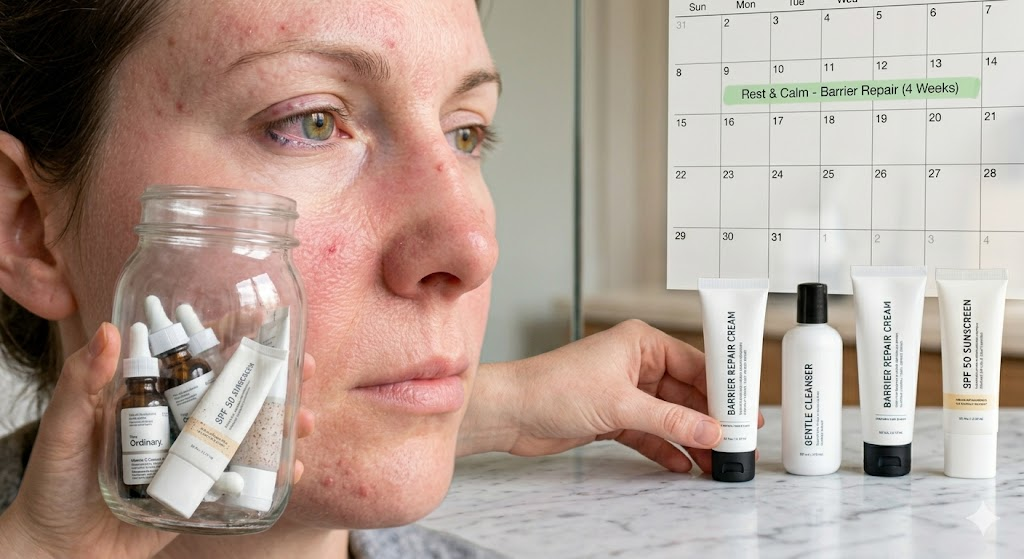
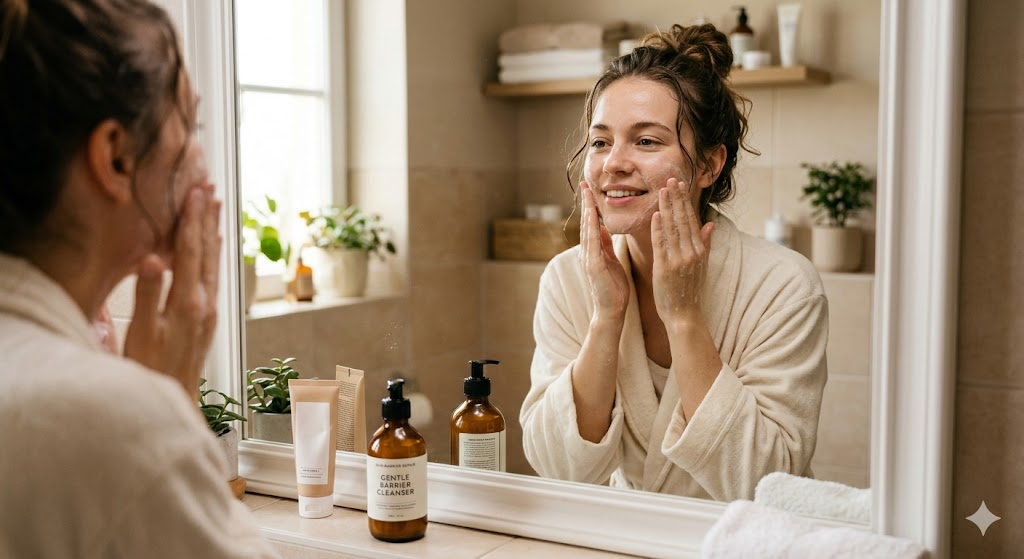
Step 2: Switch to a gentle cleanser for sensitive skin
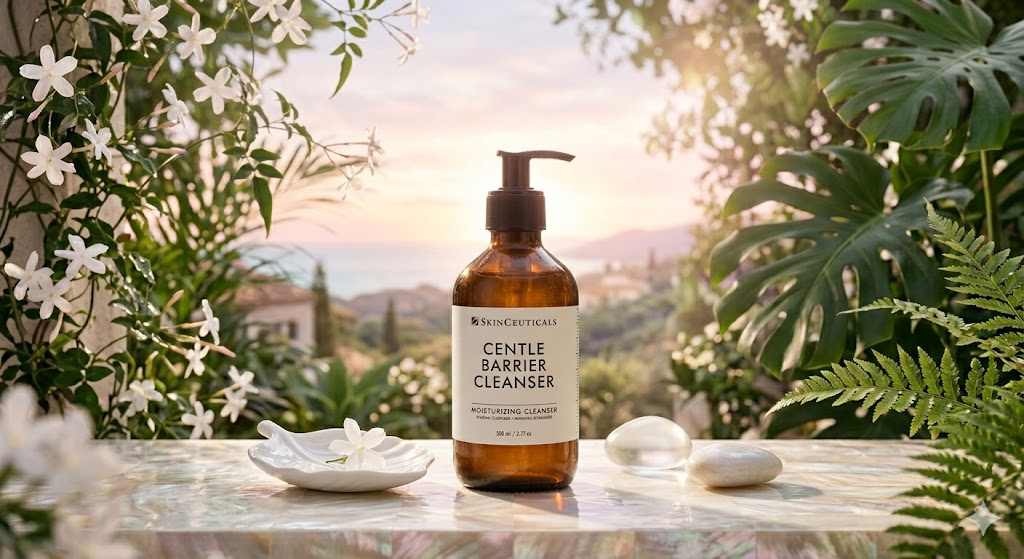
- Your cleanser for sensitive skin should be your first upgrade. Ditch anything foaming or gel-based with sulfates (sodium lauryl sulfate or sodium laureth sulfate). Instead, choose a cream or micellar cleanser that cleans without stripping. Look for these words on the label: non-foaming, sulfate-free, fragrance-free, and pH-balanced. A good face wash for sensitive skin should leave your skin feeling soft and comfortable — not squeaky clean.
Step 3: Use a skin barrier repair moisturizer — twice a day
This is the most important step. A good skin barrier moisturizer or barrier repair face cream actively rebuilds the lipid layer your skin is missing. The three ingredients you absolutely need are:
- Ceramides — These are the primary lipids that make up your skin barrier. Replacing them directly repairs the “mortar” between skin cells.
- Fatty acids (like linoleic acid or shea butter) — These work alongside ceramides to restore the barrier’s structure.
- Cholesterol — The third key lipid in your natural barrier. The best skin barrier repair moisturizer contains all three in a balanced ratio.
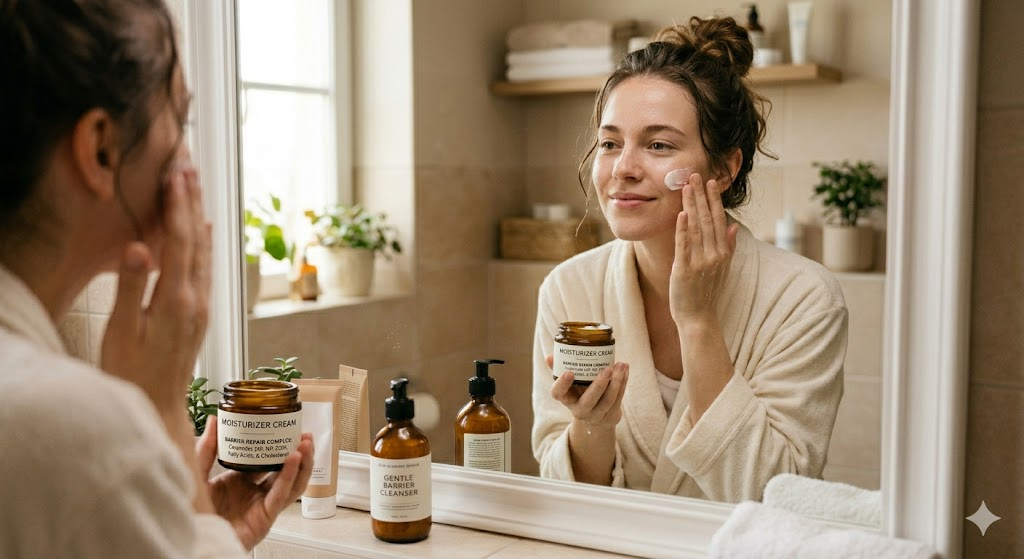
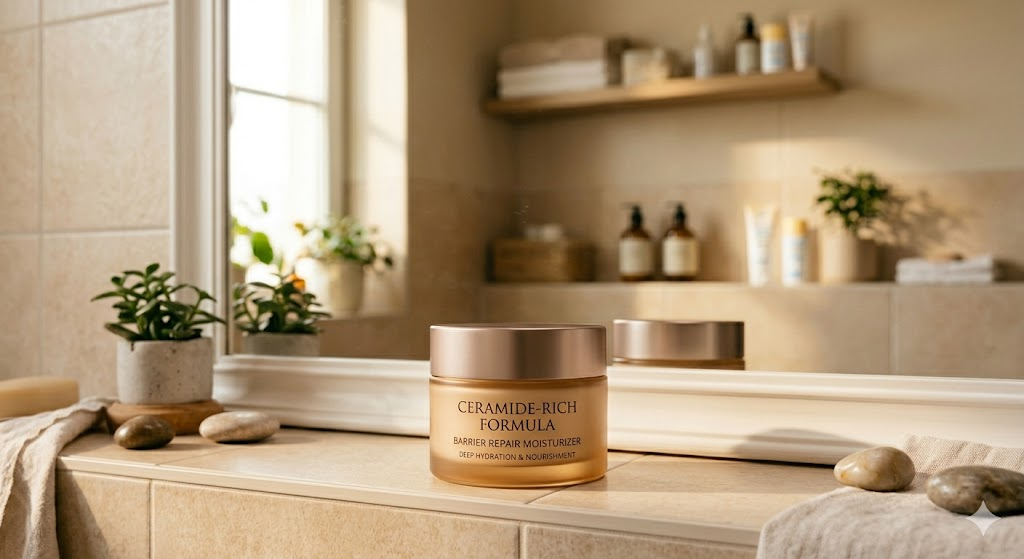
Apply your barrier repair face cream morning and night — every single day, without skipping. Consistency is what heals a damaged barrier, not occasional application.
Step 4: Add niacinamide for sensitive skin
- Niacinamide for sensitive skin is one of the smartest ingredient choices you can make. Here’s why: niacinamide (vitamin B3) directly stimulates ceramide production in your skin. It also reduces redness, calms inflammation, strengthens the barrier, and minimizes the appearance of pores — all without causing irritation.
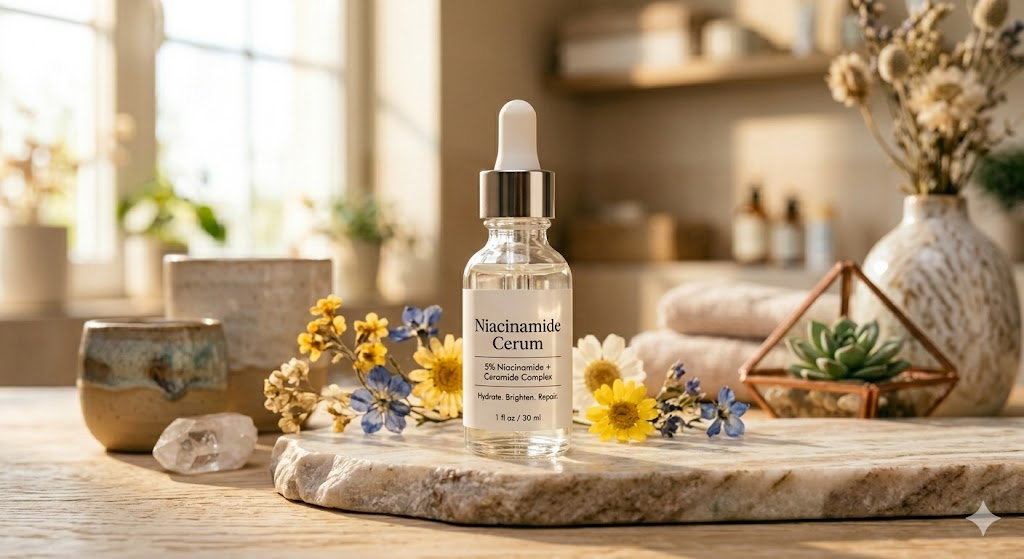
- Use a niacinamide serum (5%–10%) after cleansing and before your moisturizer. It layers well with almost every other ingredient and works in both morning and evening routines. It’s one of the few actives that’s actually safe to use while your barrier is still healing.
Step 5: Apply sunscreen for sensitive skin every morning
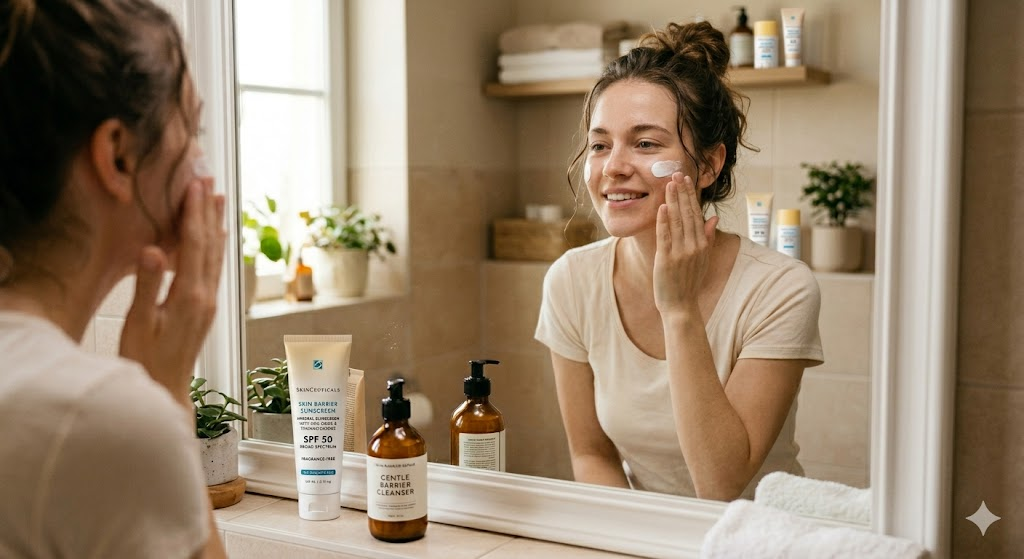
- UV exposure degrades ceramides and damages the skin barrier every single day — even on cloudy days, even indoors near windows. Choosing the right sunscreen for sensitive skin matters. Mineral sunscreens with zinc oxide or titanium dioxide sit on top of the skin rather than absorbing into it, making them far less irritating than chemical sunscreen formulas. Look for SPF 30 or higher, fragrance-free, and labeled “for sensitive skin.”
How long does it take to repair a skin barrier?
This is the question everyone asks — and the honest answer is: it depends on how damaged your barrier is. Here’s a realistic general timeline:
- Days 1–3: Immediate relief
- Redness and stinging reduce once you remove harsh products and switch to gentle ones.
- Week 1–2: Hydration returns
- Skin starts feeling less tight and uncomfortable as ceramide-rich moisturizers rebuild the lipid layer.
- Week 2–4: Visible improvement
- Redness fades, texture smooths, and most mild-to-moderate barrier damage is repaired with consistent care.
- Week 4–8: Full repair for severe damage
Chronically compromised barriers (from months or years of over-exfoliation or harsh products) need up to 8 weeks of gentle, consistent care.
So, how long does it take to repair a skin barrier? Most people see meaningful improvement in 2–4 weeks. Full repair of a severely damaged barrier can take up to 8 weeks. The key is consistency — not switching products every few days when you don’t see instant results.
The complete skincare routine for sensitive skin
Here’s a simple, dermatologist-approved skincare routine for sensitive skin that supports barrier repair and keeps reactive skin calm long-term.
Morning routine
- Gentle cleanser for sensitive skin — Cream or micellar formula, sulfate-free and fragrance-free.
- Niacinamide serum (5%–10%) — Apply to damp skin. Calms redness, builds ceramides, strengthens the barrier.
- Skin barrier moisturizer — Ceramide-rich formula. Apply while skin is still slightly damp to lock in hydration.
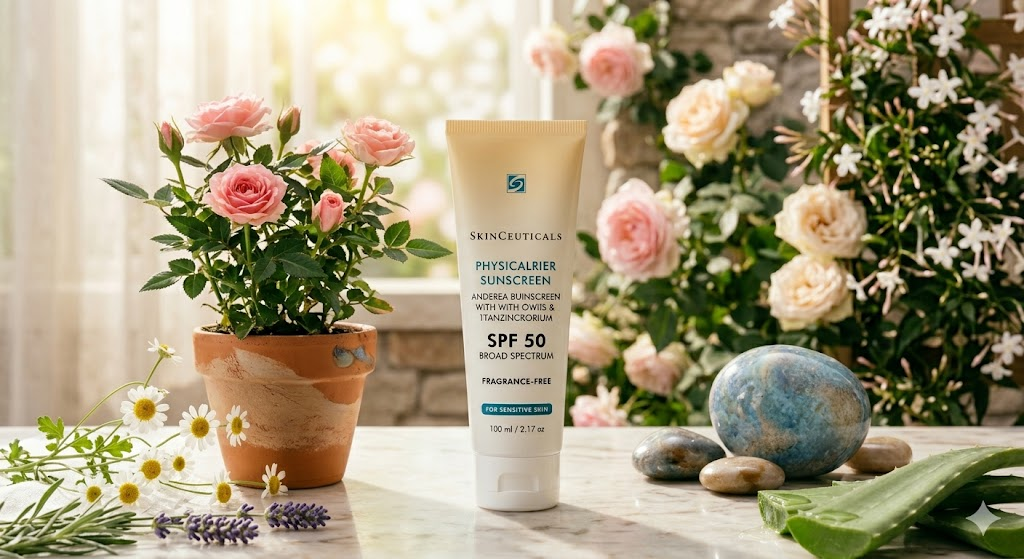
- Mineral sunscreen for sensitive skin — SPF 30 or higher with zinc oxide. Non-negotiable, every single morning.
Evening routine
1. Gentle face wash for sensitive skin — Same cleanser as the morning, or a micellar water if your skin feels extra reactive.
2. Niacinamide serum — Apply again at night for round-the-clock barrier support.
3. Barrier repair face cream — Use a slightly richer formula at night. Your skin does most of its repair work while you sleep
Sensitive skin care tips most blogs don’t mention
- Patch test every new product. Apply a small amount to your inner arm for 24–48 hours before using it on your face. This simple habit saves weeks of unnecessary flare-ups.
- Use lukewarm water, not hot. Hot water strips the barrier lipids every time you wash your face. Lukewarm water cleans just as well without the damage.
- Pat — don’t rub — your face dry. Rubbing with a towel causes micro-friction that aggravates sensitive skin. Pat gently with a clean, soft towel.
- Change your pillowcase twice a week. Pillowcases collect oil, bacteria, and product residue that press against your skin barrier for 7–8 hours every night.
- Run a humidifier in winter. Dry indoor air pulls moisture out of your skin. A humidifier in your bedroom adds it back and supports barrier health overnight.
- Check your laundry detergent. Fragrance in detergent leaves residue on pillowcases and face towels — a hidden trigger for many people with reactive skin.
Frequently asked questions
What’s the best face wash for sensitive skin?
The best face wash for sensitive skin is a fragrance-free, sulfate-free, non-foaming cream or gel cleanser. It should leave skin feeling soft and comfortable — never tight or stripped. Avoid anything marketed as “deep clean” or “pore-clearing,” as these are almost always too harsh for a compromised barrier.
How do I know if my skin barrier is damaged?
The most common signs of a damaged skin barrier are stinging or burning when applying products, persistent dryness or tightness, unexpected breakouts, and redness that doesn’t go away. If your skin suddenly reacts to products it used to tolerate, barrier damage is almost always the cause.
What’s the best face wash for sensitive skin?
The best face wash for sensitive skin is a fragrance-free, sulfate-free, non-foaming cream or gel cleanser. It should leave skin feeling soft and comfortable — never tight or stripped. Avoid anything marketed as “deep clean” or “pore-clearing,” as these are almost always too harsh for a compromised barrier.
Is mineral sunscreen really better for sensitive skin?
For most people with sensitive or reactive skin, yes. Mineral sunscreen for sensitive skin uses zinc oxide or titanium dioxide — physical blockers that sit on top of the skin rather than absorbing into it. They rarely sting, cause breakouts, or trigger reactions. Chemical sunscreens are more likely to irritate a compromised barrier.
Can I use a regular moisturizer to repair my skin barrier?
A regular moisturizer hydrates the skin’s surface but doesn’t actively rebuild the barrier structure. A skin barrier repair moisturizer goes further — it contains ceramides, fatty acids, and cholesterol that physically replenish the lipids your barrier has lost. For genuine repair, ingredients matter more than texture or price.
Conclusion
- Sensitive skin isn’t a life sentence. In most cases, it’s a signal — your skin barrier is damaged and asking for help.
- The fix isn’t complicated: strip your routine back, switch to a gentle cleanser for sensitive skin, use a ceramide-rich skin barrier repair moisturizer twice a day, add niacinamide for sensitive skin, and protect everything with a mineral sunscreen for sensitive skin every morning.
- Give it 2–4 weeks of consistency. Your skin barrier knows how to heal — it just needs you to stop getting in the way.