
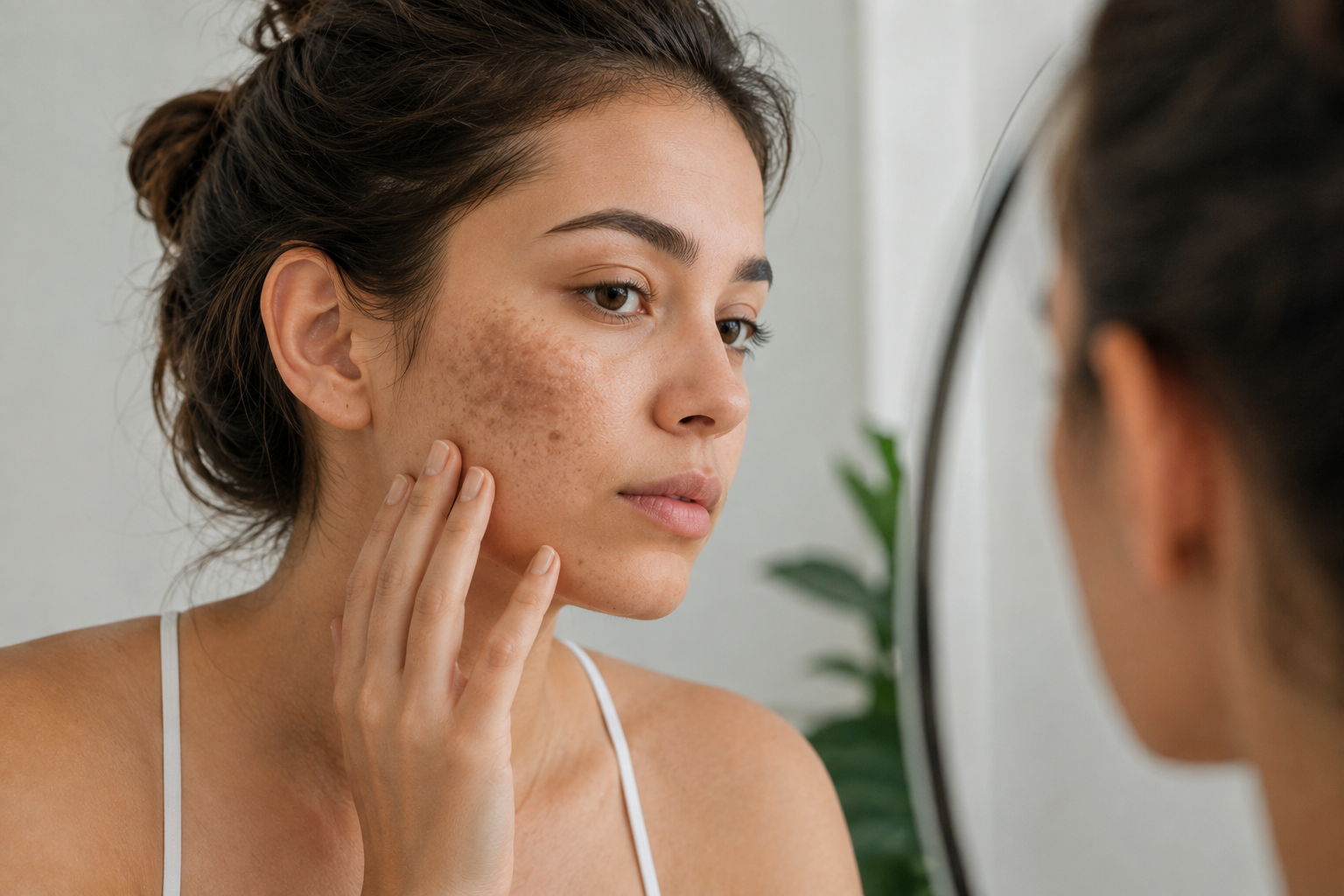
You catch your reflection in the bathroom mirror one morning, and there it is—a brownish patch on your cheek that definitely wasn’t there last summer. Maybe it’s a scattering of small spots across your forehead, or a stubborn patch near your jawline that no amount of concealer seems to fully hide. If you’re nodding along, you’re far from alone. Dark spots are one of the most common skin concerns dermatologists see, affecting people of every age and skin tone.
The good news? Once you understand what causes dark spots on face skin, you’re in a much better position to stop them from multiplying—and to fade the ones you already have. This guide walks through the real causes, the most effective prevention strategies, and answers to the questions people ask most.
What Are Dark Spots, Exactly?
Dark spots—also called hyperpigmentation—happen when certain areas of skin produce more melanin (the pigment that gives skin its color) than the surrounding areas. This creates patches that appear darker than your natural skin tone, ranging from light tan to deep brown or even black, depending on your complexion.
They go by several names depending on what’s causing them and where they show up:
- Sunspots or age spots (solar lentigines)
- Melasma (larger, often symmetrical patches)
- Post-inflammatory hyperpigmentation (PIH) (marks left behind after a breakout or injury)
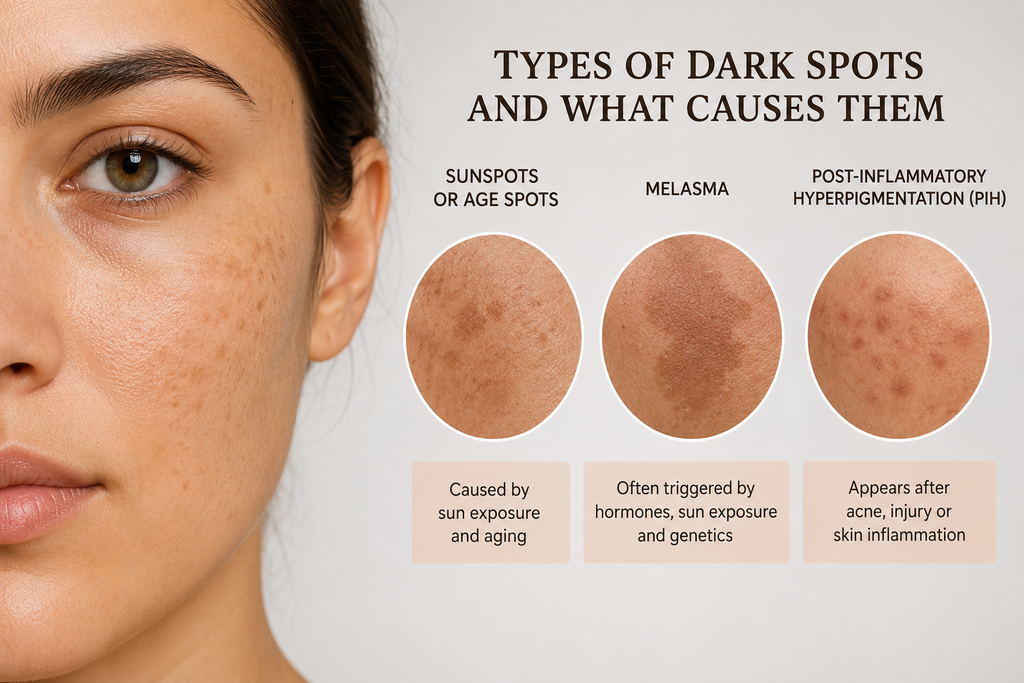
Understanding which type you’re dealing with matters, because the cause—and the best treatment—can differ quite a bit.
Top Causes of Dark Spots on Face Skin
Sun Exposure and UV Damage
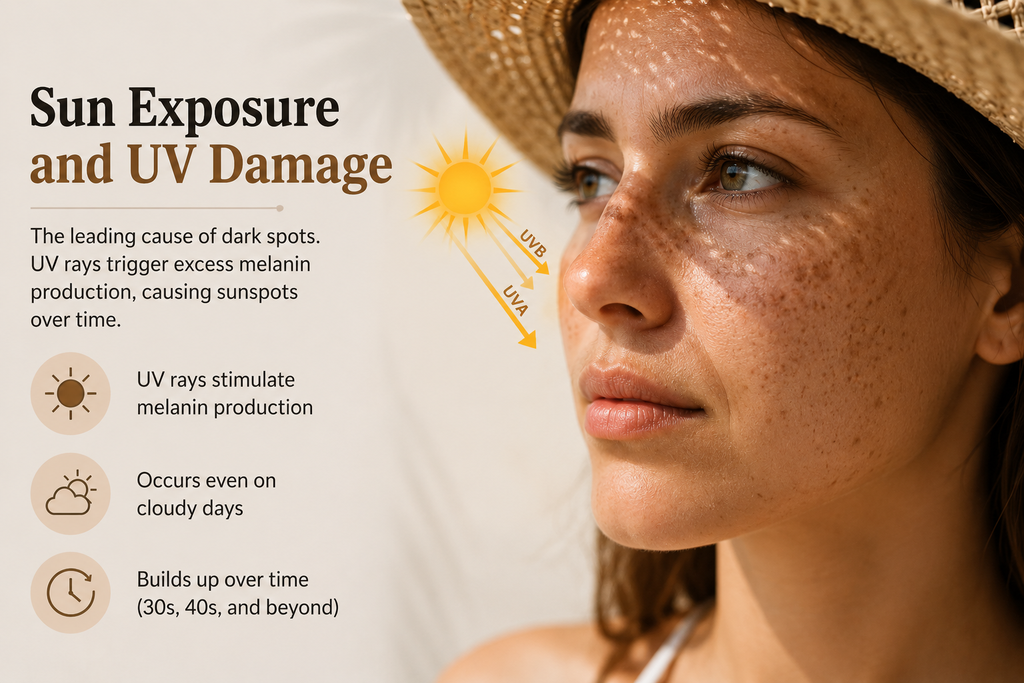
This is, by far, the number one culprit. Ultraviolet (UV) rays trigger your skin’s melanocytes—the cells responsible for pigment production—to kick into overdrive as a defense mechanism. Over years of unprotected sun exposure, this results in visible sunspots, especially on areas that get the most exposure: cheeks, forehead, nose, and temples.
Even on cloudy days or during winter, UV rays reach your skin. That daily commute or afternoon walk adds up over time, which is why sun-related dark spots tend to show up more noticeably as people move into their 30s, 40s, and beyond.
Hormonal Changes (Melasma)
Melasma is a specific type of hyperpigmentation closely tied to hormonal fluctuations. It’s especially common during pregnancy (sometimes called the “mask of pregnancy”), while taking birth control pills, or during hormone therapy. It typically appears as larger, symmetrical patches on the cheeks, upper lip, forehead, and chin.
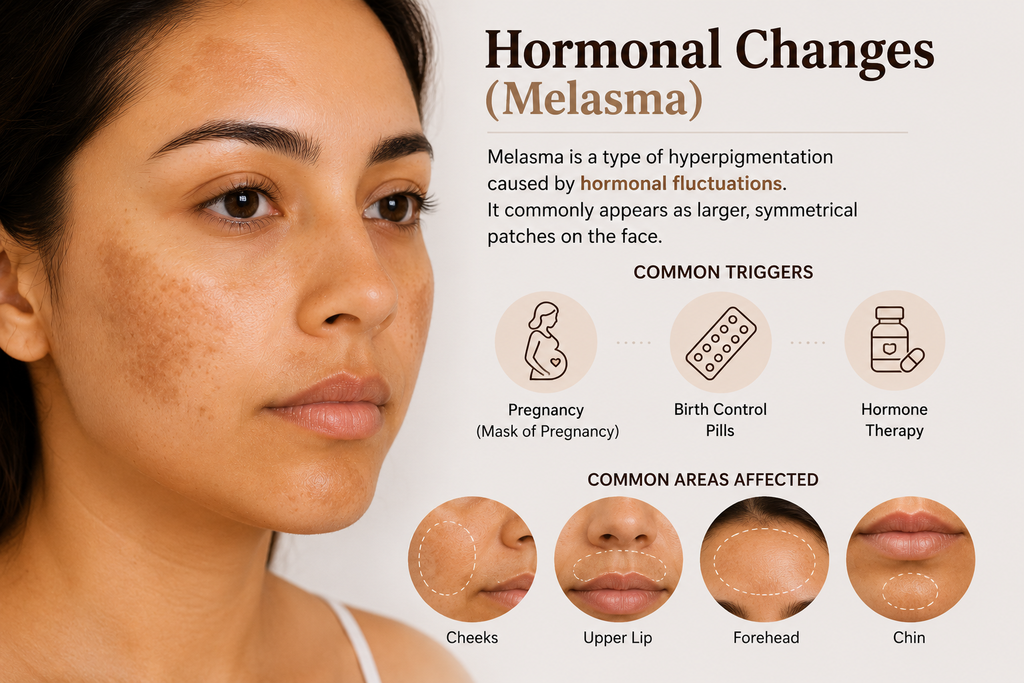
What makes melasma tricky is that it’s often stubborn and can worsen with sun exposure, even after the hormonal trigger has resolved.
Post-Inflammatory Hyperpigmentation (Acne Marks and Injuries)
If you’ve ever picked at a pimple and watched a dark mark linger for weeks—or months—afterward, you’ve experienced post-inflammatory hyperpigmentation. This happens when inflammation from acne, cuts, burns, insect bites, or even harsh skincare treatments triggers excess melanin production as the skin heals.
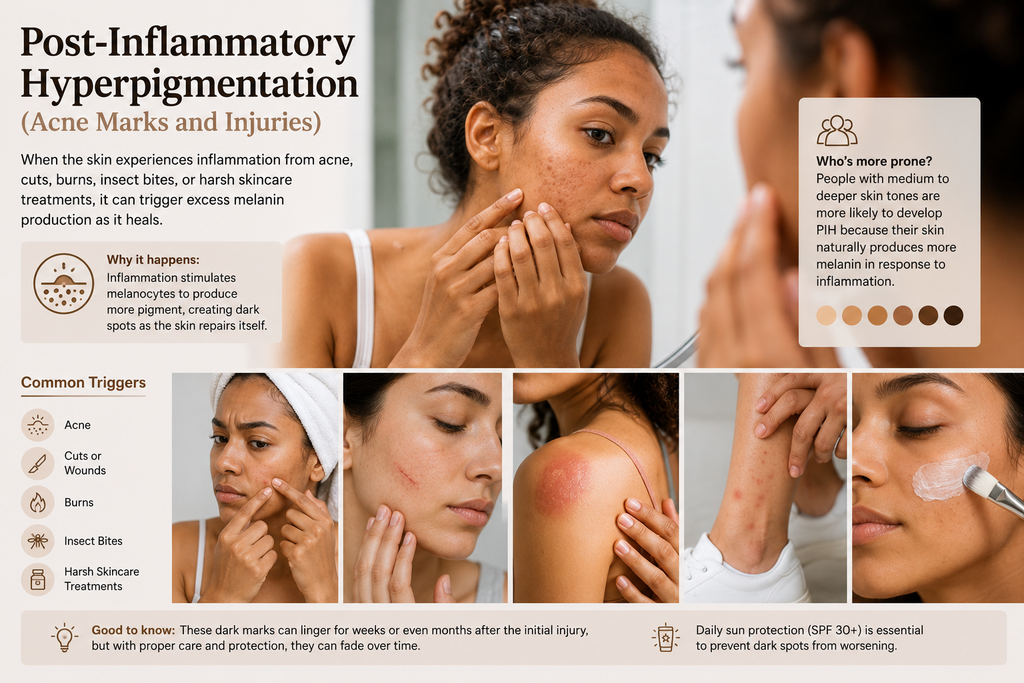
People with medium to deeper skin tones tend to be more prone to PIH, since their skin naturally produces more melanin in response to inflammation.
Aging and Cumulative Sun Damage
As skin ages, years of accumulated UV exposure catch up. Cell turnover slows down, which means pigmented cells stick around longer instead of naturally shedding. This is why age spots become more common and more noticeable after age 40.
Certain Medications and Medical Conditions
Some medications increase your skin’s sensitivity to sunlight or directly trigger pigmentation changes. These include certain antibiotics, retinoids, chemotherapy drugs, and some anti-seizure medications. Underlying conditions like thyroid disorders can also play a role in triggering melasma-like pigmentation.
Genetics
Family history matters here too. If your parents or grandparents developed sunspots or melasma, you may be more genetically predisposed to developing dark spots yourself, particularly with sun exposure or hormonal shifts.
How to Prevent Dark Spots From Forming
Make Sunscreen Non-Negotiable
This is the single most effective prevention strategy. Dermatologists consistently recommend a broad-spectrum SPF 30 or higher, applied every single day—not just on sunny beach days. UV rays penetrate clouds and windows, so daily application matters year-round, even if you’re mostly indoors.
Reapply every two hours when you’re outdoors for extended periods, and don’t forget often-missed spots like the ears and hairline.
Wear Protective Accessories
A wide-brimmed hat and UV-blocking sunglasses aren’t just stylish—they physically block rays from ever reaching sensitive facial skin, adding a layer of defense that sunscreen alone can’t provide.
Resist the Urge to Pick at Breakouts
Since inflammation drives post-inflammatory hyperpigmentation, keeping hands off active breakouts helps prevent unnecessary dark marks. Treating acne early and gently, rather than picking or popping, reduces the likelihood of lingering discoloration.
Choose Skincare Products Wisely
Certain ingredients can increase photosensitivity, making skin more reactive to sun exposure. If you’re using retinoids, exfoliating acids, or other active ingredients, pairing them with diligent sunscreen use is essential.
Effective Ways to Fade Existing Dark Spots
Once dark spots have formed, several approaches can help fade them over time:
- Topical vitamin C: A well-studied antioxidant that helps brighten skin and inhibit excess melanin production.
- Niacinamide: Known for evening out skin tone and strengthening the skin barrier.
- Azelaic acid: Effective for both acne marks and melasma, and generally well-tolerated.
- Retinoids: Speed up cell turnover, helping pigmented cells shed faster.
- Chemical exfoliants (AHAs/BHAs): Gently remove the outer layer of pigmented skin cells over time.
- Professional treatments: Options like chemical peels, microdermabrasion, and laser therapy can offer faster, more dramatic results for stubborn spots, ideally performed by a licensed dermatologist.
Consistency matters more than intensity here—most ingredients take 8 to 12 weeks of regular use before you notice meaningful fading.
When to See a Dermatologist
While most dark spots are harmless, it’s worth getting any new or changing spot checked by a dermatologist, especially if it has irregular borders, multiple colors, or is growing quickly. These can sometimes signal something beyond ordinary hyperpigmentation and are worth ruling out professionally.
A dermatologist can also help identify which type of hyperpigmentation you’re dealing with and recommend a treatment plan tailored to your skin tone and history, since not every approach works the same way for every skin type.
Frequently Asked Questions
What causes dark spots on face skin to suddenly appear?
Sudden dark spots are most often triggered by a recent increase in sun exposure, a hormonal shift (like starting birth control or pregnancy), or healing from a breakout or skin injury.
Do dark spots go away on their own?
Some fade gradually over several months as skin naturally turns over, especially post-inflammatory marks. Sunspots and melasma, however, often need active treatment and consistent sun protection to fade.
Can diet affect dark spots?
While diet alone doesn’t directly cause dark spots, a diet rich in antioxidants (think berries, leafy greens, and vitamin C-rich foods) supports overall skin health and may help the skin recover more efficiently from pigmentation triggers.
Is it safe to use dark spot correctors every day?
Most brightening ingredients like vitamin C and niacinamide are safe for daily use. Stronger actives like retinoids or exfoliating acids are usually better introduced gradually, a few times a week, to avoid irritation.
Are dark spots more common in certain skin tones?
Post-inflammatory hyperpigmentation tends to be more pronounced in medium to deep skin tones, while sunspots are often more visible on lighter skin. Melasma can affect any skin tone but is more common in those with more melanin.
Final Thoughts
Dark spots are frustrating, but they’re also one of the most preventable and treatable skin concerns out there. The foundation is simple: consistent sun protection, gentle skincare habits, and patience with proven brightening ingredients. If spots persist or you’re unsure which type you’re dealing with, a dermatologist can help map out the most effective path forward for your specific skin.
Ready to build a skincare routine that actually protects and brightens your skin? Start with a broad-spectrum sunscreen today—your future skin will thank you.